
How alpine ski races are timed and placed
Alpine races are decided on elapsed time, with technical events combining two runs into a single total.
Overview
An alpine ski race is a time trial down a gated course: the clock starts as the racer leaves the start and stops at the finish line, and the fastest valid run wins. A run is only valid if every gate was passed, so a missed gate ends the attempt regardless of the time on the board.
The technical events are usually run twice on different course sets, and the two run times are added together to give the result. Speed events are more commonly decided on a single run. Because the differences are often tiny, times are recorded electronically to a fraction of a second.
How it works
- The clock runs from the start signal to the finish line.
- A missed gate invalidates the run whatever the time.
- Technical events commonly add two run times together for the result.
- Speed events are more often decided on a single run.
- Times are recorded electronically because margins are frequently fractions of a second.
Where it’s used
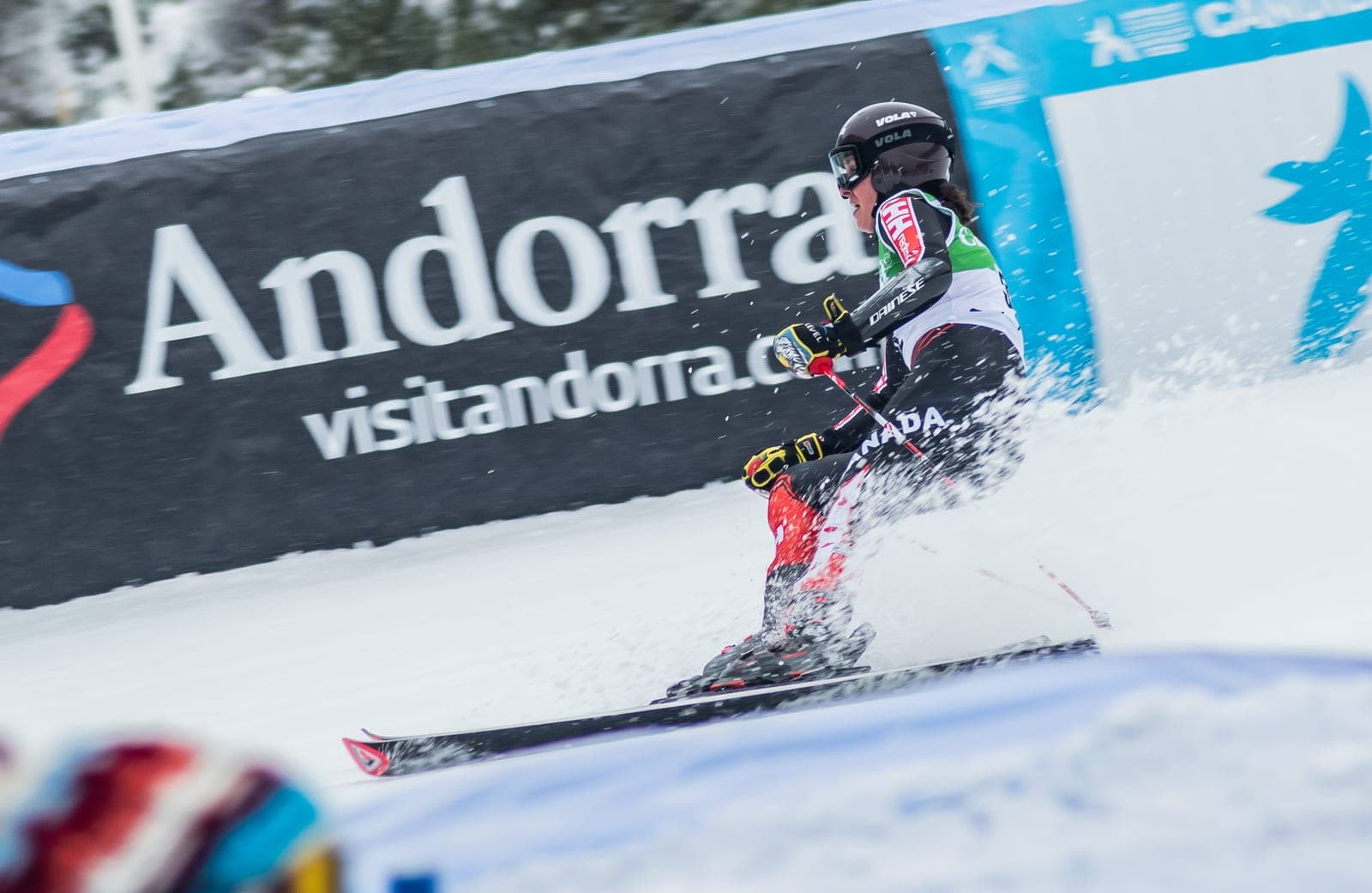
Sports that use how alpine ski races are timed and placed:
How it connects
The meaning-bearing relationships that place How alpine ski races are timed and placed in the wider knowledge graph — each one with the reason it exists.
Frequently learned together
Taught side by side in the same stage of a learning path.
Explore across the knowledge base
Follow the threads that connect How alpine ski races are timed and placed to the rest of SocialSportHub.
Rules
Officiating
- Gate JudgeAn official posted beside an alpine race course who watches an assigned group of gates and records whether each racer passed them correctly.
- TimekeeperThe timekeeper is the official who runs a contest's clock — starting and stopping time, timing rounds, races and periods, and signalling when time expires.
- JudgeA judge is an official who scores performance in judged sports, awarding marks for execution and difficulty rather than counting goals or timing a race.
Disciplines
- CombinedAlpine combined blends a speed run with a slalom run, adding the times together so the result rewards all-around skiers across both ends of the spectrum.
- SlalomSlalom is the most technical alpine skiing discipline, run on a short course with closely spaced gates that demand rapid, precise turns.
- Road CyclingRoad cycling covers riding and racing on paved roads, from mass-start races and time trials to multi-day stage events.
- Super-GSuper-G, or super giant slalom, is a speed discipline with gates set farther apart than giant slalom, blending high speed with sweeping turns.
- Parallel (Alpine)Parallel is an alpine snowboarding discipline in which two riders race side by side down gated courses, carving turns on stiffer alpine boards.
Go deeper with How alpine ski races are timed and placed
Everywhere else on the platform that covers How alpine ski races are timed and placed — assembled from what actually references it, so nothing here is a dead end.
Learn it
Structured courses and paths on the platform that cover this directly.
How this page is maintained
- Content type
- Scoring system
- Provenance
- Tier A — evergreen educational
- Verified external sources
- 0
- Content updated
- 2026-09-12
Evergreen, first-party explanation — it makes no claim that needs an external source. How we handle sources and reviews.