
The loop and the block
Table tennis's primary attacking stroke and its primary counter — how a loop lifts backspin into topspin, and why a block uses the attacker's own pace against them.
Overview
The loop is the stroke modern table tennis is built around: a heavy topspin drive that lifts the ball over the net with enough rotation to bring it down onto the table. The block is its most economical answer.
They are a matched pair. The loop generates spin and pace; the block returns both without generating any, using the incoming energy instead.
The loop
The stroke starts low, with the knees bent and the bat below the level of the ball, and accelerates upwards and forwards, brushing the back and top of the ball. The contact is tangential rather than flat — the bat is trying to grip and rotate the ball, not to hit it.
Because topspin makes the ball dip, a loop can be hit much harder than a flat drive and still land. That is the whole point: the spin buys the margin that lets the player use full power.
Looping against backspin
A loop against a backspin ball has to do two jobs at once: reverse the existing rotation and add its own. This requires a steeper, more upward swing path and more bat speed than a loop against topspin.
This is the hardest common stroke in the sport, and it is why the push is such a durable defensive shot. A player who cannot lift backspin reliably has no way to start an attack against a good pusher.
The block
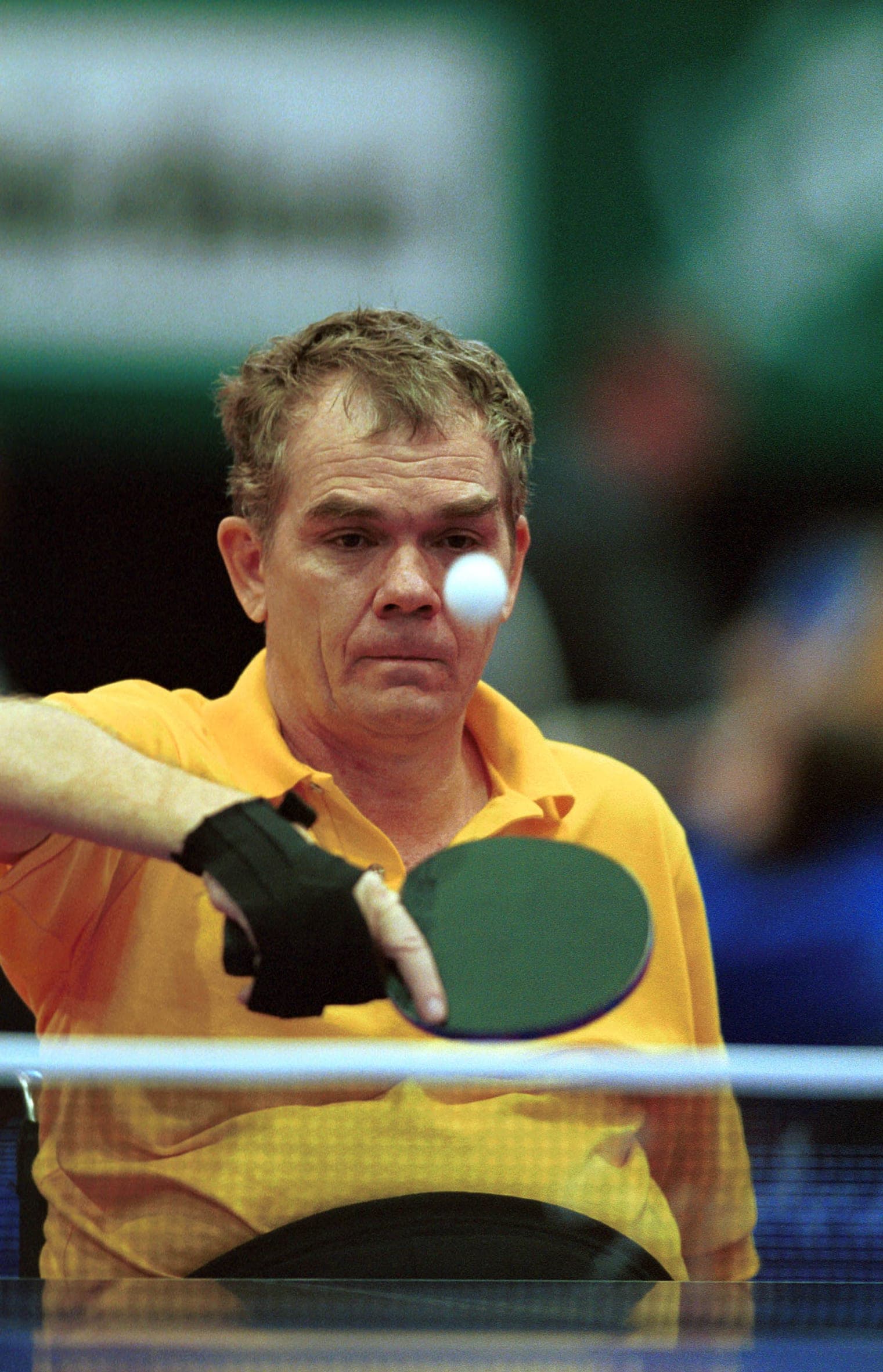
A block is played close to the table with a short, firm movement and a closed bat angle, taking the ball early on the rise. The player adds no swing: the ball's own pace supplies the return.
Blocking does two useful things. It returns a heavy loop with almost no risk, and it gives the looper no time — a ball taken on the rise comes back faster than one taken at the peak, even though the blocker did less work.
How to do it
- 1For a loop, start with the knees bent and the bat below the ball.
- 2Accelerate upwards and forwards, brushing the back and top of the ball.
- 3Use the legs and hips to drive the stroke rather than the arm alone.
- 4Against backspin, swing more steeply upwards and increase bat speed.
- 5For a block, stand close to the table and take the ball early on the rise.
- 6Close the bat angle and let the ball's own pace do the work — do not swing.
Key points
- A loop brushes the ball tangentially to generate topspin rather than hitting flat.
- Topspin makes the ball dip, which is what allows a loop to be hit at full power.
- Looping against backspin needs a steeper path and more bat speed.
- A block adds no pace — it returns the attacker's own energy.
- Taking the block early on the rise steals time from the looper.
Where it’s used
Sports that use the loop and the block:
Related techniques
Table Tennis Forehand Drive
A controlled attacking stroke in table tennis, played on the forehand side with a compact swing and light topspin.
Spin in table tennis
Why table tennis is a spin sport before it is a speed sport — how topspin, backspin and sidespin change a ball's flight and its bounce off an opponent's bat.
Table tennis serve technique
How to serve legally and still create an advantage — generating spin within the rules, keeping the ball short, and why disguise must come from contact rather than concealment.
How it connects
The meaning-bearing relationships that place The loop and the block in the wider knowledge graph — each one with the reason it exists.
Builds on
Understanding these first makes this one make sense.
Alternative to
Comparable enough that people choose between them.
Frequently learned together
Taught side by side in the same stage of a learning path.
- Table Tennis Forehand DriveBoth are taught in the “Build your technique” stage of the Table Tennis learning path.
- Spin in table tennisBoth are taught in the “Build your technique” stage of the Table Tennis learning path.
- Table tennis serve techniqueBoth are taught in the “Build your technique” stage of the Table Tennis learning path.
- The push and the chopBoth are taught in the “Build your technique” stage of the Table Tennis learning path.
Explore across the knowledge base
Follow the threads that connect The loop and the block to the rest of SocialSportHub.
Tactics
- Serve and third ballTable tennis's most-rehearsed tactical pattern — using a serve to force a predictable return so the third ball of the rally can be attacked from a known position.
- Placement and tempo in table tennisWhy where and when you hit the ball beats how hard — the playing elbow, the wide angles, and how taking the ball earlier removes an opponent's time without adding any power.
- Serve +1 and return +1The two-shot patterns that decide short points — how a serve's direction determines where the reply comes from, and how a returner uses the same idea against the server.
Positions
- StrikerA striker is the main attacking player in football, positioned furthest forward with the primary job of scoring goals.
- Goal attackThe goal attack is a versatile netball attacker who both feeds the shooter and scores goals, moving through the centre and attacking thirds.
- Goal shooterThe goal shooter is a netball attacker who scores goals and is one of only two players allowed to shoot, working within the attacking goal third and circle.
- Point guardThe point guard is basketball’s primary ball-handler and playmaker, running the offence and setting up teammates to score.
Skills
Go deeper with The loop and the block
Everywhere else on the platform that covers The loop and the block — assembled from what actually references it, so nothing here is a dead end.
Learn it
Structured courses and paths on the platform that cover this directly.
Take it away
Open data and the whole-platform view of this subject.
How this page is maintained
- Content type
- Technique
- Provenance
- Tier A — evergreen educational
- Verified external sources
- 0
- Content updated
- 2026-09-12
Evergreen, first-party explanation — it makes no claim that needs an external source. How we handle sources and reviews.