Table tennis serve technique
How to serve legally and still create an advantage — generating spin within the rules, keeping the ball short, and why disguise must come from contact rather than concealment.
Overview
The serve is the only stroke in table tennis played entirely on the server's terms, and it is the most important shot in the sport. But the Laws deliberately restrict how much can be hidden, so the advantage has to be created within a narrow set of permitted actions.
What remains legal is substantial: the amount of spin, the type of spin, the length, the placement and the speed are all free. What is not legal is hiding the contact.
Disguise without concealment
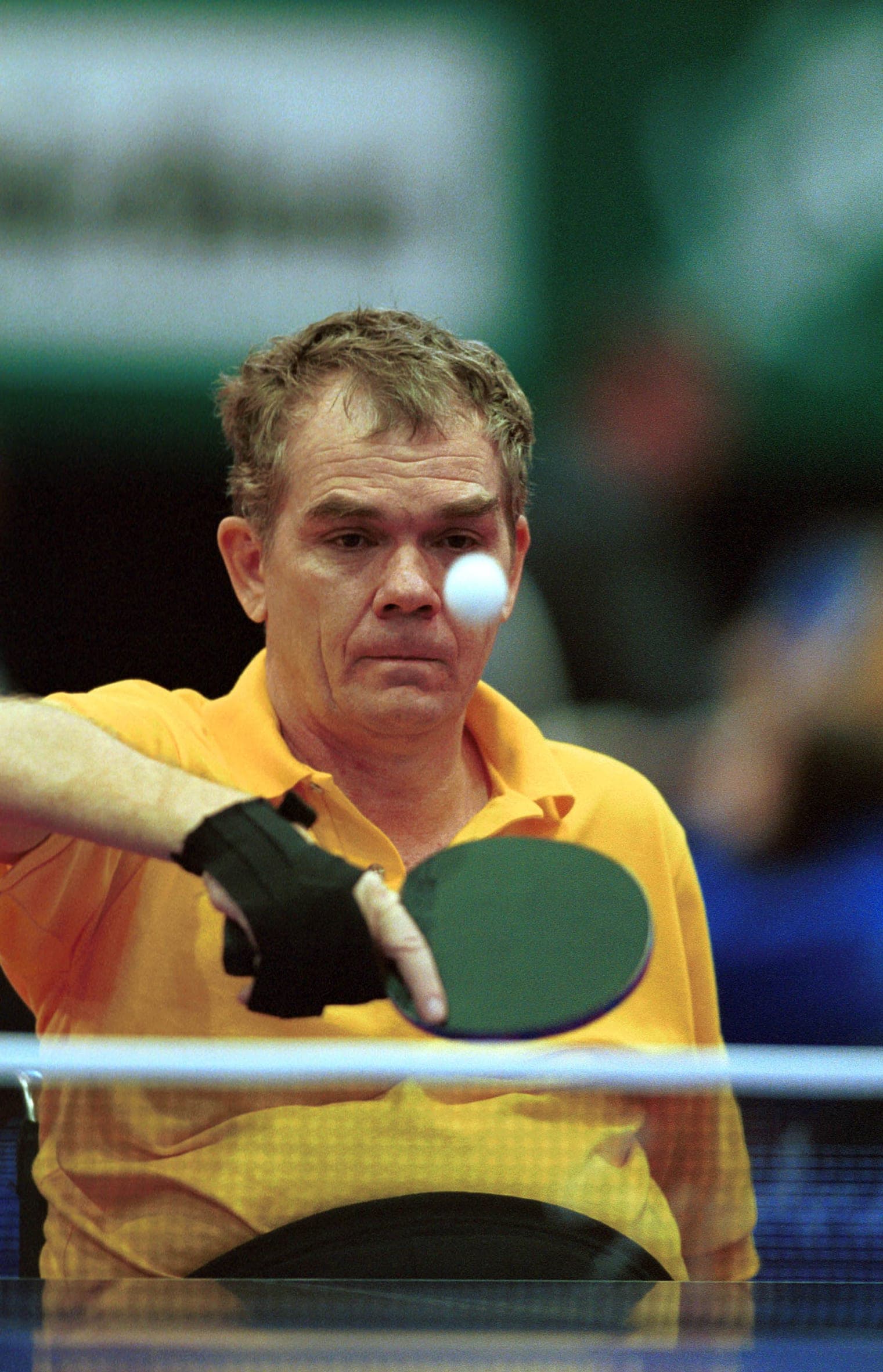
Because the ball must remain visible to the receiver throughout, disguise cannot come from hiding the bat. It comes from making different spins look the same at the moment of contact — a similar bat path with a different contact point on the ball.
Brushing the underside of the ball produces backspin; brushing the back of it produces topspin; brushing across it produces sidespin. A server who uses a single arm motion and varies only the contact point gives the receiver almost nothing to read.
Short serves and long serves
A short serve is one that would bounce twice on the opponent's side if left. It denies the receiver the room to make a full attacking stroke, because they cannot swing through a ball still close to the net.
A long serve gives up that protection but can be used as a surprise — a fast, deep serve to a receiver set up for a short one frequently wins the point outright. The value of a long serve comes entirely from the short ones that preceded it.
The rules you must not break
Rest the ball on an open, stationary palm. Toss it near vertically at least 16 cm without spin. Keep it above the playing surface and behind the end line. Do not let it be hidden by you, your partner, or anything you wear or carry. Move the free arm out of the space between the ball and the net after the toss.
None of these prevents a good serve. A player who learns to serve legally from the start never has to unlearn a habit that will be called at the first umpired match they play.
How to do it
- 1Rest the ball on a flat, open, stationary palm behind the end line.
- 2Toss it near vertically at least 16 cm, without imparting spin.
- 3Keep the ball above the table and visible to your opponent throughout.
- 4Move the free arm clear of the space between ball and net as soon as it is tossed.
- 5Brush the ball as it falls — underside for backspin, back for topspin, across for sidespin.
- 6Keep the first bounce close to your own end line to serve short.
Key points
- Spin, placement, length and speed are all free; only concealment is prohibited.
- Vary the contact point on the ball rather than the arm motion to disguise spin.
- A short serve denies the receiver room to attack.
- A long serve is valuable because of the short serves that came before it.
- Learning to serve legally from the start avoids unlearning an illegal habit later.
Where it’s used
Sports that use table tennis serve technique:
Related techniques
Table Tennis Forehand Drive
A controlled attacking stroke in table tennis, played on the forehand side with a compact swing and light topspin.
Spin in table tennis
Why table tennis is a spin sport before it is a speed sport — how topspin, backspin and sidespin change a ball's flight and its bounce off an opponent's bat.
The loop and the block
Table tennis's primary attacking stroke and its primary counter — how a loop lifts backspin into topspin, and why a block uses the attacker's own pace against them.
Sources
The rules, dimensions and specifications on this page were read from these documents.
- ITTF Statutes — The Laws of Table Tennis — International Table Tennis Federation, 2026, Law 2.6 — The service (read 2026-09-12)
How it connects
The meaning-bearing relationships that place Table tennis serve technique in the wider knowledge graph — each one with the reason it exists.
Foundation of
These build directly on this one.
Explains
Covers the underlying "why" for these.
Frequently learned together
Taught side by side in the same stage of a learning path.
- Table Tennis Forehand DriveBoth are taught in the “Build your technique” stage of the Table Tennis learning path.
- Spin in table tennisBoth are taught in the “Build your technique” stage of the Table Tennis learning path.
- The loop and the blockBoth are taught in the “Build your technique” stage of the Table Tennis learning path.
- The push and the chopBoth are taught in the “Build your technique” stage of the Table Tennis learning path.
Explore across the knowledge base
Follow the threads that connect Table tennis serve technique to the rest of SocialSportHub.
Rules
- The legal table tennis serveThe most-broken rule in table tennis, set out exactly — the open palm, the 16 cm toss, the no-hiding requirement, and what happens the first time an umpire is unsure.
- Badminton serve rulesThe rules for how a badminton serve must be delivered and where it must land.
- Tennis serving rulesThe rules governing how a tennis point begins, including where the server stands and where the serve must land.
- Three-hit ruleThe volleyball rule that a team may contact the ball at most three times before it must cross the net.
- Lane disciplineThe rule that competitors must stay within their assigned lane in lane-based races.
Tactics
- Serve and third ballTable tennis's most-rehearsed tactical pattern — using a serve to force a predictable return so the third ball of the rally can be attacked from a known position.
- Point constructionHow tennis points are built rather than won — the neutral, attacking and defensive positions, what each one permits, and why most errors come from playing the wrong shot for the position.
- The penalty killHow a team defends a player short — the box and diamond formations, why killers ice the puck legally, and what a short-handed team is actually trying to protect.
- Approaching the netHow a point is moved forward — which balls justify an approach, why the approach is hit down the line, and the transition volley that has to be played from no-man's land.
- Wing playAttacking down the flanks and crossing the ball into the box to stretch the defence and create chances.
Skills
- BalanceThe skill of keeping the body stable and controlled while still or moving.
- PassingThe skill of moving the ball to a teammate accurately to keep possession and create chances.
- TacklingThe skill of legally challenging an opponent to win the ball or stop their progress.
- ServingThe skill of putting the ball or shuttle into play to start a point or rally.
- Returning serveThe skill of reading and playing back an opponent’s serve to stay in the rally.
Go deeper with Table tennis serve technique
Everywhere else on the platform that covers Table tennis serve technique — assembled from what actually references it, so nothing here is a dead end.
Learn it
Structured courses and paths on the platform that cover this directly.
Take it away
Open data and the whole-platform view of this subject.
How this page is maintained
- Content type
- Technique
- Provenance
- Tier A — evergreen educational
- Verified external sources
- 0
- Content updated
- 2026-09-12
Evergreen, first-party explanation — it makes no claim that needs an external source. How we handle sources and reviews.