
Padel racket
A solid, stringless racket perforated with holes, used to play padel. The lack of strings gives padel its distinctive shorter, flatter shots.
Overview
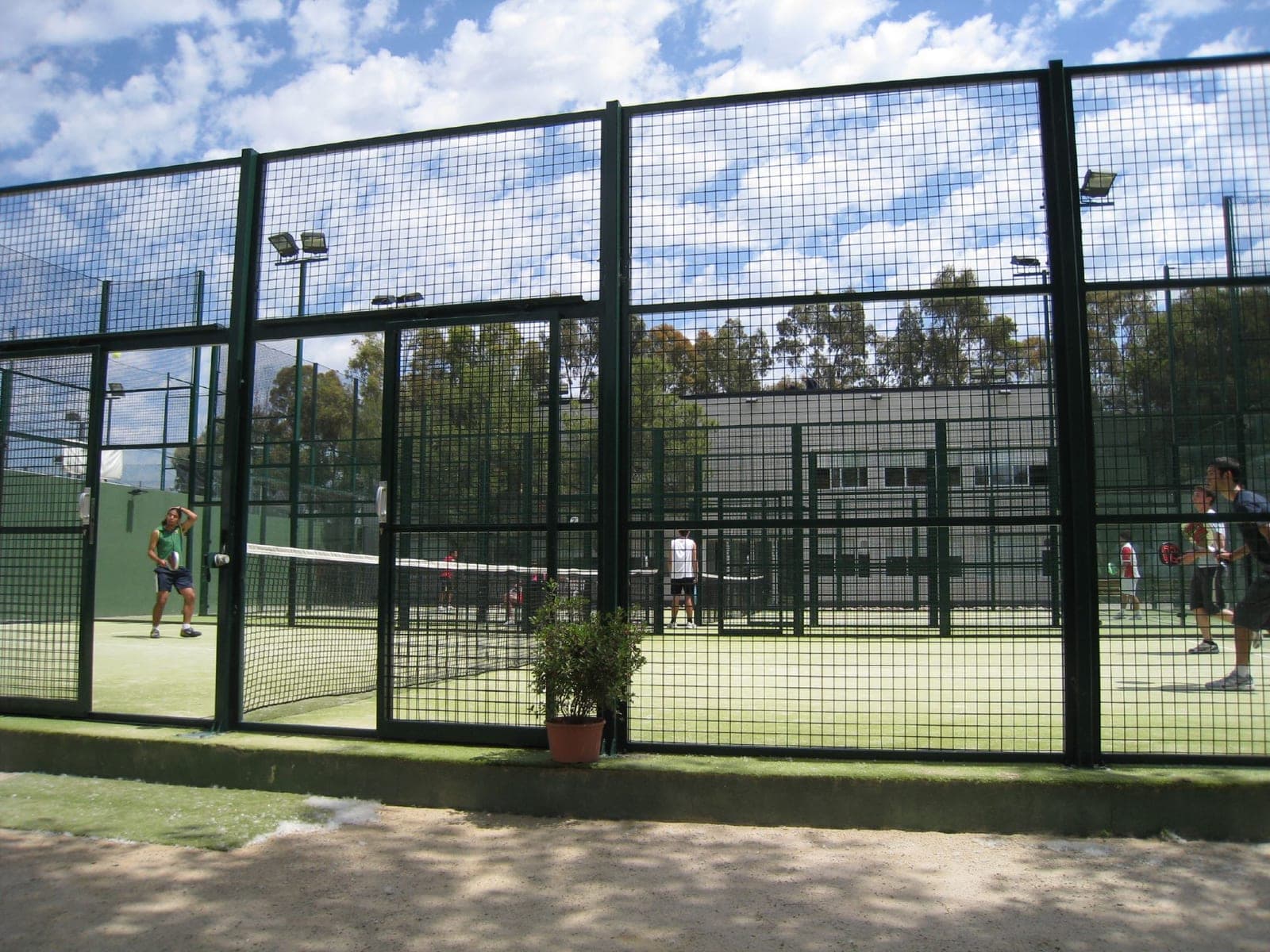
A padel racket has no strings. Instead it uses a solid hitting surface, usually perforated with holes, and a shorter frame than a tennis racquet. A wrist strap is normally attached so the racket stays in the player’s hand during fast exchanges.
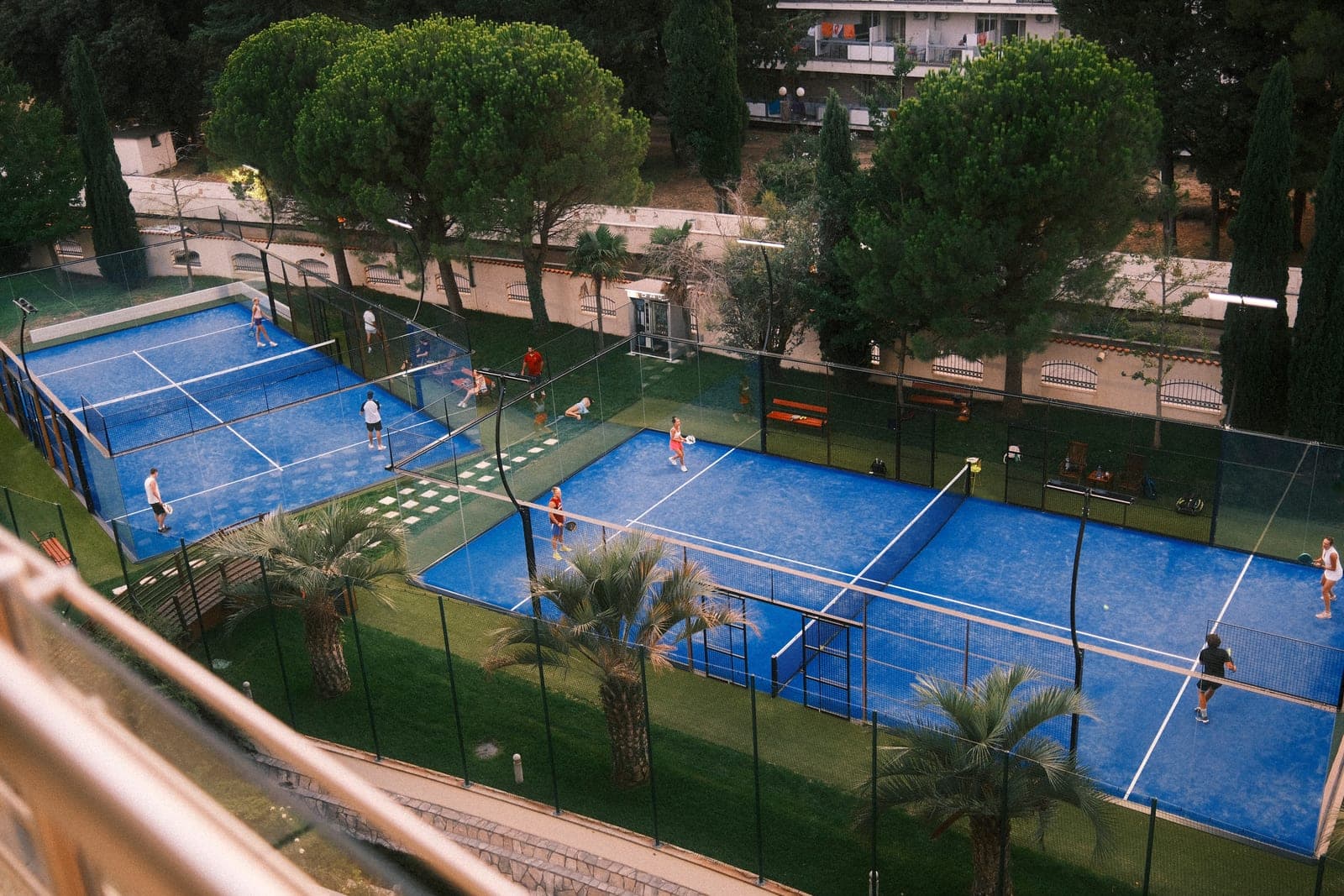
The compact, stringless design suits the enclosed padel court, where the walls are part of play and shots are generally shorter and more controlled than in tennis.
Good to know
- Shorter and stringless compared with a tennis racquet.
- Usually has a wrist strap for security during rallies.
- The perforated face is a defining feature of the racket.
Where it’s used
Sports that use padel racket:

Related equipment
The padel net
The net that divides a padel court — its two different heights, the maximum post height, the white strip that tops it, and why the posts sit at the lateral limits.
The padel ball
The padel ball's own specification — diameter, weight, bounce and internal pressure — and the separate altitude ball the rules provide for above 1,000 metres.
The padel racket
What the FIP rules fix about a padel racket — the maximum length, width and thickness, the mandatory cord, and the perforation limits that define the hitting surface.
How it connects
The meaning-bearing relationships that place Padel racket in the wider knowledge graph — each one with the reason it exists.
Frequently learned together
Taught side by side in the same stage of a learning path.
- The padel netBoth are taught in the “What you’ll need” stage of the Padel learning path.
- The padel ballBoth are taught in the “What you’ll need” stage of the Padel learning path.
- The padel racketBoth are taught in the “What you’ll need” stage of the Padel learning path.
- Padel courtBoth are taught in the “What you’ll need” stage of the Padel learning path.
- Padel court dimensionsBoth are taught in the “What you’ll need” stage of the Padel learning path.
Explore across the knowledge base
Follow the threads that connect Padel racket to the rest of SocialSportHub.
Facilities
- Padel courtAn enclosed court, much smaller than a tennis court, walled with glass and mesh so the ball can be played off the walls.
- Padel court dimensionsThe exact size and markings of a padel court under FIP rules — the 10 by 20 metre rectangle, the service lines, the line width, and the free height the rules require above it.
- Driving rangeA practice facility with hitting bays and an open landing area, used to repeat shots without playing a hole.
Techniques
- Padel BandejaA controlled overhead shot in padel, hit with slice and moderate pace to keep the player at the net without over-committing.
- Playing the walls in padelThe skill that separates padel from every other racket sport — reading a rebound off glass, positioning behind the bounce rather than at it, and using your own back wall to attack.
Learning paths
Knowledge Atlas
Go deeper with Padel racket
Everywhere else on the platform that covers Padel racket — assembled from what actually references it, so nothing here is a dead end.
Learn it
Structured courses and paths on the platform that cover this directly.
See it
Diagrams and step-through visualisations drawn for this subject.
Kit it out
Equipment guidance drawn from the graph, with no brands and no affiliate links.
Take it away
Open data and the whole-platform view of this subject.
How this page is maintained
- Content type
- Equipment
- Provenance
- Tier A — evergreen educational
- Verified external sources
- 0
- Content updated
- 2026-09-12
Evergreen, first-party explanation — it makes no claim that needs an external source. How we handle sources and reviews.