
What the Rules regulate about a tennis racket
The surprisingly short list of things the ITF fixes about a racket — a flat, uniform stringing pattern and no energy sources — and the two decided cases that settle what players may use.
Overview
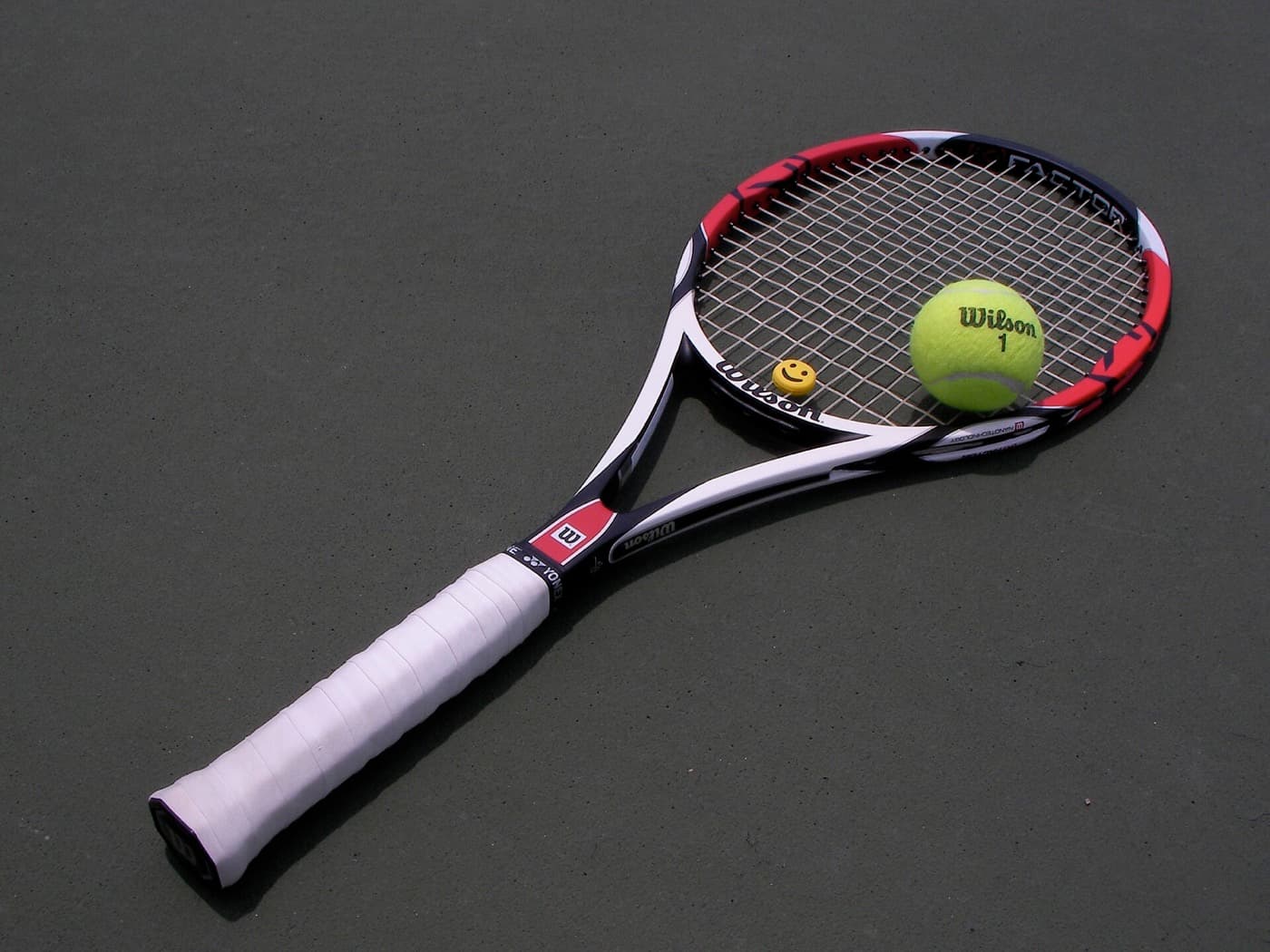
Appendix II of the Rules of Tennis is short, and its brevity is informative. The racket consists of a frame and strings. The frame consists of a handle and head and may also include a throat; the head is the part the strings connect to.
The hitting surface — the main area of the stringing pattern, bordered by the points where the strings enter the head or contact it, whichever is smaller — must be flat and consist of a pattern of crossed strings, alternately interlaced or bonded where they cross. The stringing pattern must be generally uniform.
What is NOT regulated
There is no restriction in the Rules on string tension, string material, string gauge, head size in general terms, weight, balance or stiffness. Those are the properties players and manufacturers actually talk about, and the Rules leave all of them open.
This is worth stating plainly because it is the honest answer to most equipment questions. A claim that a particular tension or head size is "legal" or "illegal" is almost always wrong: the Rules simply do not address it.
The two decided cases
The Rules include decisions that settle recurring questions. A player may not use more than one racket at any time during play. And a battery that affects playing characteristics may not be incorporated into a racket — prohibited because it is an energy source, as are solar cells and other similar devices.
The energy-source rule is the substantive restriction in the Appendix. A racket may be made of anything and strung however the player likes, but it may not be powered.
Uniformity is the real constraint
The requirement that the stringing pattern be "generally uniform" is the clause that prevents a racket from having a deliberately different string density in one part of the hitting surface — which could otherwise be used to impart spin far beyond what a conventional pattern allows.
Together with the requirement that the hitting surface be flat, it is what keeps rackets recognisably rackets while leaving almost everything else to the manufacturer.
Good to know
- The racket is a frame and strings; the hitting surface must be flat.
- Strings must be alternately interlaced or bonded, in a generally uniform pattern.
- The Rules do not regulate tension, gauge, material, weight or balance.
- A player may not use more than one racket at a time.
- Batteries, solar cells and other energy sources are prohibited.
Where it’s used
Sports that use what the rules regulate about a tennis racket:
Related equipment
Tennis racquet
A strung frame with a handle, used to hit the ball in tennis. Head size, weight and balance vary to suit different playing styles.
Tennis ball
A hollow rubber ball covered in felt used in tennis and related racquet sports.
Sports bag
A roomy bag for carrying kit, footwear and gear to and from training, usually with a separate compartment for wet or muddy items.
Sources
The rules, dimensions and specifications on this page were read from these documents.
- ITF Rules of Tennis — International Tennis Federation, 2026, Appendix II — The racket; Rule 4 decided cases (read 2026-09-12)
How it connects
The meaning-bearing relationships that place What the Rules regulate about a tennis racket in the wider knowledge graph — each one with the reason it exists.
Frequently learned together
Taught side by side in the same stage of a learning path.
- Tennis racquetBoth are taught in the “What you’ll need” stage of the Tennis learning path.
- Tennis ballBoth are taught in the “What you’ll need” stage of the Tennis learning path.
- Sports bagBoth are taught in the “What you’ll need” stage of the Tennis learning path.
- The tennis net, posts and singles sticksBoth are taught in the “What you’ll need” stage of the Tennis learning path.
- Tennis ball types and specificationsBoth are taught in the “What you’ll need” stage of the Tennis learning path.
Part of
The wider grouping this belongs to.
Explore across the knowledge base
Follow the threads that connect What the Rules regulate about a tennis racket to the rest of SocialSportHub.
Learning paths
Scoring systems
- Tiebreak scoringA tiebreak is a short deciding game used in racket sports to settle a set that has reached an even number of games, scored in simple numbers to a fixed target.
- Tennis scoring systemsThe scoring methods the ITF Rules actually authorise — the advantage set, the tie-break set, the standard tie-break game, and the short sets and match tie-breaks in Appendix VI.
Rules
- Two-bounce ruleA pickleball rule requiring both the serve and the return to bounce once before players may hit the ball out of the air.
- Continuous play and the time between pointsWhat the ITF Rules say about pace of play — 25 seconds between points, 90 seconds at a changeover, 120 at a set break — and why tour rulebooks are a separate document.
- Drafting rulesRules that govern when a rider or athlete may sit in the slipstream of another to save energy.
- How a point is won in table tennisThe full list of ways a player scores — the returns that fail, the ball through the net, the double hit, the free-hand touch, and the moving-table rule most players never meet.
- The maulThe contest for a ball held off the ground in rugby union — how a maul differs from a ruck, why that difference changes what players may legally do, and why it is a driving weapon.
Movement comparisons
- Lunge vs SquatLunge vs Squat: how these two movements differ, what they share, and how to tell them apart — from mechanics to the sports that use them.
- Hinge vs SquatHinge vs Squat: how these two movements differ, what they share, and how to tell them apart — from mechanics to the sports that use them.
- Hinge vs LungeHinge vs Lunge: how these two movements differ, what they share, and how to tell them apart — from mechanics to the sports that use them.
- Crossover Step vs LungeCrossover Step vs Lunge: how these two movements differ, what they share, and how to tell them apart — from mechanics to the sports that use them.
- Acceleration vs JumpAcceleration vs Jump: how these two movements differ, what they share, and how to tell them apart — from mechanics to the sports that use them.
Go deeper with What the Rules regulate about a tennis racket
Everywhere else on the platform that covers What the Rules regulate about a tennis racket — assembled from what actually references it, so nothing here is a dead end.
Learn it
Structured courses and paths on the platform that cover this directly.
Take it away
Open data and the whole-platform view of this subject.
How this page is maintained
- Content type
- Equipment
- Provenance
- Tier A — evergreen educational
- Verified external sources
- 0
- Content updated
- 2026-09-01
Evergreen, first-party explanation — it makes no claim that needs an external source. How we handle sources and reviews.