
Two-bounce rule
A pickleball rule requiring both the serve and the return to bounce once before players may hit the ball out of the air.
Overview
After the serve, the receiving side must let the ball bounce before returning it, and the serving side must then let the return bounce as well. Only after these two bounces may either team volley the ball, meaning hit it before it bounces.
The rule stops the serving team from rushing the net immediately and gives both sides a fair chance to reach the front of the court. It is also known as the double-bounce rule.
Key points
- The return of serve must be played off a bounce.
- The serving team must also let the return bounce.
- Volleys are only allowed after those first two bounces.
- The rule prevents an immediate serve-and-volley rush.
Where it’s used
Sports that use two-bounce rule:
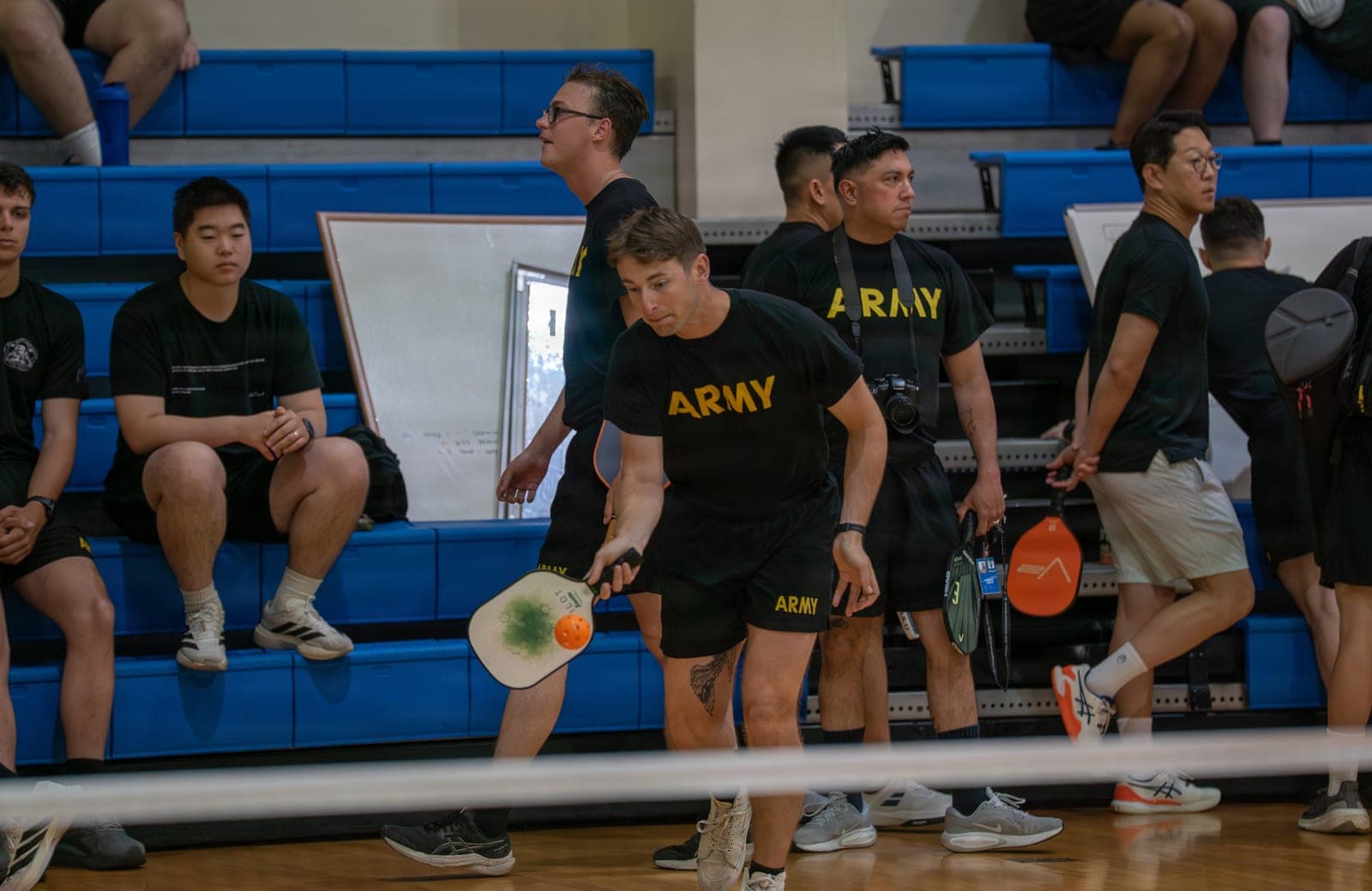
How it connects
The meaning-bearing relationships that place Two-bounce rule in the wider knowledge graph — each one with the reason it exists.
Frequently learned together
Taught side by side in the same stage of a learning path.
Explore across the knowledge base
Follow the threads that connect Two-bounce rule to the rest of SocialSportHub.
Tactics
- Serve and volleyAn attacking tennis tactic where the server follows their serve to the net to finish the point with a volley.
- Serve and third ballTable tennis's most-rehearsed tactical pattern — using a serve to force a predictable return so the third ball of the rally can be attacked from a known position.
- Serve +1 and return +1The two-shot patterns that decide short points — how a serve's direction determines where the reply comes from, and how a returner uses the same idea against the server.
Equipment
- Pickleball paddleA solid, flat paddle used to hit the perforated plastic ball in pickleball.
- What the Rules regulate about a tennis racketThe surprisingly short list of things the ITF fixes about a racket — a flat, uniform stringing pattern and no energy sources — and the two decided cases that settle what players may use.
- The rugby union ballThe oval ball that shapes how rugby union is passed and kicked — its weight, air pressure, construction and the provision that lets younger players use a smaller one.
- The padel ballThe padel ball's own specification — diameter, weight, bounce and internal pressure — and the separate altitude ball the rules provide for above 1,000 metres.
- Squash racquetA slim strung racquet used to hit the ball against the walls in squash.
Techniques
- VolleyA shot played near the net by blocking the ball out of the air before it bounces, using a short, firm punch rather than a full swing.
- The return of serveTennis's most under-coached shot — where to stand against a first and second serve, why blocking beats swinging, and what the Rules allow a returner to do.
- Seam bowlingMovement off the pitch rather than through the air — how landing the ball on its seam deviates it at the bounce, and why seam and swing are different skills that look alike.
- Bunker ShotThe greenside sand shot where the club enters the sand behind the ball and lifts it out on a cushion of sand.
- Spin in table tennisWhy table tennis is a spin sport before it is a speed sport — how topspin, backspin and sidespin change a ball's flight and its bounce off an opponent's bat.
Disciplines
Go deeper with Two-bounce rule
Everywhere else on the platform that covers Two-bounce rule — assembled from what actually references it, so nothing here is a dead end.
Learn it
Structured courses and paths on the platform that cover this directly.
Take it away
Open data and the whole-platform view of this subject.
How this page is maintained
- Content type
- Rule
- Provenance
- Tier A — evergreen educational
- Verified external sources
- 0
- Content updated
- 2026-09-12
Evergreen, first-party explanation — it makes no claim that needs an external source. How we handle sources and reviews.