
Eskimo Roll (Kayak Roll)
A paddling technique for righting a capsized kayak or canoe while remaining seated in it, using a coordinated hip and paddle motion.
Definition
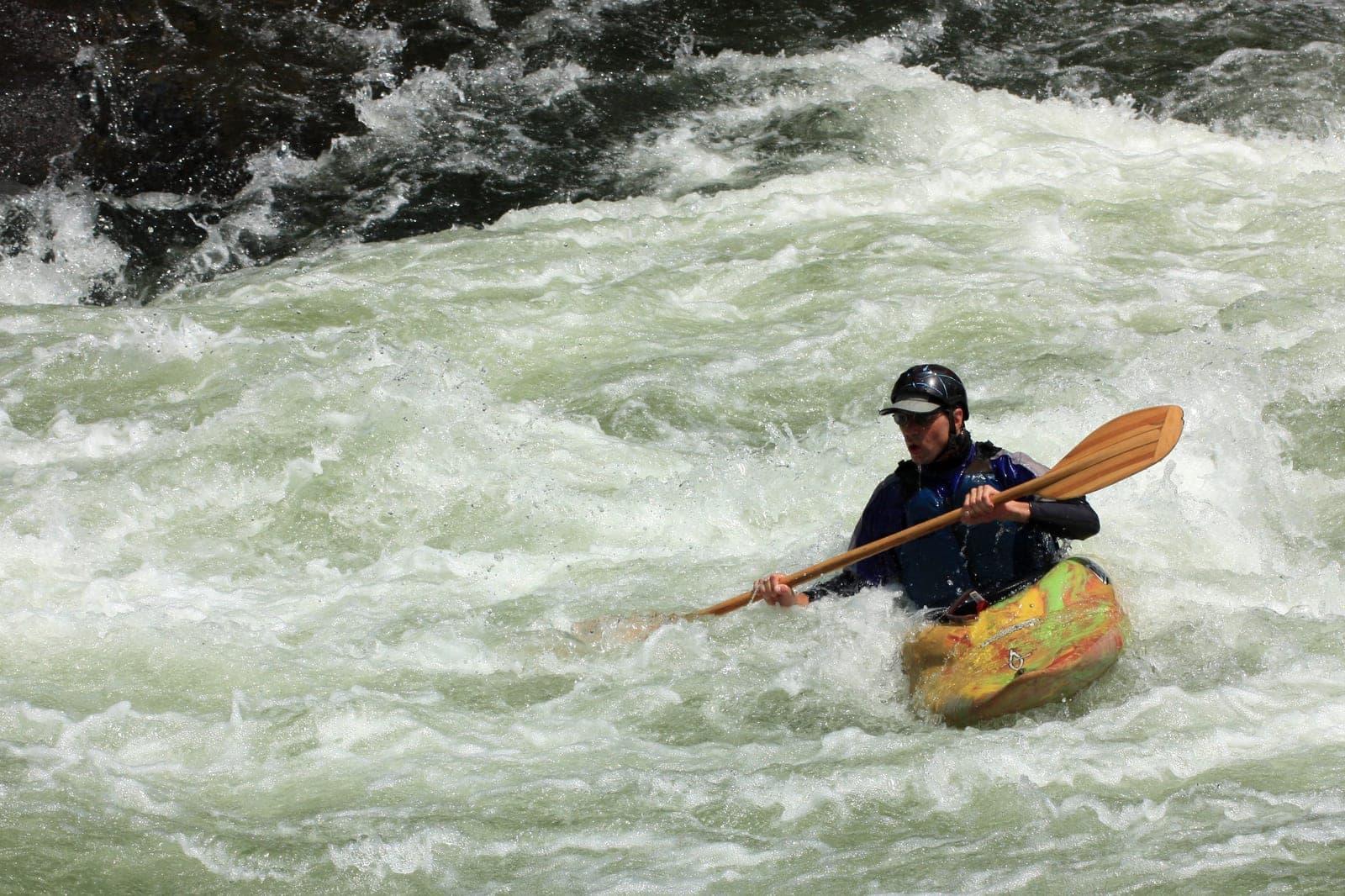
The roll is a self-rescue technique in which a capsized paddler brings the boat back upright without exiting it. The key action is a hip snap that rotates the boat under the body, supported by a sweeping paddle stroke that provides a brief brace at the surface. Being able to roll lets paddlers recover from a capsize quickly in surf, whitewater or open water.
The technique has long been known as the Eskimo roll, but many paddlers and organisations now prefer 'kayak roll', 'combat roll' or simply 'roll', because 'Eskimo' is regarded by some Inuit and other Arctic peoples as outdated or offensive. The skill itself traces to Arctic kayaking traditions, where reliably righting a capsized kayak in cold water was essential to survival.
Scope: Increasingly called the 'kayak roll' or 'combat roll'; the word 'Eskimo' is regarded by some as outdated or offensive.
Where you’ll hear “eskimo roll (kayak roll)”
Sports that use this term:

Explore across the knowledge base
Follow the threads that connect Eskimo Roll (Kayak Roll) to the rest of SocialSportHub.
Disciplines
- Slalom (Whitewater Gates)Slalom kayaking times paddlers through a sequence of hanging gates on whitewater, combining precise boat control with reading fast-moving current.
- Whitewater & CreekingWhitewater kayaking is the descent of moving rivers and rapids, with creeking focused on steep, technical drops and low-volume runs.
- Sea Kayaking (Touring)Sea kayaking is touring open water in longer, storage-equipped boats, emphasizing efficient paddling, navigation, and endurance over distance.
- SUP SurfingSUP surfing is riding waves on a stand-up paddleboard, staying upright and using a long paddle to catch waves and steer through the ride.
Sport categories
Go deeper with Eskimo Roll (Kayak Roll)
Everywhere else on the platform that covers Eskimo Roll (Kayak Roll) — assembled from what actually references it, so nothing here is a dead end.
Take it away
Open data and the whole-platform view of this subject.
How this page is maintained
- Content type
- Term
- Provenance
- Tier A — evergreen educational
- Verified external sources
- 0
- Content updated
- 2026-09-01
Evergreen, first-party explanation — it makes no claim that needs an external source. How we handle sources and reviews.