
Setting a cricket field
How a captain turns nine fielders into a plan — attacking and defensive settings, the trade between catchers and boundary riders, and the fielding restrictions competitions add.
Overview
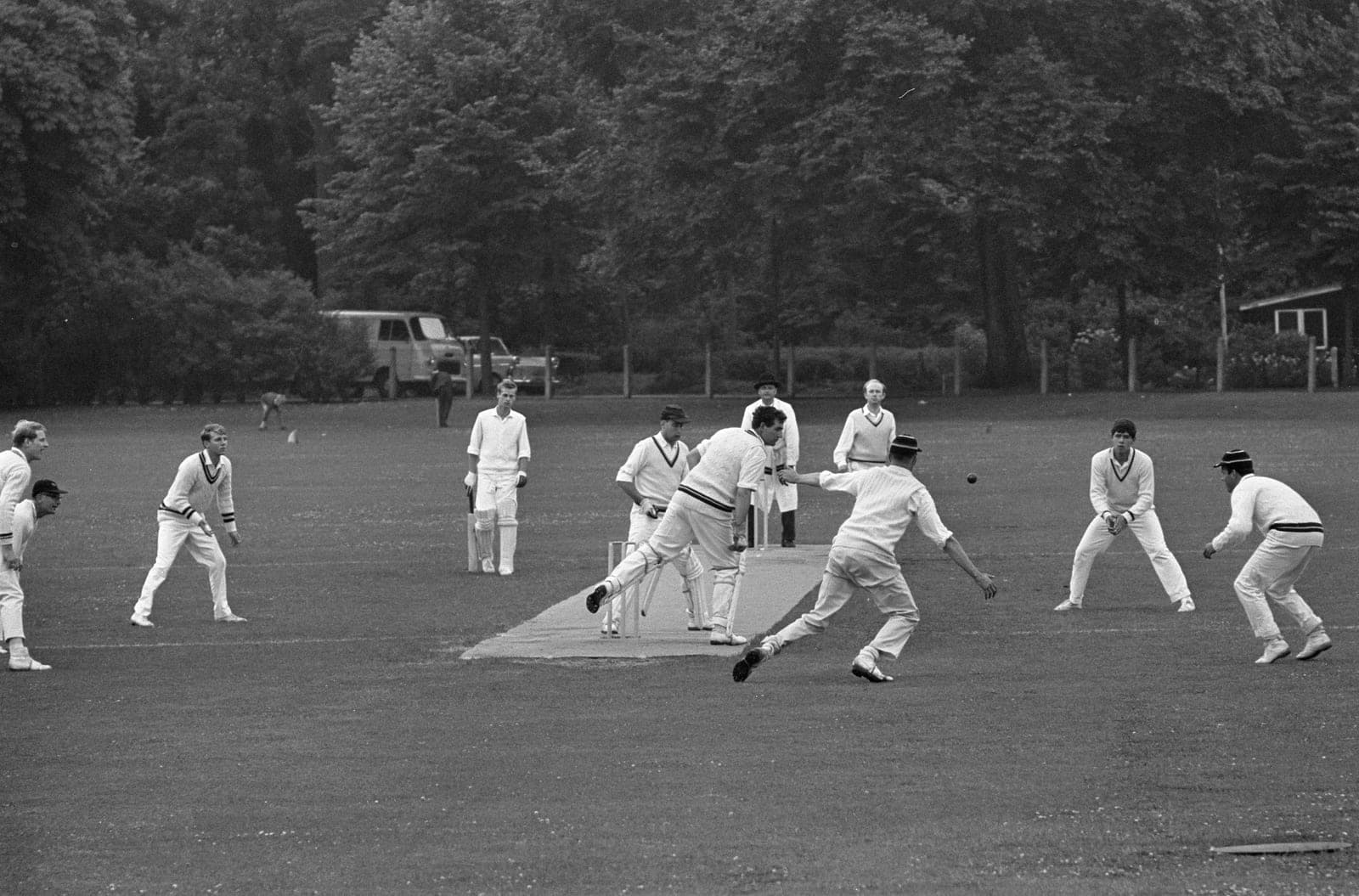
A captain has nine fielders to place besides the bowler and the wicketkeeper, and no rule requiring any particular arrangement. Field placement is therefore the clearest expression of what a bowling side is trying to do.
Every field is a trade. A fielder in the ring saves a single but cannot stop a boundary; a fielder on the rope does the reverse. A catcher close to the bat threatens a wicket but leaves an area unguarded.
Attacking and defensive fields
An attacking field brings fielders in and puts catchers behind the bat: slips, gully, short leg. It accepts that a well-struck ball will reach the boundary, and it is bought with the expectation that the bowler will create a chance first.
A defensive field pushes fielders back to the ring and the rope, cutting off singles and boundaries but removing catchers. Captains move between the two constantly — a new batter usually sees an attacking field, a set batter a defensive one.
The field must match the bowling
A field only works if the bowler bowls to it. Three slips are worthless to a bowler aiming at leg stump, and a packed leg side is worthless to a bowler who keeps drifting outside off. The commonest failure in amateur cricket is a field set for a plan the bowler is not executing.
This is also how a batter reads the game. If the field says one thing and the bowling says another, the bowler is under pressure — and the areas the captain has protected reveal what they are most afraid of.
Fielding restrictions are competition rules
In limited-overs cricket, phases known as powerplays restrict how many fielders may stand outside the inner circle. Early overs force fielders up, which makes boundaries easier and rewards aggressive batting; later phases relax the restriction and let a captain defend the rope.
These are ICC and domestic competition playing conditions. They are not Laws of Cricket, they differ between formats and competitions, and none of them applies to a Test match.
Key points
- Every fielder placed is a choice between saving singles and saving boundaries.
- Attacking fields buy wicket chances by conceding scoring areas.
- A field is only as good as the bowler's ability to bowl to it.
- Gaps left open are usually invitations to play a risky stroke.
- Powerplay restrictions are competition rules, absent from Test cricket and the Laws.
Where it’s used
Sports that use setting a cricket field:
Related tactics
Strike rotation
Why singles matter more than they look in cricket — how rotating the strike unsettles a bowler's rhythm, protects a struggling batter, and is decided by the over structure itself.
Playing spin bowling
What a batter actually does against a spinner — using the crease and the feet to change the length, picking the ball from the hand, and the options when the pitch is turning sharply.
Sources
The rules, dimensions and specifications on this page were read from these documents.
- The Laws of Cricket — Marylebone Cricket Club (MCC), 2017 Code, Law 28 — The fielder (read 2026-09-12)
- ICC Men's Test Match Playing Conditions — International Cricket Council, Playing conditions — fielding restrictions (read 2026-09-12)
How it connects
The meaning-bearing relationships that place Setting a cricket field in the wider knowledge graph — each one with the reason it exists.
Builds on
Understanding these first makes this one make sense.
Explained by
The underlying "why" behind this.
Frequently learned together
Taught side by side in the same stage of a learning path.
- Strike rotationBoth are taught in the “Understand tactics & strategy” stage of the Cricket learning path.
- Playing spin bowlingBoth are taught in the “Understand tactics & strategy” stage of the Cricket learning path.
- Attacking vs Defensive BalanceBoth are taught in the “Understand tactics & strategy” stage of the Cricket learning path.
- Controlling TempoBoth are taught in the “Understand tactics & strategy” stage of the Cricket learning path.
- Game managementBoth are taught in the “Understand tactics & strategy” stage of the Cricket learning path.
Explore across the knowledge base
Follow the threads that connect Setting a cricket field to the rest of SocialSportHub.
Facilities
- The cricket field and boundaryHow the edge of a cricket field is defined and marked, what scores four and what scores six, and why the Laws set no boundary distance while international playing conditions do.
- VelodromeA steeply banked oval track for track cycling, with sloped bends that let riders hold high speeds through the turns.
Strategies
- Attacking vs Defensive BalanceThe overarching choice a team or athlete makes about how much to commit to creating scoring chances versus avoiding conceding, and when to shift it.
- Controlling TempoControlling tempo is the strategy of dictating the pace and rhythm of play — speeding up or slowing down — to suit your strengths and unsettle opponents.
- Game managementAdapting how a team or athlete plays to the scoreline and time remaining — protecting a lead, chasing a result or seeing out the closing stages.
- Using Width and SpaceA side's plan to stretch the playing area and open gaps when attacking, then shrink and control that space when defending.
- Transition PlayTransition play is the strategy of switching quickly between attack and defence the moment possession changes, exploiting the opponent's brief disorganisation.
Rules
- Test, ODI and T20 cricket comparedThe three international formats of cricket side by side — innings structure, over limits and match length — and why almost everything that separates them is a competition rule rather than a Law.
- Backcourt violationA basketball rule breach for returning the ball into a team's own defensive half after it has crossed into the attacking half.
Techniques
- The pull and the hookThe two cross-batted strokes that punish short bowling — how the pull and the hook differ, the height of the ball that separates them, and the risk each one carries.
- Pace bowlingWhat fast bowling is actually for — how speed reduces a batter's reaction time, what the short ball and the yorker each achieve, and how a pace attack uses length as its main variable.
- The sweepThe stroke that turns a good-length spinning delivery into a scoring opportunity — the conventional sweep, the slog sweep and the reverse sweep, and the LBW risk each one accepts.
Go deeper with Setting a cricket field
Everywhere else on the platform that covers Setting a cricket field — assembled from what actually references it, so nothing here is a dead end.
Learn it
Structured courses and paths on the platform that cover this directly.
How this page is maintained
- Content type
- Tactic
- Provenance
- Tier A — evergreen educational
- Verified external sources
- 0
- Content updated
- 2026-09-12
Evergreen, first-party explanation — it makes no claim that needs an external source. How we handle sources and reviews.