
Face-offs
How every hockey stoppage restarts — the nine face-off locations, why the location is itself a sanction, and the techniques centres use to win possession.
Overview
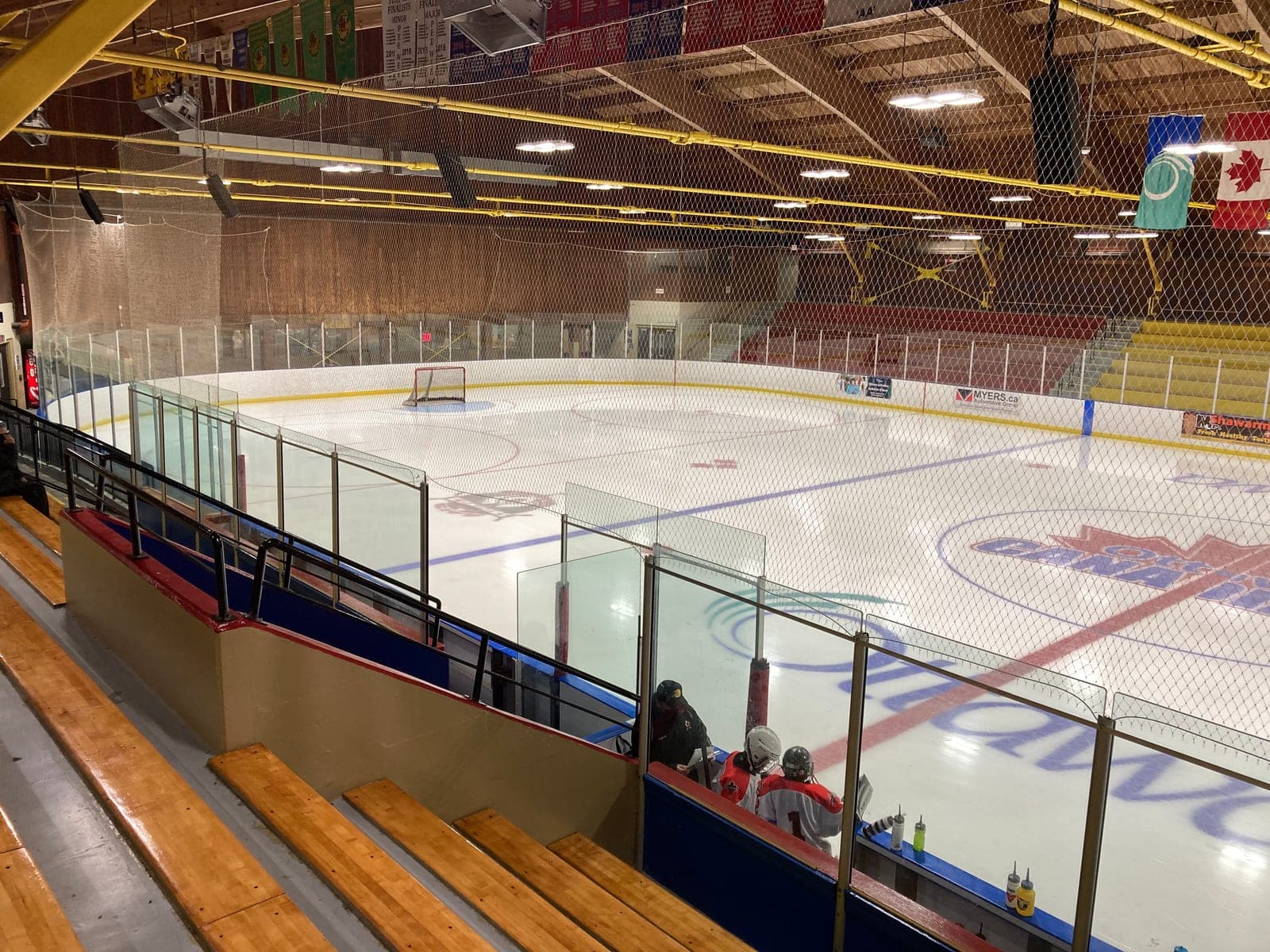
Play restarts with a face-off: two opposing players, usually centres, facing each other at a marked spot while the linesperson drops the puck between them. There are nine spots — one at centre ice, four in the neutral zone and four in the end zones.
Which spot is used is determined by what caused the stoppage, and that choice is frequently the real consequence of an infraction rather than an administrative detail.
Location as punishment
After icing, the face-off is taken in the offending team's own end zone — and the offending team may not change lines. A tired defensive unit is pinned in its own zone against a fresh attacking line. That is a substantial disadvantage created entirely by where the puck is dropped.
If a linesperson errs in calling icing, the face-off is taken at centre ice instead. The correction is geographic, because the location was the penalty.
Winning the draw
Centres win face-offs in several ways: pulling the puck backwards to a team-mate, tying up the opposing stick and letting a winger take the loose puck, or winning it forward into space. The technique chosen depends on where the face-off is and what the team wants to do next.
Handedness matters because the geometry differs on each side of the ice. A left-handed centre pulling the puck back on one side is working with their natural motion; on the other side, the same pull sends the puck to a different place.
Everyone else has a job
A face-off is a five-player set piece rather than a duel. Wingers are assigned to opposing players, defence position for a loose puck, and everyone knows where the puck is intended to go if the centre wins it cleanly.
In the defensive zone the priority is usually to get the puck out cleanly; in the offensive zone it is often to win it back to the point for a shot. The same draw is played differently depending on which end of the rink it is in.
Key points
- There are nine face-off spots and the location is decided by the stoppage.
- An icing face-off in your own end with no line change is the real penalty.
- Centres can win a draw backwards, by tying up the stick, or forwards into space.
- Handedness changes the geometry of a draw on each side of the ice.
- All five skaters have assignments on a face-off, not just the centre.
Where it’s used
Sports that use face-offs:
Related techniques
Ice hockey skating
The skill everything else in hockey sits on — how a skater generates power from the edges, why stopping and turning use the same mechanism, and what makes crossovers faster than striding.
Stickhandling
How a hockey player carries and protects the puck at speed — why the hands work independently of the feet, the role of soft hands, and how body position beats stick skill.
Ice hockey shooting
The four shots hockey is scored with — wrist shot, snap shot, slap shot and backhand — how each trades power against release time, and why the stick is bent on purpose.
Sources
The rules, dimensions and specifications on this page were read from these documents.
- IIHF Official Rule Book — International Ice Hockey Federation, 2026/27, Icing; Appendix VI — Face-off spot and circle (read 2026-09-12)
How it connects
The meaning-bearing relationships that place Face-offs in the wider knowledge graph — each one with the reason it exists.
Builds on
Understanding these first makes this one make sense.
Explained by
The underlying "why" behind this.
Explore across the knowledge base
Follow the threads that connect Face-offs to the rest of SocialSportHub.
Rules
- IcingThe rule that stops a team simply firing the puck the length of the ice — what triggers icing, what nullifies it, the goaltender exception, and the line-change penalty that follows.
- Knock-on and forward passThe rule that makes rugby a backwards-passing game — what counts as a knock-on, what makes a pass forward, and why the sanction is usually a scrum rather than a penalty.
- Direct and indirect free kicksThe two types of free kick awarded in football to restart play after a foul or other stoppage.
Positions
- Ice hockey positionsThe six players on the ice and what each does — centre, two wings, two defence and the goaltender — plus why hockey substitutes in lines rather than individually.
- Goal shooterThe goal shooter is a netball attacker who scores goals and is one of only two players allowed to shoot, working within the attacking goal third and circle.
- Wing attackThe wing attack is a netball playmaker who feeds the ball into the shooting circle, moving through the centre and attacking thirds but not entering the goal circle.
Exercises
Learning paths
- Learn TennisA structured, educational learning path for tennis — from the rules to skills, techniques, tactics and training.
- Learn FootballA structured, educational learning path for football — from the rules to skills, techniques, tactics and training.
- Learn RunningA structured, educational learning path for running — from the rules to skills, techniques, tactics and training.
- Learn BasketballA structured, educational learning path for basketball — from the rules to skills, techniques, tactics and training.
- Learn SwimmingA structured, educational learning path for swimming — from the rules to skills, techniques, tactics and training.
Go deeper with Face-offs
Everywhere else on the platform that covers Face-offs — assembled from what actually references it, so nothing here is a dead end.
Take it away
Open data and the whole-platform view of this subject.
How this page is maintained
- Content type
- Technique
- Provenance
- Tier A — evergreen educational
- Verified external sources
- 0
- Content updated
- 2026-09-12
Evergreen, first-party explanation — it makes no claim that needs an external source. How we handle sources and reviews.