
Learn Basketball
A clear, structured way to learn basketball — what to focus on first, and how it all fits together. Self-paced and educational.
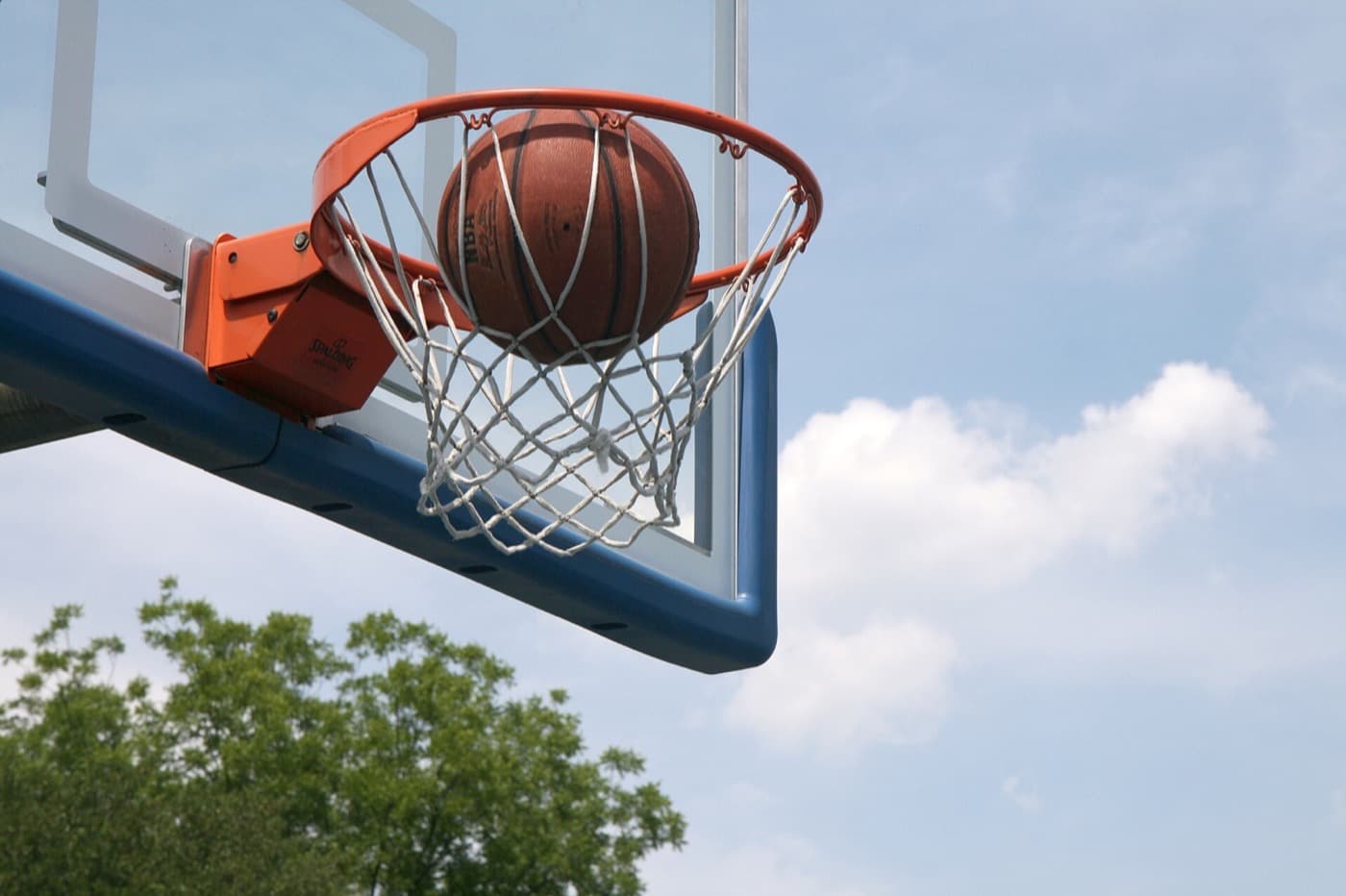

Basketball is a team sport where players score by shooting a ball through an elevated hoop. It flows quickly between attack and defence, with constant movement, jumping and rapid decision-making.
This path walks through the sport in a sensible order — from understanding the game to training for it. Work through it at your own pace; every step links to a clear guide.
Get to know the game
Start with how the sport works — the basic rules and how it is scored. A few minutes here saves confusion later.
Milestone: You can explain the aim of the game, its basic rules and how it is scored.
What you’ll need
The essential equipment, and the kind of place you’ll play. Most sports need far less to get started than people expect.
Milestone: You know what equipment you need to start and the kind of place the sport is played.
Learn the core skills
The fundamental skills the sport is built on. These are what to practise first — everything else builds on them.
Milestone: You can name the core skills and know which ones to practise first.
Build your technique
How specific movements and shots are performed. Learn these once the basics feel comfortable, one at a time.
Milestone: You understand how the key techniques are performed and when they are used.
Understand tactics & strategy
How the game is actually played and thought about — the tactics and bigger-picture strategy that turn skills into a game.
Milestone: You can follow how the game is played tactically, not just physically.
Find your position or role
Where you fit in — the positions and roles players take on, and what each one does.
Milestone: You know the positions or roles and what each one is responsible for.
Train your body for it
The physical qualities the sport asks for, and ways to build them. Educational — not a personalised plan.
Milestone: You know which physical qualities the sport asks for and, in general terms, how they are built.
Keep getting better
How improvement actually happens — the practice principles and the science beneath them apply to every sport.
Milestone: You understand how improvement actually happens and where to go deeper.
Where the path leads next
Once the fundamentals feel comfortable, these are the natural next steps — all educational, all self-paced.
A structured guide, not a coaching programme
More sports to learn
How it connects
The meaning-bearing relationships that place Learn Basketball in the wider knowledge graph — each one with the reason it exists.
Prepared by
The on-ramp people usually take before this.
Explore across the knowledge base
Follow the threads that connect Learn Basketball to the rest of SocialSportHub.
Beginner guides
- Your first basketball sessionA first basketball session is a friendly, fast-moving introduction to handling the ball, moving your feet and sharing simple play with others — no experience or prior skill needed.
- Your first running sessionA warm, honest picture of what a first running session actually feels like — so you can turn up relaxed, run at a comfortable effort, and enjoy it without any pressure to be fast.
Glossary
- Fast breakAn attacking play in basketball where a team pushes the ball up the court quickly to score before the defence is set.
- BaselineThe line marking the back boundary of a court, running parallel to the net or end wall.
- BalanceThe ability to control the body's position by keeping its centre of gravity over the base of support, whether still or moving.
- Zone defenceA defensive system in which each player guards a specific area of the court or field rather than a specific opponent.
- Hard CourtA rigid tennis or racket-sport surface of acrylic-coated concrete or asphalt that gives a medium-fast, true and consistent bounce.
Decision making
- Positioning choicesDeciding where to place yourself — often before the ball arrives — to cover space, stay ready to act and shape what an opponent can do.
- Transition decisionsThe choices made at the moment a situation flips — winning or losing the ball, and switching between attack and defence.
- Decision speedHow quickly a choice is made — the tempo of deciding, and how it trades off against getting the choice right.
- Pacing decisionsIn-the-moment choices about how to spend energy over time — when to push, hold back, conserve or surge.
- Pass selectionChoosing which pass to play, and to whom, from the options a moment offers — weighing space, risk and what the team is trying to do.
Exercises
- High kneesA running-in-place cardio drill where you lift the knees high with a quick rhythm.
- Kettlebell swingA dynamic hinge where you swing a kettlebell to shoulder height using a snap of the hips.
- Mountain climberA dynamic exercise where you drive your knees toward your chest one at a time from a plank.
- Jumping jackA rhythmic cardio move where you jump the feet out and swing the arms overhead, then back in.
How this page is maintained
- Content type
- Learning path
- Provenance
- Tier A — evergreen educational
- Verified external sources
- 0
- Content updated
- 2026-09-12
Evergreen, first-party explanation — it makes no claim that needs an external source. How we handle sources and reviews.
Ready to start basketball?
Follow the path, or jump straight into the full sport guide whenever you like.