
Ice hockey positions
The six players on the ice and what each does — centre, two wings, two defence and the goaltender — plus why hockey substitutes in lines rather than individually.
Overview
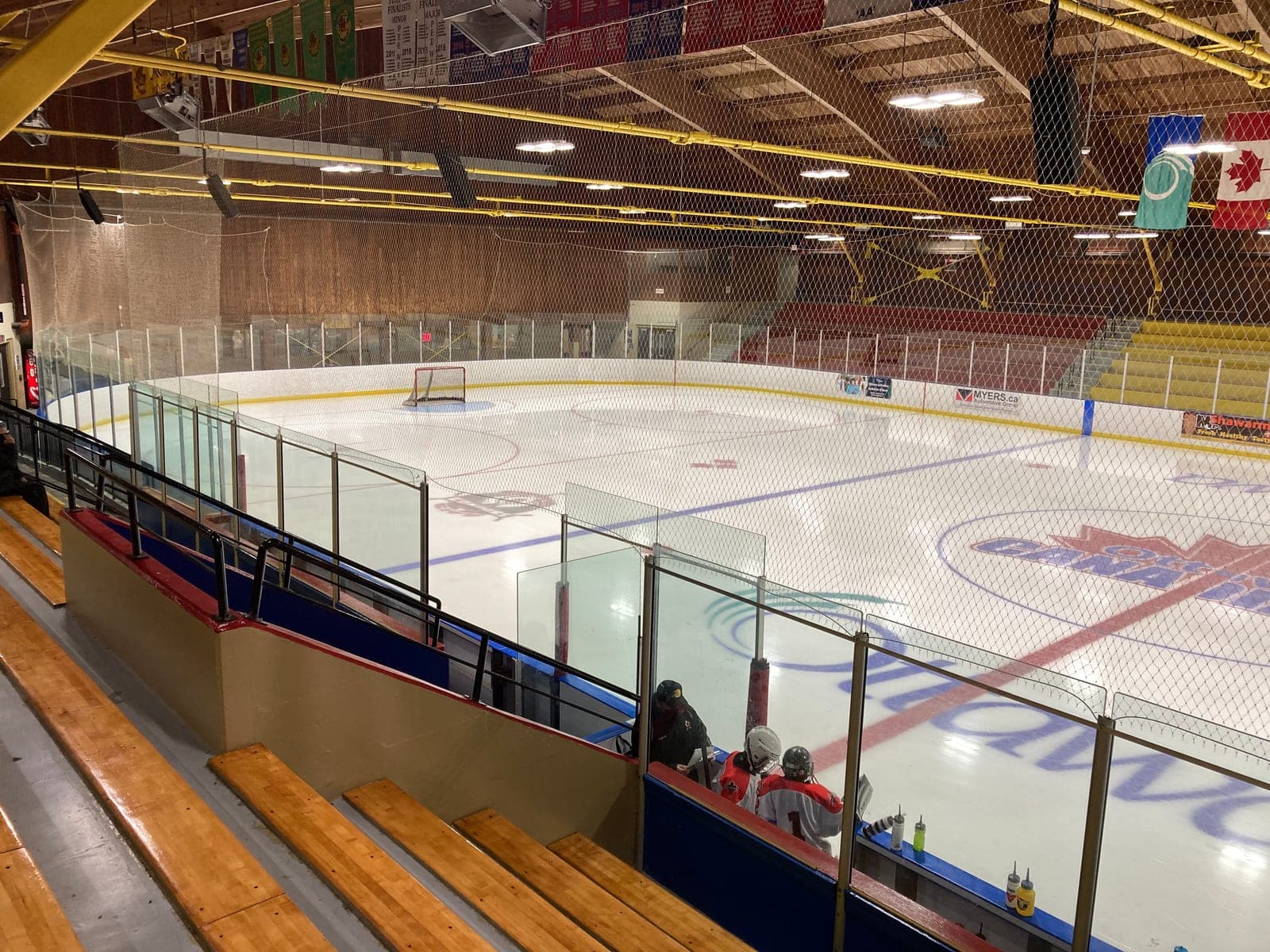
A team plays with six players on the ice: three forwards, two defence and a goaltender. The forwards are a centre and two wings; the defence pair split the ice left and right.
What makes hockey positions unusual is that players are substituted constantly and in groups. Forwards change as a line of three, defence as a pair, and a shift typically lasts well under a minute because the sport is played at an intensity that cannot be sustained longer.
The forwards
The centre plays through the middle of the ice, takes most face-offs, and is usually the forward with the most defensive responsibility — covering the high slot in the defensive zone and supporting the defence on breakouts.
The two wings play the left and right lanes. In attack they drive the outside, take passes off the boards and go to the net; in the defensive zone they typically cover the opposing defence at the points. A winger's side is usually chosen to match their handedness, though many players play both.
The defence
The two defence operate as a pair, one on each side of the ice. Their primary job is to deny entry to the defending zone, to win the puck behind their own net and to start the breakout — the transition from defending to attacking.
In the attacking zone they hold the blue line at the points, which keeps the puck in the zone and creates shooting angles from distance. A defenceman who leaves the point early gives up the zone; one who never joins the attack gives up a shooting option.
Lines and matching
Because changes happen on the fly as well as at stoppages, a coach can influence which of their lines faces which of the opposition's. The home team gets the last change at every stoppage, which is the concrete advantage of home ice: it lets a coach put a chosen line against the opposition's.
Line changes also explain why icing's no-substitution rule bites so hard. A team that ices the puck must keep a tired line on the ice for a defensive-zone face-off, which is a far larger penalty than it first appears.
Responsibilities
- Six players are on the ice: three forwards, two defence, one goaltender.
- The centre takes most face-offs and carries the most defensive responsibility among forwards.
- Defence operate as a pair and start the breakout from behind their own net.
- Substitutions happen in lines and pairs, including on the fly.
- The home team has the last change, which is what home-ice advantage actually is.
Where it’s used
Sports that use ice hockey positions:
Sources
The rules, dimensions and specifications on this page were read from these documents.
- IIHF Official Rule Book — International Ice Hockey Federation, 2026/27, Rule 5 — Team (read 2026-09-12)
How it connects
The meaning-bearing relationships that place Ice hockey positions in the wider knowledge graph — each one with the reason it exists.
Frequently learned together
Taught side by side in the same stage of a learning path.
Explore across the knowledge base
Follow the threads that connect Ice hockey positions to the rest of SocialSportHub.
Techniques
- Ice hockey skatingThe skill everything else in hockey sits on — how a skater generates power from the edges, why stopping and turning use the same mechanism, and what makes crossovers faster than striding.
- Face-offsHow every hockey stoppage restarts — the nine face-off locations, why the location is itself a sanction, and the techniques centres use to win possession.
- Forward and back defenceThe two strokes a batter survives with — the forward defensive and the back defensive — when each is the right choice, and why a defensive stroke is a decision about length rather than intent.
- Movement and recovery in tennisWhy tennis footwork is mostly about getting back rather than getting there — the split step, the recovery position that is not the centre of the court, and sliding on clay.
- Flat, slice and kick servesThe three serves and what actually separates them — the contact point on the ball and the toss that makes it possible — plus what each one does to the ball after it bounces.
Tactics
- The forecheckHow a hockey team attacks in the opposition's defensive zone without the puck — the 1-2-2, 2-1-2 and trap approaches, and what each one risks to win the puck back.
- Zone defenceA defensive system where each player guards an area of the court rather than a specific opponent.
- Point constructionHow tennis points are built rather than won — the neutral, attacking and defensive positions, what each one permits, and why most errors come from playing the wrong shot for the position.
- Rugby union set-piece strategyWhy the scrum and lineout are attacking platforms rather than restarts — how a set piece fixes defenders in known positions, and what a team is buying when it chooses one over a kick.
- Neutral-zone play and the breakoutThe 15 metres between the blue lines where most hockey possession is decided — how a breakout moves the puck out of the defensive zone, and why zone entries are so contested.
Facilities
- The ice hockey rinkThe dimensions and markings of an IIHF ice hockey rink — length, width, corner radius, the blue and centre lines, the goal lines and the face-off circles, with the line widths the rule book specifies.
- Tennis court geometryEvery measurement on a tennis court and the rule that governs them all — court and service-box dimensions, line widths, the centre mark, and why measurements are taken to the outside of the lines.
- Golf courseA large outdoor course of individually designed holes, each running from a teeing area to a hole cut in a putting green.
- The cricket field and boundaryHow the edge of a cricket field is defined and marked, what scores four and what scores six, and why the Laws set no boundary distance while international playing conditions do.
- The rugby union fieldThe dimensions and markings of a rugby union pitch — the field of play, the in-goal areas, the 22-metre and 10-metre lines, the goal posts, and what the Laws fix versus what they leave open.
Rules
- Volleyball rotationThe rule that players rotate one position clockwise each time their team wins back the serve.
- IcingThe rule that stops a team simply firing the puck the length of the ice — what triggers icing, what nullifies it, the goaltender exception, and the line-change penalty that follows.
- The maulThe contest for a ball held off the ground in rugby union — how a maul differs from a ruck, why that difference changes what players may legally do, and why it is a driving weapon.
- Off-side in ice hockeyThe rule that stops attackers waiting in the attacking zone — where exactly the blue line is crossed, why skates and not sticks decide it, and what a delayed off-side means.
- The ruckHow a ruck forms in rugby union and what changes the moment it does — the offside line, the ban on handling, the requirement to join from behind, and how a ruck ends.
Player roles
- Utility playerA dependable, versatile player who can competently fill several different positions as the team needs, rather than specialising in just one.
- All-RounderAn all-rounder is a versatile player who contributes across attack and defence rather than specialising in a single phase, position, or skill.
- Last line of defenceThe final barrier between an attack and a score — the goalkeeper, sweeper or last-ditch defender whose job is to stop what the rest of the team has let through.
Equipment
How this page is maintained
- Content type
- Position
- Provenance
- Tier A — evergreen educational
- Verified external sources
- 0
- Content updated
- 2026-09-12
Evergreen, first-party explanation — it makes no claim that needs an external source. How we handle sources and reviews.