
Table tennis scoring and service order
How games and matches are won — 11 points with a two-point margin, service changing every two points, and the expedite system that stops a game lasting forever.
Overview
A game is won by the player or pair first scoring 11 points, unless both reach 10 points, in which case the game goes to the first to gain a lead of 2 points. A match consists of the best of any odd number of games.
Service alternates every two points. After each 2 points have been scored the receiving player or pair becomes the serving player or pair, and so on until the end of the game.
What changes at 10–10
At 10 points each, two things change at once. The game no longer ends at 11 but continues until someone leads by two, and the service rotation changes from two serves each to one serve each.
The single-serve rotation from 10–10 is the part recreational players most often get wrong. It exists so that neither player holds a two-serve block during the decisive phase of the game.
Choosing ends and serves
The right to choose the initial order of serving, receiving and ends is decided by lot, and the winner may choose to serve first, to receive first, or to start at a particular end. The other player or pair then has the other choice.
Note what this means: the winner of the toss chooses only one of those things, and the opponent chooses from what remains. A player who takes the serve does not also choose the end.
The expedite system
If a game is still going after 10 minutes' play, the expedite system comes into operation — or at any earlier time if both players or pairs request it. It is not introduced if at least 18 points have already been scored, because a game moving at that rate is not the problem expedite exists to solve.
Under expedite, each player serves for 1 point in turn until the end of the game, and if the receiving player or pair makes 13 correct returns in a rally, the receiver scores the point. That last clause is the whole mechanism: it makes purely defensive play unprofitable, because a sufficiently long rally is awarded to the receiver.
How it works
- A game is first to 11, and from 10–10 must be won by two clear points.
- Service changes every two points until 10–10, then every point.
- The toss winner chooses serve, receive OR end — not all three.
- Expedite begins after 10 minutes unless 18 points have been scored.
- Under expedite, 13 correct returns by the receiver wins the point.
Where it’s used
Sports that use table tennis scoring and service order:
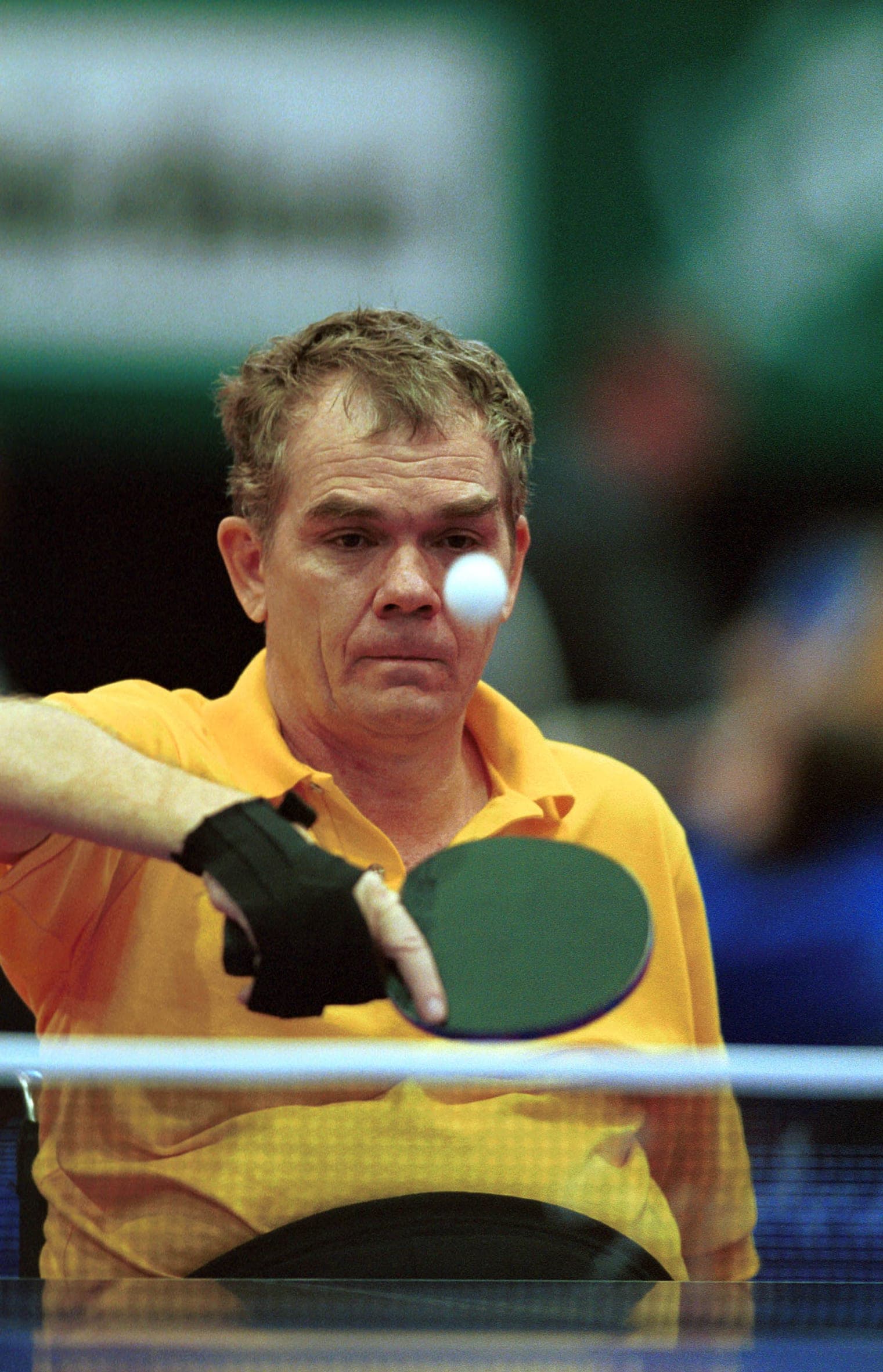
Sources
The rules, dimensions and specifications on this page were read from these documents.
- ITTF Statutes — The Laws of Table Tennis — International Table Tennis Federation, 2026, Laws 2.11–2.13, 2.15 — A game; A match; Order of serving; Expedite (read 2026-09-12)
How it connects
The meaning-bearing relationships that place Table tennis scoring and service order in the wider knowledge graph — each one with the reason it exists.
Builds on
Understanding these first makes this one make sense.
Foundation of
These build directly on this one.
Frequently learned together
Taught side by side in the same stage of a learning path.
- LetBoth are taught in the “Get to know the game” stage of the Table Tennis learning path.
- The legal table tennis serveBoth are taught in the “Get to know the game” stage of the Table Tennis learning path.
- How a point is won in table tennisBoth are taught in the “Get to know the game” stage of the Table Tennis learning path.
- Table tennis scoringBoth are taught in the “Get to know the game” stage of the Table Tennis learning path.
Explore across the knowledge base
Follow the threads that connect Table tennis scoring and service order to the rest of SocialSportHub.
Rules
- The legal table tennis serveThe most-broken rule in table tennis, set out exactly — the open palm, the 16 cm toss, the no-hiding requirement, and what happens the first time an umpire is unsure.
- LetA call that stops a point and has it replayed without penalty, used across several racket sports.
- How a point is won in table tennisThe full list of ways a player scores — the returns that fail, the ball through the net, the double hit, the free-hand touch, and the moving-table rule most players never meet.
- Badminton serve rulesThe rules for how a badminton serve must be delivered and where it must land.
- Tennis serving rulesThe rules governing how a tennis point begins, including where the server stands and where the serve must land.
Tactics
- Serve and third ballTable tennis's most-rehearsed tactical pattern — using a serve to force a predictable return so the third ball of the rally can be attacked from a known position.
- Point constructionHow tennis points are built rather than won — the neutral, attacking and defensive positions, what each one permits, and why most errors come from playing the wrong shot for the position.
Techniques
- Tennis ServeThe overhead stroke that starts every point, hit from behind the baseline into the diagonally opposite service box.
- The push and the chopTable tennis's backspin strokes — the short push that stops an opponent attacking, the long push that changes the rally, and the chop that defends from distance.
Knowledge Atlas
Go deeper with Table tennis scoring and service order
Everywhere else on the platform that covers Table tennis scoring and service order — assembled from what actually references it, so nothing here is a dead end.
Learn it
Structured courses and paths on the platform that cover this directly.
How this page is maintained
- Content type
- Scoring system
- Provenance
- Tier A — evergreen educational
- Verified external sources
- 0
- Content updated
- 2026-09-01
Evergreen, first-party explanation — it makes no claim that needs an external source. How we handle sources and reviews.