
Tennis serving rules
The rules governing how a tennis point begins, including where the server stands and where the serve must land.
Overview
The server begins each point from behind the baseline, alternating sides after every point, and must land the serve in the service box diagonally opposite. The server gets two attempts: if the first serve misses, a second serve is played, and missing both is a double fault that loses the point.
A serve that clips the top of the net and still lands in the correct box is replayed as a let. Serving alternates by game, and the receiver must let the ball bounce once before returning the serve.
Key points
- The serve is struck from behind the baseline, alternating sides each point.
- The ball must land in the service box diagonally opposite.
- Missing both serves is a double fault and loses the point.
- A serve that touches the net and lands in is replayed as a let.
Where it’s used
Sports that use tennis serving rules:
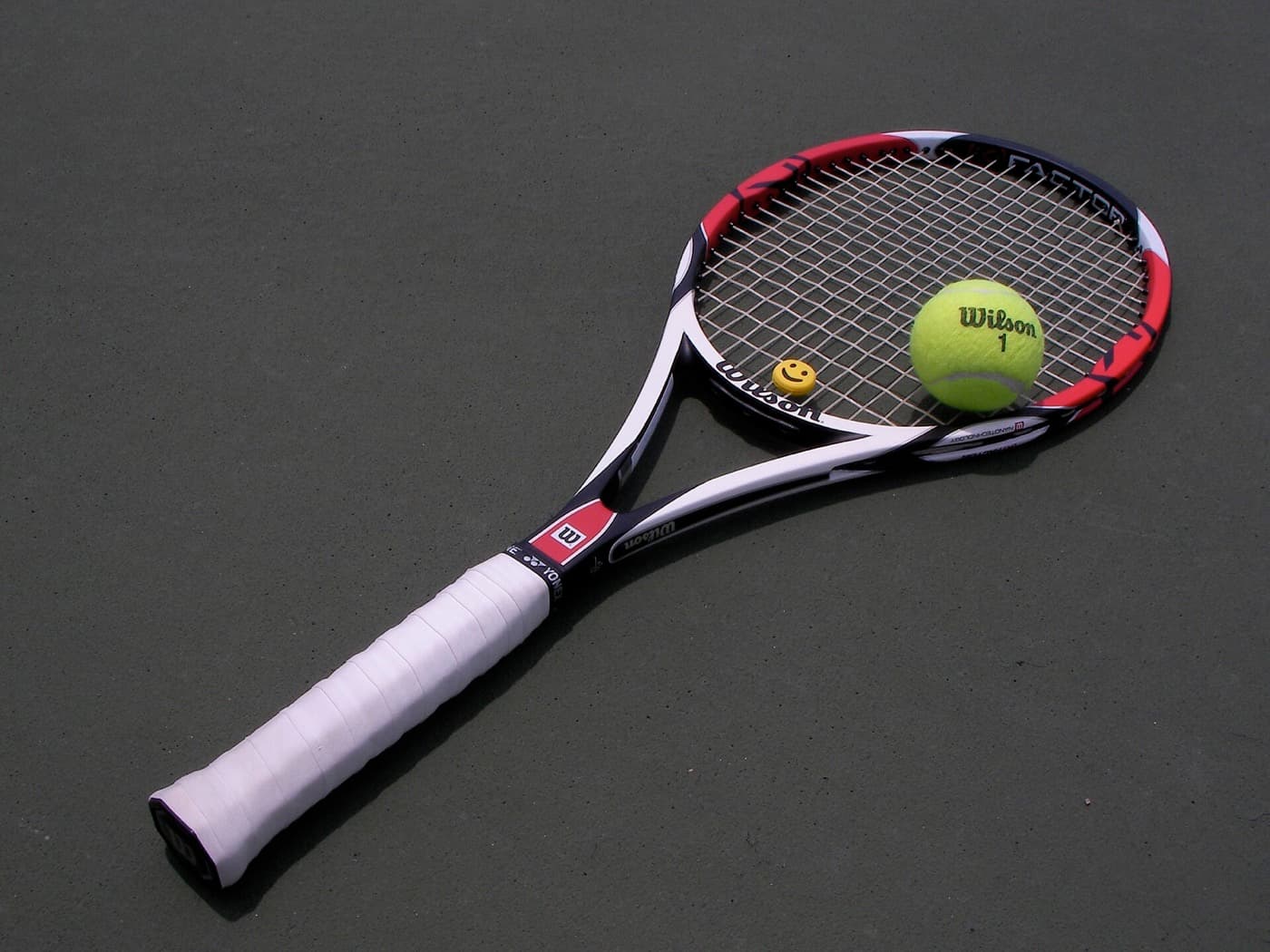
Tennis
A singles or doubles racquet sport that blends agility, strategy and stamina on court.
POP Tennis
A friendly, easy-to-learn racquet sport on a smaller court with solid paddles and a lower net.
Beach Tennis
A sociable sand-court paddle sport played with solid paddles and a soft ball that is volleyed without a bounce.
Related rules
Foot fault
A serving fault called when the server's foot touches the baseline or court before striking the ball.
Let
A call that stops a point and has it replayed without penalty, used across several racket sports.
Volleyball rotation
The rule that players rotate one position clockwise each time their team wins back the serve.
How it connects
The meaning-bearing relationships that place Tennis serving rules in the wider knowledge graph — each one with the reason it exists.
Foundation of
These build directly on this one.
Commonly confused with
Close enough to be mixed up — the distinction is worth knowing.
Frequently learned together
Taught side by side in the same stage of a learning path.
- Foot faultBoth are taught in the “Get to know the game” stage of the Tennis learning path.
- LetBoth are taught in the “Get to know the game” stage of the Tennis learning path.
- Touching the netBoth are taught in the “Get to know the game” stage of the Tennis learning path.
- Hindrance, lets and permanent fixturesBoth are taught in the “Get to know the game” stage of the Tennis learning path.
- Continuous play and the time between pointsBoth are taught in the “Get to know the game” stage of the Tennis learning path.
Explore across the knowledge base
Follow the threads that connect Tennis serving rules to the rest of SocialSportHub.
Techniques
- Flat, slice and kick servesThe three serves and what actually separates them — the contact point on the ball and the toss that makes it possible — plus what each one does to the ball after it bounces.
- Table tennis serve techniqueHow to serve legally and still create an advantage — generating spin within the rules, keeping the ball short, and why disguise must come from contact rather than concealment.
- Tennis ServeThe overhead stroke that starts every point, hit from behind the baseline into the diagonally opposite service box.
- The return of serveTennis's most under-coached shot — where to stand against a first and second serve, why blocking beats swinging, and what the Rules allow a returner to do.
Officiating
- UmpireA match official who rules on lines, serves and dismissals in racket, bat-and-ball and net sports such as tennis, cricket and baseball — and, in racket sports, also keeps the running score.
- Line JudgeA boundary-line official who calls whether the ball or player is in or out and flags foot faults, working under the head referee across many sports.
- Out-of-Bounds CallAn official's ruling that the ball or a player in possession has left the legal playing area, stopping play and handing a restart or possession to the opponent.
Scoring systems
- Tennis scoringTennis is scored in points, games and sets, using the distinctive 15–30–40 point sequence and a win-by-two margin at every level.
- Padel scoring and the tie-breakHow padel matches are counted — the game and set structure, the tie-break serving order, and the alternative scoring methods the FIP rules explicitly authorise.
Tactics
- Serve and volleyAn attacking tennis tactic where the server follows their serve to the net to finish the point with a volley.
- Serve +1 and return +1The two-shot patterns that decide short points — how a serve's direction determines where the reply comes from, and how a returner uses the same idea against the server.
- Pick and rollA two-player basketball action where one player screens for the ball-handler, then rolls to the basket.
- Approaching the netHow a point is moved forward — which balls justify an approach, why the approach is hit down the line, and the transition volley that has to be played from no-man's land.
Go deeper with Tennis serving rules
Everywhere else on the platform that covers Tennis serving rules — assembled from what actually references it, so nothing here is a dead end.
Learn it
Structured courses and paths on the platform that cover this directly.
Take it away
Open data and the whole-platform view of this subject.
How this page is maintained
- Content type
- Rule
- Provenance
- Tier A — evergreen educational
- Verified external sources
- 0
- Content updated
- 2026-09-12
Evergreen, first-party explanation — it makes no claim that needs an external source. How we handle sources and reviews.