
Rebounding
The basketball skill of gaining the ball after a missed shot — positioning and timing decide it far more often than pure jumping height.
Overview
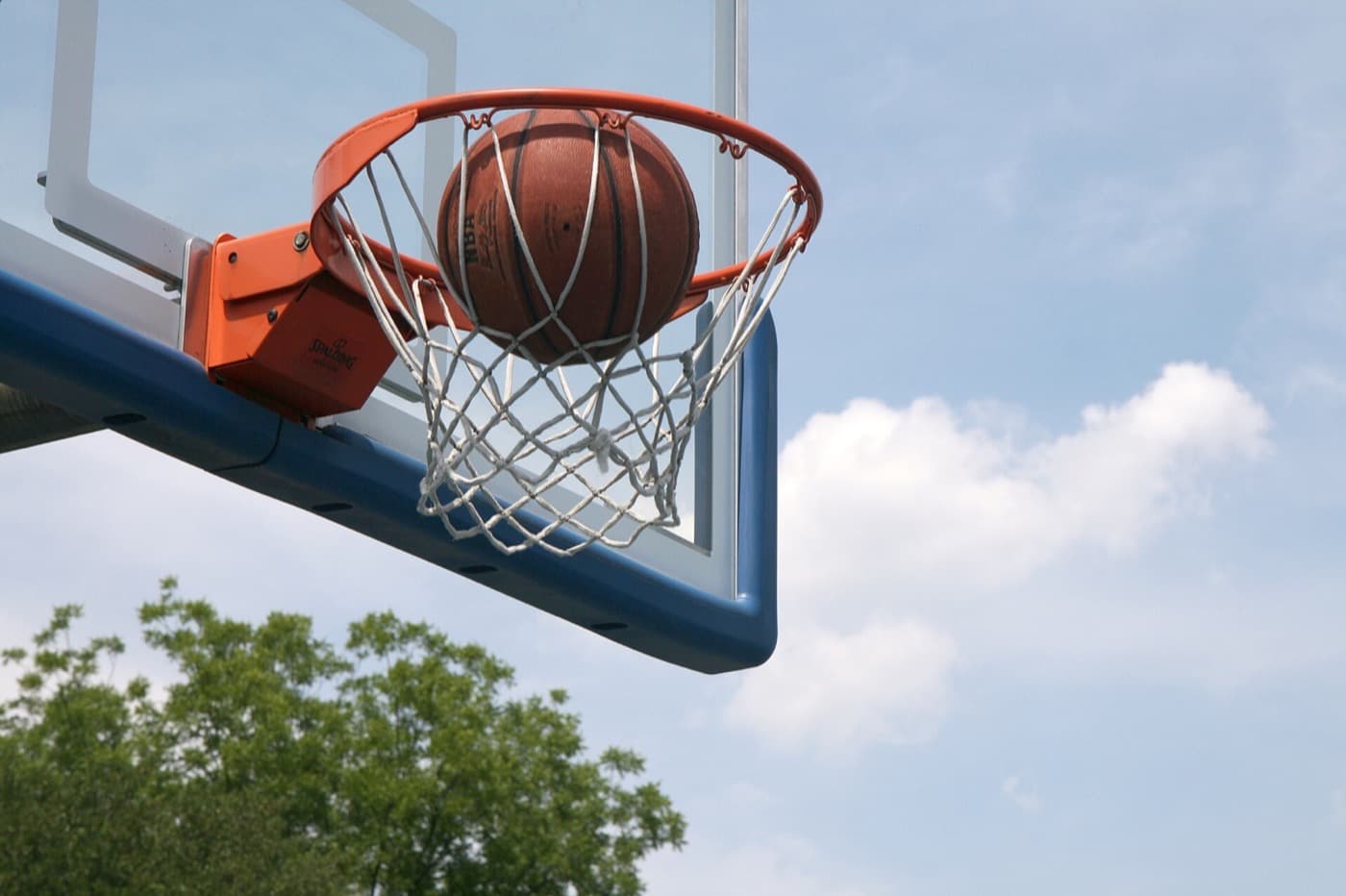
Rebounding is winning the ball off the backboard or rim after a shot misses. It gives a team extra chances to score on offence and ends an opponent’s possession on defence, making it a hugely valuable skill.
Rebounding rewards timing, positioning and effort more than height alone: getting in front of an opponent to claim the space under the basket is often the deciding factor.
Key points
- Boxing out — getting your body between an opponent and the basket — protects the space to catch the ball.
- Timing the jump to the ball coming off the rim matters more than sheer height.
- Offensive rebounds create second-chance scoring opportunities.
- Defensive rebounds end the opponent’s possession and can start a fast break.
- Anticipating where a missed shot will land gives you a head start.
Where it’s used
Sports that use rebounding:
Related skills
How it connects
The meaning-bearing relationships that place Rebounding in the wider knowledge graph — each one with the reason it exists.
Progresses to
The next step in a curated learning order.
Progresses from
The step that comes before this one in a curated learning order.
Part of
The wider grouping this belongs to.
Explore across the knowledge base
Follow the threads that connect Rebounding to the rest of SocialSportHub.
Skills Academy
Movement patterns
- CatchReceiving a moving object and securing it under control, absorbing its momentum by yielding along its path so kinetic energy is dissipated rather than rebounded away.
- LandingThe controlled absorption of force at ground contact that ends an airborne phase, dissipating impact through eccentric triple flexion of the ankle, knee and hip.
- ReachExtending a limb toward a distant point or object, often at full stretch, by projecting a distal segment beyond the body's resting envelope while a stabilised base preserves balance and control.
- JumpThe plyometric pattern of projecting the body off the ground through explosive triple extension and controlling the landing — the core expression of lower-body power.
Coaching concepts
- Decision-Making PracticeTraining athletes to read cues and choose the right action under pressure — coupling perception to action, not just rehearsing physical technique in isolation.
- Small-Sided GamesPractising in scaled-down versions of a sport — fewer players, smaller area — so skills and decisions happen more often in a game-like setting.
Positions
- Power forwardThe power forward plays near the basket in basketball, using strength to rebound, score inside, and defend the paint.
- CenterThe center is usually the tallest player on a basketball team, playing near the basket to score inside, rebound, and protect the rim.
- Goal shooterThe goal shooter is a netball attacker who scores goals and is one of only two players allowed to shoot, working within the attacking goal third and circle.
- Goal attackThe goal attack is a versatile netball attacker who both feeds the shooter and scores goals, moving through the centre and attacking thirds.
Techniques
- Playing the walls in padelThe skill that separates padel from every other racket sport — reading a rebound off glass, positioning behind the bounce rather than at it, and using your own back wall to attack.
- VolleyA shot played near the net by blocking the ball out of the air before it bounces, using a short, firm punch rather than a full swing.
- Free ThrowAn unguarded basketball shot taken from the free-throw line, relying on a calm, repeatable routine rather than power.
- The slice in tennisThe underspin stroke that changes a rally's height and pace — how slice keeps the ball low, when it is defensive and when it is an attack, and what it does on different surfaces.
- Bunker ShotThe greenside sand shot where the club enters the sand behind the ball and lifts it out on a cushion of sand.
How this page is maintained
- Content type
- Skill
- Provenance
- Tier A — evergreen educational
- Verified external sources
- 0
- Content updated
- 2026-09-12
Evergreen, first-party explanation — it makes no claim that needs an external source. How we handle sources and reviews.