
Cycling shoes
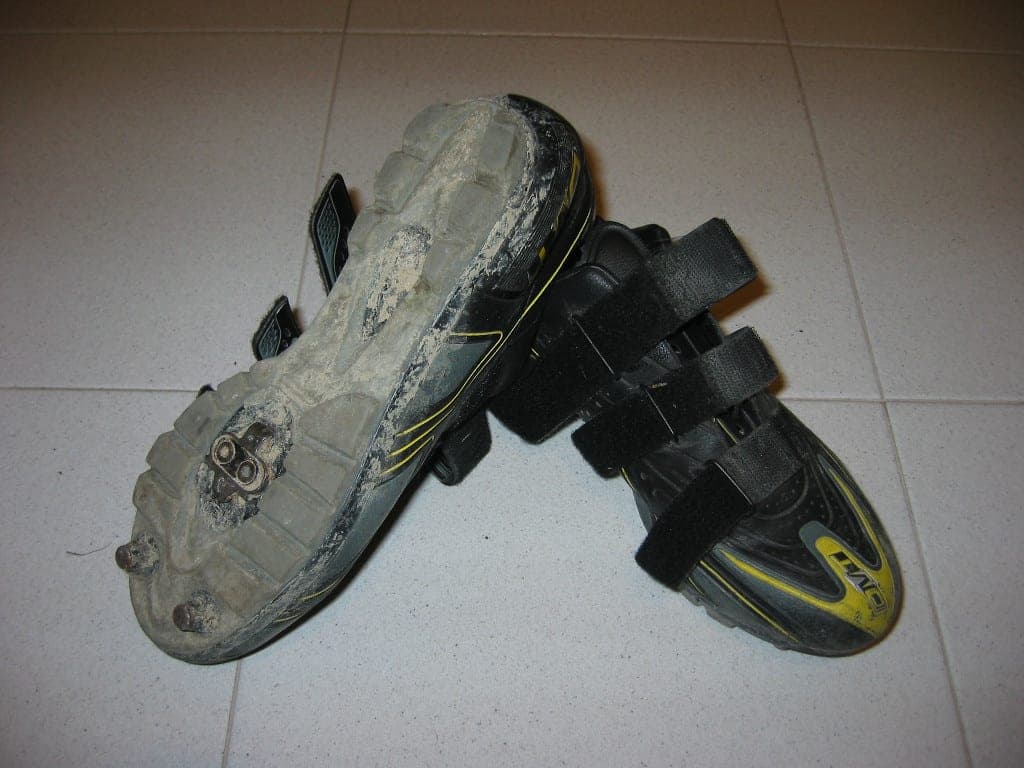
Stiff-soled shoes that clip onto pedals to transfer power efficiently while riding.

Overview
Cycling shoes have a stiff sole that spreads pedalling force across the foot and reduces flex, so more of the rider’s effort reaches the pedals. Many use cleats on the sole that clip into clipless pedals to keep the foot connected through the whole pedal stroke.
Road, mountain and indoor cycling shoes differ in sole design and cleat style, but all aim to make each pedal stroke more efficient and secure.
Good to know
- The stiff sole improves power transfer to the pedals.
- Cleats clip into compatible clipless pedals.
- Riders can still cycle in ordinary shoes with flat pedals.
Where it’s used
Sports that use cycling shoes:
Cycling
A low-impact endurance sport that doubles as transport, exercise and adventure.
Indoor Cycling
An energetic, low-impact studio workout on a stationary bike, guided by an instructor and music.

Triathlon
A multi-sport endurance event that links swimming, cycling and running into one continuous race.
Related equipment
Running shoes
Cushioned footwear designed for the repetitive forward motion of running.
Bike helmet
A hard-shelled head covering worn while cycling, built to absorb a single significant impact and be replaced afterwards.
Swimming goggles
Sealed eyewear that lets swimmers see clearly and keep water out of the eyes.
How it connects
The meaning-bearing relationships that place Cycling shoes in the wider knowledge graph — each one with the reason it exists.
Frequently learned together
Taught side by side in the same stage of a learning path.
- Bike helmetBoth are taught in the “What you’ll need” stage of the Cycling learning path.
- Road bikeBoth are taught in the “What you’ll need” stage of the Cycling learning path.
- Mountain bikeBoth are taught in the “What you’ll need” stage of the Cycling learning path.
- Water bottleBoth are taught in the “What you’ll need” stage of the Cycling learning path.
- VelodromeBoth are taught in the “What you’ll need” stage of the Cycling learning path.
Used with
Turns up alongside this across the same sports.
Explore across the knowledge base
Follow the threads that connect Cycling shoes to the rest of SocialSportHub.
Playing surfaces
- Road (Tarmac / Asphalt)Paved tarmac or asphalt: a firm, smooth, predictable surface that rewards steady pace and rhythm — the ground for road running, cycling and race-walking.
- TrailNatural off-road terrain of dirt, rock, roots, grass and mud that varies constantly and rewards surefootedness in trail running, mountain biking and hiking.
Learning paths
Disciplines
- Road CyclingRoad cycling covers riding and racing on paved roads, from mass-start races and time trials to multi-day stage events.
- Track CyclingTrack cycling is racing on a velodrome, an oval banked track, using fixed-gear bikes with no brakes across sprint and endurance events.
- CyclocrossCyclocross is lap racing on a short off-road circuit of grass, mud, and sand, where riders often dismount to carry the bike over obstacles.
- Gravel CyclingGravel cycling is riding and racing on unpaved roads and mixed surfaces on a drop-bar bike, often over long distances and self-supported.
- Sprint DistanceSprint distance triathlon combines a short swim, bike, and run, making it a common entry point and a fast, higher-intensity racing format.
Go deeper with Cycling shoes
Everywhere else on the platform that covers Cycling shoes — assembled from what actually references it, so nothing here is a dead end.
Learn it
Structured courses and paths on the platform that cover this directly.
Kit it out
Equipment guidance drawn from the graph, with no brands and no affiliate links.
Take it away
Open data and the whole-platform view of this subject.
How this page is maintained
- Content type
- Equipment
- Provenance
- Tier A — evergreen educational
- Verified external sources
- 0
- Content updated
- 2026-09-12
Evergreen, first-party explanation — it makes no claim that needs an external source. How we handle sources and reviews.