
Tennis spent two years working out what its own courts were doing
Until 2000 the sport had no official way to say how fast a surface played. What it built afterwards was replaced within eight years, because the first measure did not match what players said they felt — and the replacement is still only valid for the day the test was run.
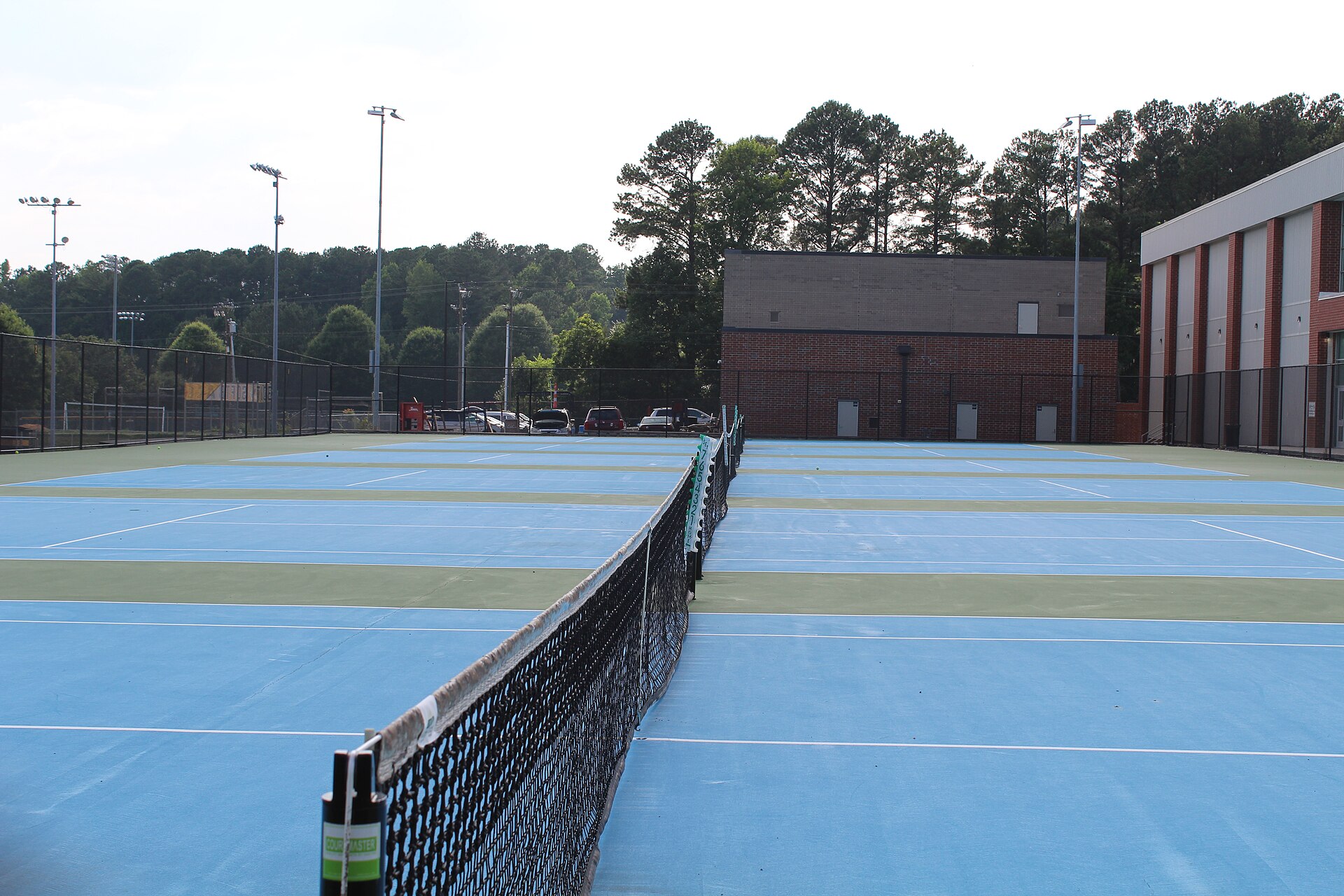
Players have described tennis courts as fast or slow for as long as there have been different kinds of court. Until the turn of this century, the sport had no official way to say what that meant.
The ITF introduced an official Court Surface Classification Scheme in 2000. It was superseded from January 2008 by the Court Pace Classification Programme, and the change followed a two-year research project by the ITF Technical Centre that culminated in the development of Court Pace Rating.
Reference The introduction of the Court Surface Classification Scheme in 2000, its supersession by the Court Pace Classification Programme from January 2008, and the two-year ITF Technical Centre research project that produced Court Pace Rating, from the booklet’s introduction.
Eight years is a short life for a measurement standard. What is more interesting than the replacement is the stated reason for it.
The criterion was players
Court Pace Rating, the ITF says, provides better agreement between theoretical measurements and player perception of pace than its predecessor, the Surface Pace Rating.
Reference That Court Pace Rating provides better agreement between theoretical measurements and player perception of pace than its predecessor, Surface Pace Rating, from the booklet’s introduction.
Read what that sentence sets as the test. The new measure is better not because it is more accurate about the physics — both are theoretical measurements of a bounce — but because it agrees more closely with what players report feeling.
That is an unusual standard for a governing body to adopt in writing. It concedes that the quantity being measured is not fully defined by the apparatus: a court’s pace is, in part, a perceptual fact, and a number that describes the collision correctly but does not track perception has failed at its job.
It is also a fairly rare instance of a sport replacing a working standard because it did not correspond to experience. The alternative — keeping the number and telling players their perception was mistaken — was available, and was not taken.
What the programme is actually for
The purpose was never to rank surfaces. It was to solve a pairing problem.
The Rules of Tennis provide for several ball types with different performance characteristics derived from their dynamic and aerodynamic properties, and the classification scheme was introduced to help determine which ball should be used on which surface. Ball approval and the Court Pace Classification Programme were part of one initiative.
Reference That the classification scheme was introduced to help determine which ball should be used on which surface, and that ball approval and the Court Pace Classification Programme form part of a single initiative, from the booklet’s introduction.
Courts are rated so that balls can be matched to them. The five pace categories are not a league table of surfaces; they are the index by which a Type 1, Type 2 or Type 3 ball is selected. Measurement came into tennis as a logistics problem before it became a way of describing the game.
What a classification is, and is not
The scheme’s limits are stated with unusual firmness, and each limit is a different kind of caution.
Classified surface products are awarded pace ratings falling into one of five categories, from Category 1 (slow) to Category 5 (fast). And immediately after that list: ITF Classification does not imply any form of ITF approval or endorsement.
Reference The five pace categories awarded to classified surface products, and the note that ITF Classification does not imply any form of approval or endorsement, from Part C.
A classification is a reading, not a recommendation. The ITF is saying that a Category 5 rating means the product measured fast, and nothing whatever about whether it is any good.
Classification is valid for three years, and the list of classified products is published on the ITF website and updated as products are added.
Reference That ITF Classification is valid for three years and that the list of classified products is published and updated on the ITF website, from Part C.
An expiry date on a measurement is a statement that the thing measured can change — formulations are revised, manufacturing drifts — and that a rating is a claim about a product at a moment.
From products to venues
A rating on a product does not tell you anything about a particular court, because a court is an installation rather than a material. So a second scheme was built on top of the first.
ITF Recognition acknowledges that a court meets the recommendations in the ITF Guide to Test Methods for Tennis Court Surfaces. It is aimed at venues hosting elite-level competition, where the standard of play demands precise playing characteristics — international tournaments, national and regional tennis centres.
Reference That ITF Recognition acknowledges a court meets the recommendations of the ITF Guide to Test Methods, and that it is targeted at venues hosting elite-level competition, from Part D.
It comes in two levels, and the split between them says what the sport thinks is hard.
One-Star Recognition tests the quality of installation: a visual inspection for flaws, evenness, slope and planarity surveyed at a range of locations, and dimensions — the positions of the lines and the net. Testing may be done by an ITF Accredited laboratory, the ITF Technical Centre, or a company that has satisfied the ITF it has the skills, equipment and experience.
Reference The four One-Star tests — visual inspection, evenness, slope and planarity, and dimensions — and who may conduct them, from Part D.
Two-Star Recognition adds pace, and adds a condition that no amount of careful building can guarantee: the court’s average Court Pace Rating must be within 5 points of the ITF Classified value for the surface product it was built from. Testing for Two-Star may only be undertaken by an ITF Accredited laboratory or the ITF Technical Centre.
Reference That Two-Star Recognition requires the court’s average Court Pace Rating to be within 5 points of the classified value for the surface product, and restricts testing to an ITF Accredited laboratory or the Technical Centre, from Part D.
Two-Star is therefore a test of agreement between the product and the installation. A court can be beautifully flat, correctly lined, and built from a classified product, and still miss Two-Star because the installed surface does not play like the material was rated to play. The scheme has built in the observation that a surface product and a court made from it are different objects.
There is even a route for the case where a product has never been classified: the supplier may apply for classification based on the average results of all courts using the product that were tested on site, at the full fee, with the classification then valid for the usual period.
Reference That where a surface product is not already classified, the supplier may apply for classification based on the average of on-site test results at the full fee, from Part D.
The sentence that undercuts all of it
Recognition is retained until the court is resurfaced, or for ten years, whichever is sooner. And then the qualification:
The results of the tests are only valid for the day of testing. Properties of the court may change due to factors such as ambient conditions, use and maintenance.
Reference That ITF Recognition is retained until resurfacing or for ten years, whichever is sooner, but that test results are valid only for the day of testing because properties change with ambient conditions, use and maintenance, from Part D.
A certificate valid for up to a decade, resting on results the same document says were true for one day. The ITF is not being careless; it is being precise about two different things. The certificate attests that a court, properly built from a classified product, met the recommendations when examined. It does not, and cannot, attest to what the court is doing this afternoon.
The scheme also declines the authority it might have claimed: ITF Recognition is not mandatory, nor does it imply any form of approval or endorsement.
Reference That ITF Recognition is neither mandatory nor an implication of ITF approval or endorsement, from Part D.
Twenty-six years after the first scheme, that is where tennis has arrived. A measurement that had to be rebuilt because it disagreed with players. A classification that expires. A venue certificate that lasts a decade and describes a single day. And, at both levels, a disclaimer that none of it is an endorsement of anything.
It reads as institutional caution, and it is. It is also an accurate description of the problem. A tennis court is a surface whose behaviour changes with the weather, with wear and with how it was swept this morning, and the sport has built the most careful measurement regime it can while declining to pretend the result is more durable than the thing it measured.
Read the evergreen pages
This piece is an argument. These are the reference pages on SocialSportHub that document the same subjects.
References
- [1]International Tennis FederationGoverning body. ITF Approved Tennis Balls, Classified Surfaces & Recognised Courts 2026 — Introduction, and Part C, Court Pace Classification Programme. Accessed 6 September 2026.
- [2]International Tennis FederationGoverning body. ITF Approved Tennis Balls, Classified Surfaces & Recognised Courts 2026 — Part D, ITF Recognition of Tennis Courts. Accessed 6 September 2026.
Continue reading
Editor’s pick
Clay is unbound, and that one word changes tennis
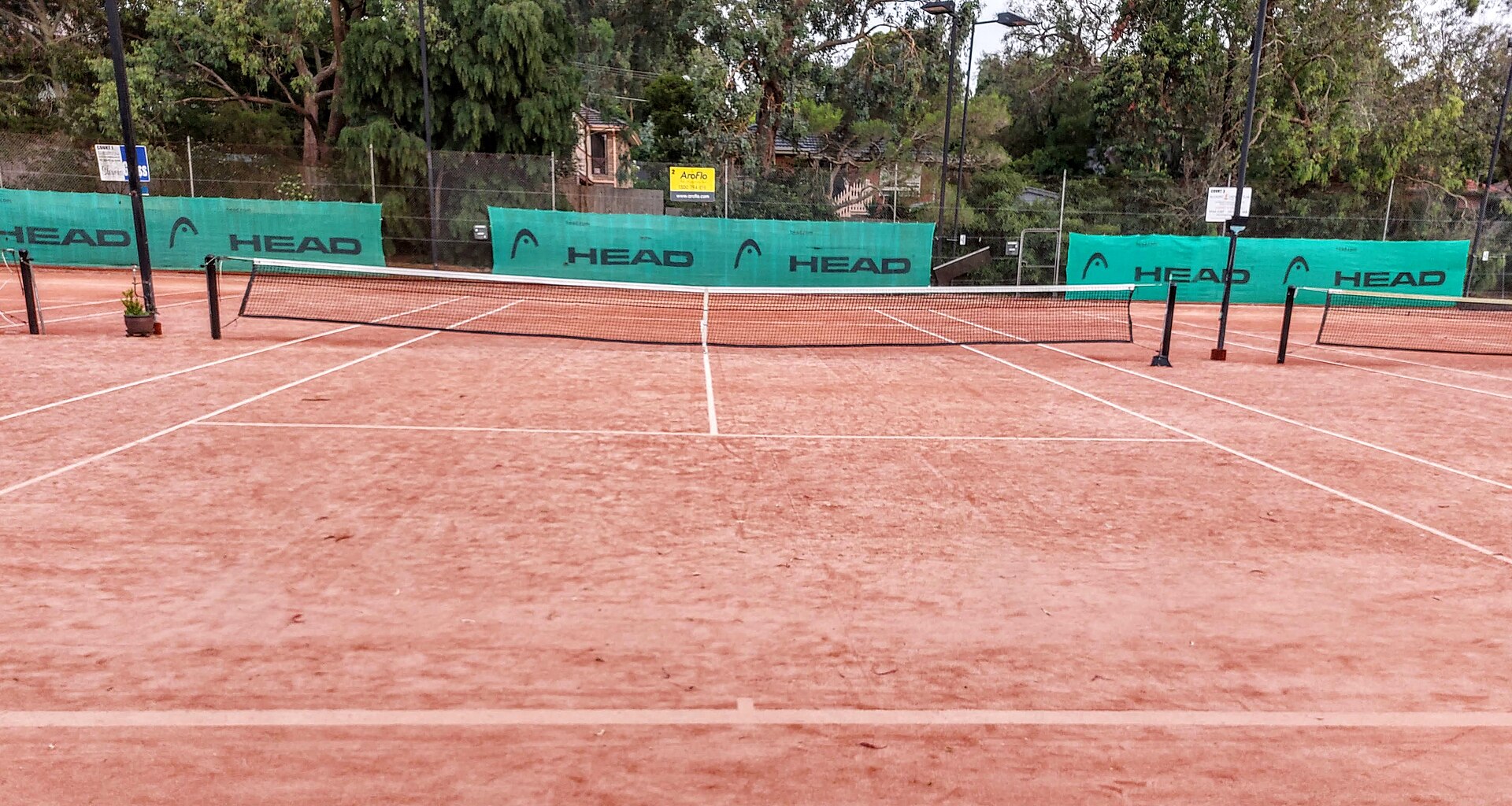
The ITF's surface table separates clay from every hard court with a single word: unbound. A few millimetres of loose grit over a deep compacted base is the whole difference — and it rewrites which shots and which footwork are worth having.
Editor’s pick
Four approved tennis balls, one mass, and the two numbers that separate them
The ITF approves four balls for adult tennis. Put their specifications side by side and they agree exactly on weight and on how far they squash — and differ on diameter, on how high they bounce, and on how much shape they have got back before the load comes off.
More on tennis
Five sports paint a line around the court. Only four of them agree it is part of it
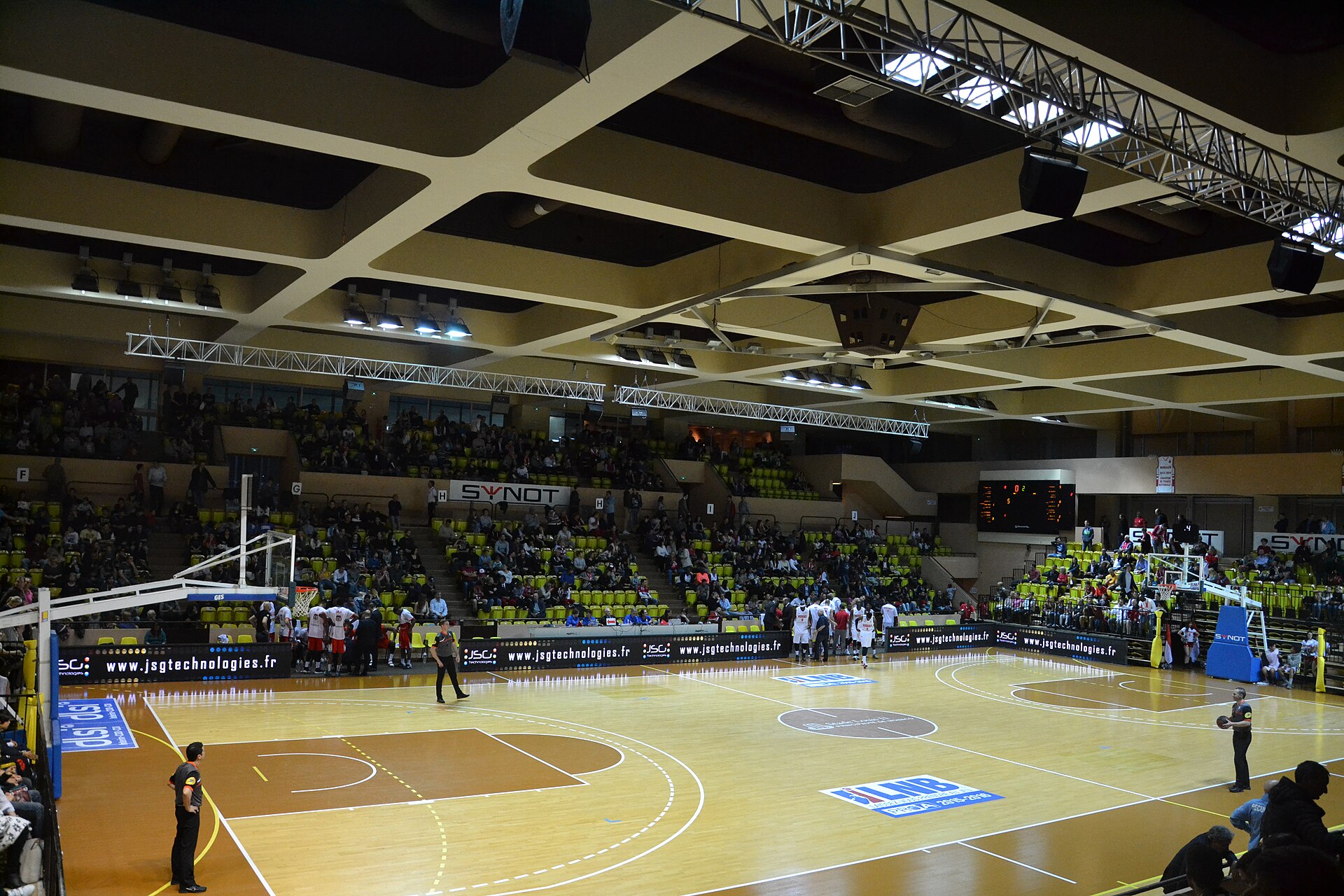
A ball on the line is in, unless you are playing basketball, where the boundary line is not court at all. The disagreement is written into the rulebooks, and it decides which edge of the paint the tape measure is held against.