
Climbing shoes
Close-fitting rubber-soled shoes that grip small holds in climbing and bouldering.

Overview
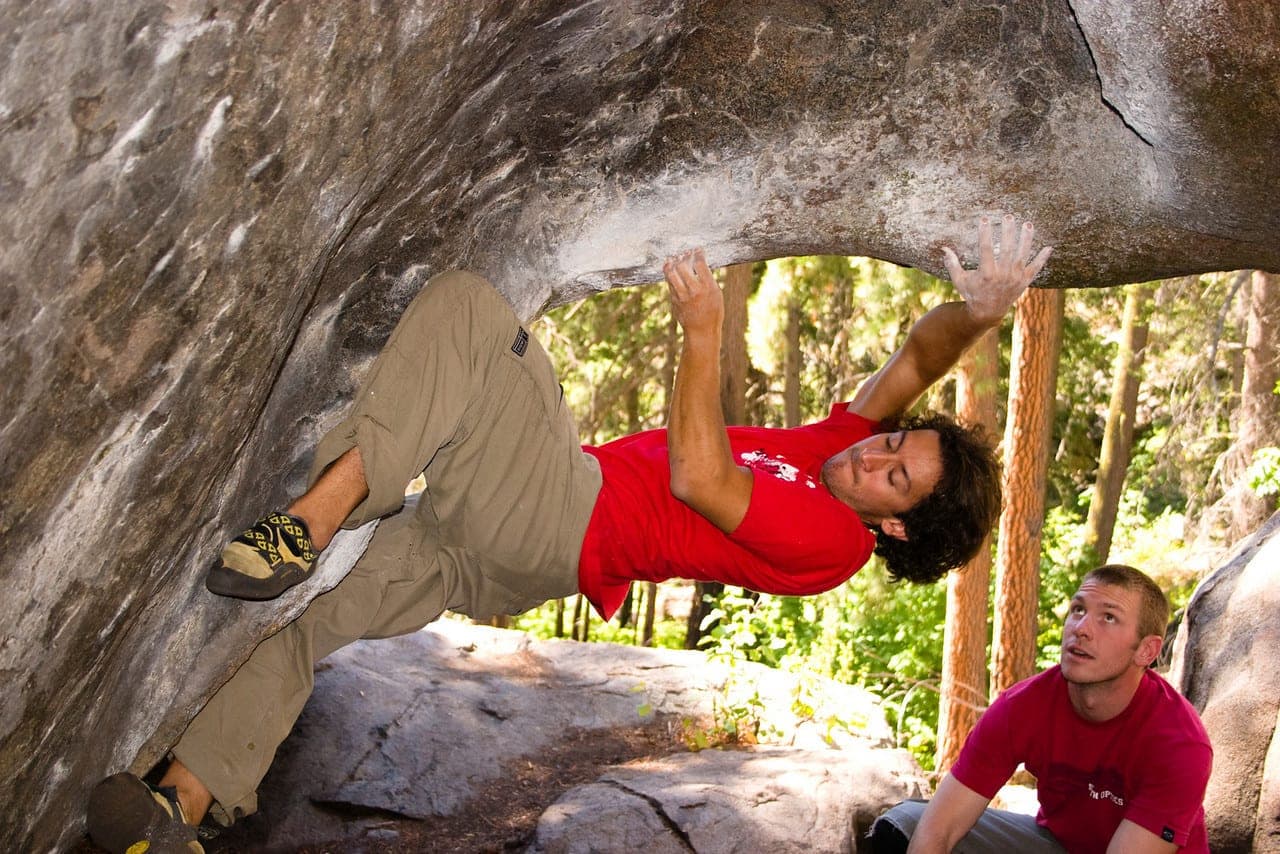
Climbing shoes are snug, flexible shoes with a smooth, sticky rubber sole that grips small footholds on rock and indoor walls. The close fit lets climbers stand on tiny edges and feel the surface through the shoe.
They are worn tight and are specific to climbing and bouldering, where precise foot placement is a key part of moving efficiently on the wall.
Good to know
- Worn snug for precise footwork on small holds.
- The sticky rubber sole is the defining feature.
- Used both on outdoor rock and indoor walls.
Where it’s used
Sports that use climbing shoes:
Rock Climbing
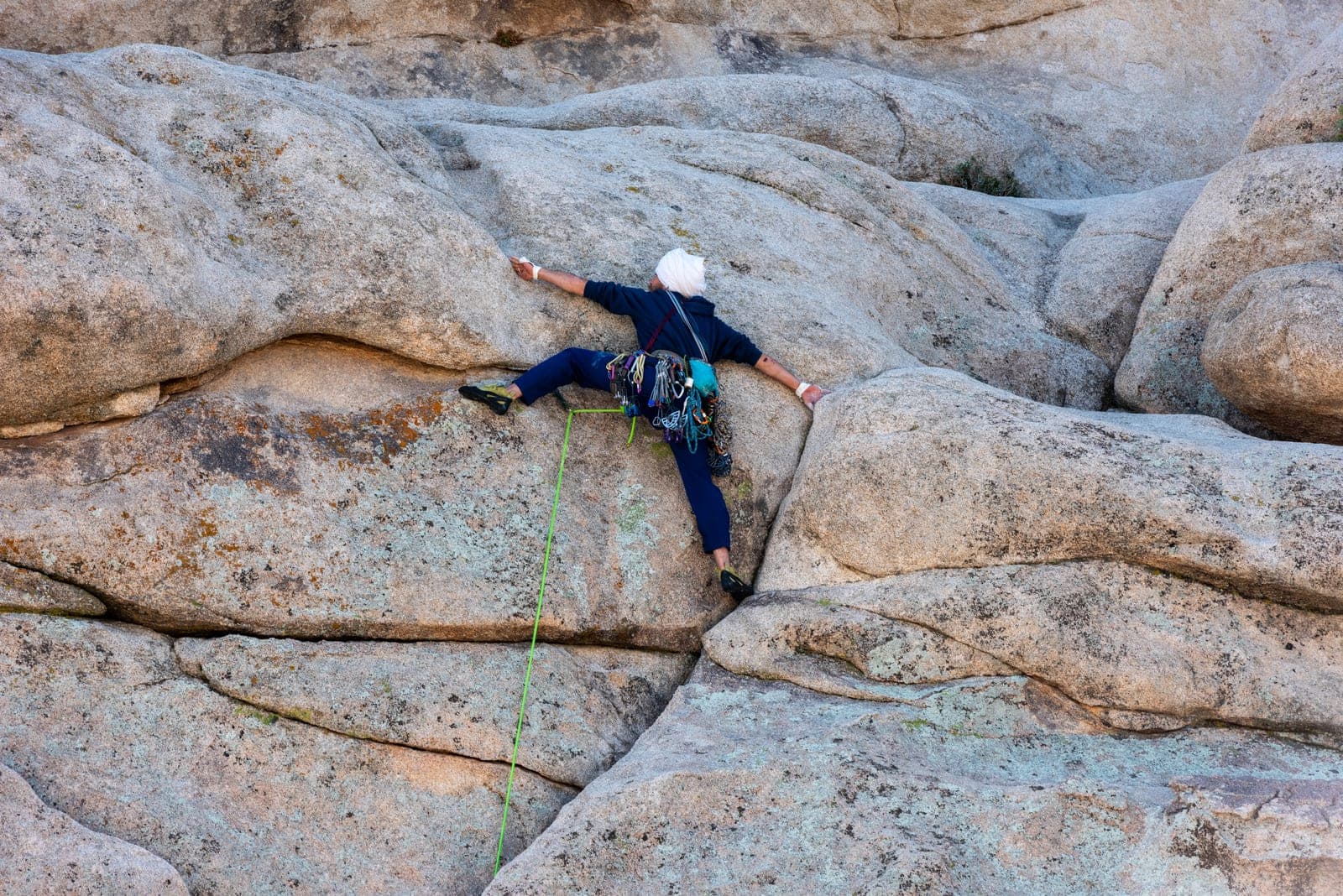
A rope-based climbing sport that pairs full-body strength with focus and careful technique, indoors or on rock.
Bouldering
A rope-free form of climbing on short walls and boulders, focused on strength, technique and puzzle-solving.
Explore across the knowledge base
Follow the threads that connect Climbing shoes to the rest of SocialSportHub.
Disciplines
- Lead & Sport ClimbingA roped format where the climber ascends from the ground, clipping the rope into protection along the way while a belayer manages it below.
- Traditional (Trad) ClimbingA lead format in which the climber places removable protection into the rock while ascending, and a partner removes it afterward, leaving no fixed gear behind.
- Top-Rope ClimbingA roped format where the rope runs up to an anchor at the top of the route and back down, so the climber is held from above throughout the ascent.
- Speed ClimbingA timed format where climbers ascend a route as fast as possible, most recognizably as a head-to-head race on a standardized competition wall.
Go deeper with Climbing shoes
Everywhere else on the platform that covers Climbing shoes — assembled from what actually references it, so nothing here is a dead end.
Kit it out
Equipment guidance drawn from the graph, with no brands and no affiliate links.
Take it away
Open data and the whole-platform view of this subject.
How this page is maintained
- Content type
- Equipment
- Provenance
- Tier A — evergreen educational
- Verified external sources
- 0
- Content updated
- 2026-09-12
Evergreen, first-party explanation — it makes no claim that needs an external source. How we handle sources and reviews.