
Football spent a century leaving time to the referee. The 2026/27 Laws put numbers on it
Ten seconds to leave the field when substituted. A minute off after treatment. A five-second countdown, visibly signalled, on throw-ins and goal kicks. The changes are small individually and they add up to a different way of regulating delay.
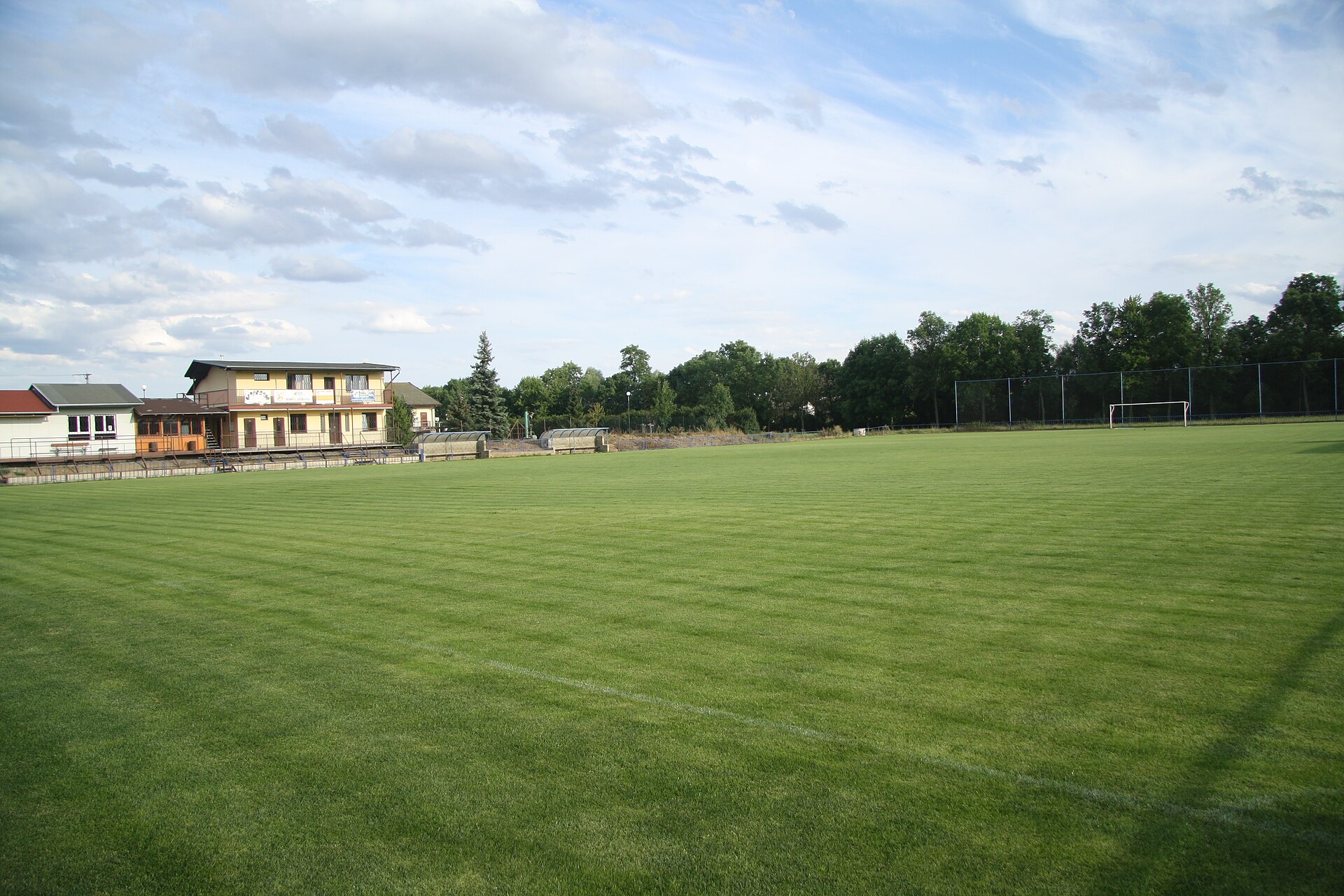
Football has always had a clock it does not trust. The referee keeps time, adds what was lost, and announces a minimum rather than a total. Delay has been a matter for judgement — Law 12 makes “delaying the restart of play” a cautionable offence and says nothing about how long a delay has to be before it is one.
The Laws of the Game for 2026/27 change that in four places at once. None of the four is dramatic on its own. Together they are the largest set of explicit time limits football has written into its Laws.
What the document actually says
IFAB publishes its amendments as a separate document, and the 2026/27 edition of that document was updated in July 2026. The four changes below are quoted from it.
A substituted player has ten seconds to get off. Law 3’s procedure now requires that a player being replaced “must be off the field of play within ten seconds of the substitution board being shown or, where there is no board, of the referee’s signal for the substitution to take place”, with exceptions for safety, security and injury. Where several players are replaced in the same stoppage, all of them must be off within ten seconds of the last substitution being indicated.
The sanction is not a card. If the ten seconds are exceeded, “the substitute cannot enter until the first stoppage after one minute has elapsed” — the team plays short, briefly, and the cost falls on the side that gained from the delay.
Reference The ten-second requirement and its exceptions, the rule for multiple substitutions in one stoppage, and the one-minute delay to the substitute’s entry, from the Law 3 changes.
Treatment costs a minute. Law 5 now provides that, barring certain exceptions, players who receive assessment or treatment on the field of play, or who cause play to be stopped because of injury, “must leave and remain off the field of play for one minute after play has restarted”.
Throw-ins and goal kicks get a visible countdown. This is the change a spectator will actually see. Under Law 15, if a player is unfairly delaying a throw-in, “the referee will whistle and signal the start of a five-second countdown”, counting down “with a raised hand”, and if the throw has not been taken by the end of it, the throw-in goes to the other side. Law 16 applies the same countdown to the goal kick, and there the restart passes to the opposition as a corner.
Reference The five-second countdown, the raised-hand signal, and the transfer of the throw-in and goal kick to the opposing team, from the Law 15 and Law 16 changes.
Note what the caution does in that rule. A player who runs out the five seconds is not booked for it; the restart simply changes hands. The card is reserved for a player who “excessively delay[s] the restart after the throw-in has been awarded to the opposing team” — that is, for arguing with the consequence rather than for causing it.
The one that is not new
Law 17 also changes, and it is the change most likely to be misread as a new time limit. The 2026/27 text adds to the list of ways a corner kick is awarded: when the referee penalises “the goalkeeper for controlling the ball with their hand(s)/arm(s) for more than eight seconds”, or a player for delaying a goal kick.
The eight seconds are not new. What is new is that Law 17 now names the corner kick as the award. The change is to where the sanction is written down and what it is, not to how long a goalkeeper may hold the ball.
Reference The addition to Law 17’s list of corner-kick awards, and its explanation, from the Law 17 changes. The eight-second limit itself is referred to as existing rather than introduced.
Why this is a change of method, not just of numbers
A rule can regulate delay in two ways. It can describe the offence and leave the threshold to the official, which is what “delaying the restart of play” has always done. Or it can state a number and attach an automatic consequence.
Football has overwhelmingly used the first method, and for a defensible reason: a fixed threshold is easier to play against. If the limit is five seconds, four seconds is free. The referee’s discretion has no exploitable edge precisely because nobody knows exactly where it is.
The 2026/27 changes accept that trade in four specific places, and the pattern in which they accept it is consistent. Each of the four attaches its number to a moment when play is already stopped and the clock is already ambiguous — a substitution, an injury, a throw-in, a goal kick. None of them puts a limit on anything happening while the ball is in play.
They also share a sanction design. Three of the four take something away rather than punishing someone: the substitute waits, the treated player stays off, the restart changes hands. Only the fourth relies on a card, and only for conduct after the fact.
What this does not tell us
The document says what the Laws now require. It does not say what will happen, and two things are genuinely open.
The first is whether a visible five-second countdown changes behaviour or merely relocates the argument. Basketball has counted publicly for decades and has not eliminated delay; it has produced a different set of habits around the count. Football has no comparable experience to draw on at this level.
The second is measurement. Ten seconds from a board being shown, and one minute after a restart, both need someone to start and stop a count while doing several other things. The Laws do not say who holds that clock or how it is displayed, and the change document does not address it. Competitions will answer that separately, and their answers will not necessarily match.
As of when
The 2026/27 Laws take effect for competitions beginning on or after 1 July 2026, and the amendment document above was updated in July 2026. One further change is announced rather than in force: the ‘Only the captain’ guidelines become a compulsory protocol for all competitions from 1 July 2027, which is outside this edition.
Everything above is read from the amendment document as published, not from a summary of it.
Read the evergreen pages
This piece is an argument. These are the reference pages on SocialSportHub that document the same subjects.
References
- [1]International Football Association BoardGoverning body. Law changes 2026/27, updated July 2026. Accessed 9 September 2026.
Continue reading
Editor’s pick
Football caps substitutes at five and substitutions at three
Law 3 regulates two entirely different resources with one rule: how many players a team may replace, and how many times it may stop the game to do it. Only the second of those is about time.
Editor’s pick
Fourteen seconds is not a shorter twenty-four
Basketball's shot clock has two numbers, and the smaller one is not a discount on the larger. Read against FIBA's Article 29, the fourteen-second reset turns out to be a rule about who lost the ball, not about how much time is left.
Editor’s pick
Scoring systems are arguments about fairness
How a sport counts is not bookkeeping. It decides whether a disaster is survivable, whether a lead can be defended by running down a clock, and whether a match may end level at all — and football, tennis and volleyball each answered differently.