
A mountain becomes a racecourse by paperwork, and most of the paperwork is about the helicopter
FIS will not sanction a race on ground it has not homologated, and the dossier it requires is a portrait of what a venue has to be. Gradients and vertical drop take a few lines. Evacuation, water supply, uphill transport and cable runs take the rest.
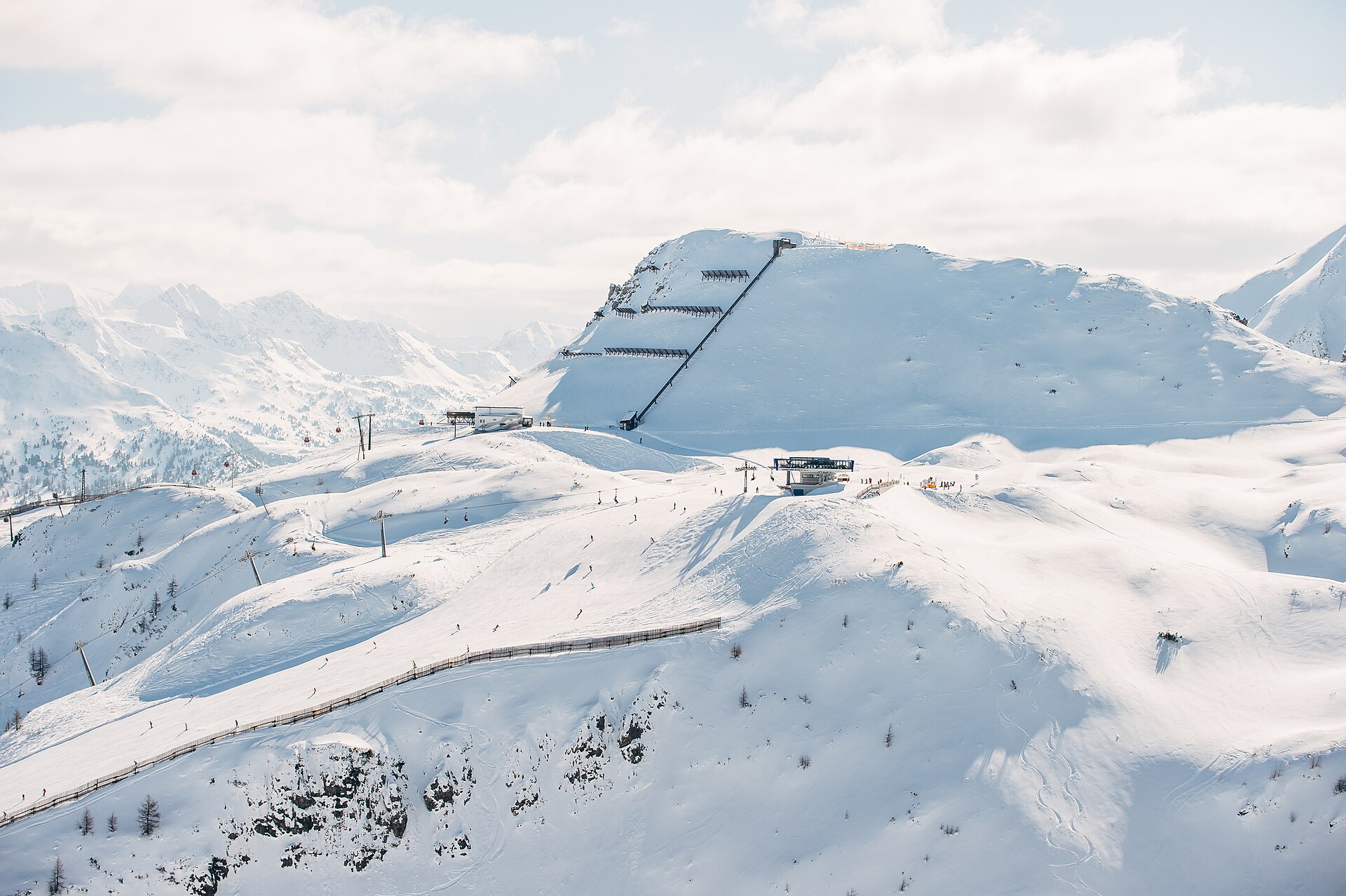
Article 650 of the alpine competition rules begins with a sentence that closes off every alternative.
All competitions must take place on FIS-approved — homologated — competition courses, and the courses proposed for homologation must comply with the technical requirements of the articles governing downhill, slalom, giant slalom and super-G.
Reference That all competitions must take place on FIS-approved (homologated) courses, and that proposed courses must comply with the technical requirements of Articles 701, 801, 901 and 1001, from Article 650.1.
There is a way out, and it is guarded. Exceptions may be granted on request, but only the FIS Council can grant exceptions or deviations from the prescribed technical data; the proposals come jointly from the National Ski Association concerned and the Sub-Committee for Alpine Courses, and an exception once granted is valid from the date of approval until revoked.
Reference That exceptions may be granted only by the FIS Council on proposals from the National Ski Association and the Sub-Committee for Alpine Courses, and that a granted exception is valid from approval until revoked, from Article 650.1.2.
Not a waiver signed by a race director on the morning. A council decision, with an indefinite life, on a named piece of ground.
What the dossier asks
The request goes to the Sub-Committee for Alpine Courses through the National Ski Association, accompanied by six documents. The first is a description of the course, and it is worth reading in the order the rule gives, because the order is the argument.
It opens where you would expect. A contact address with a telephone number and email. The name and location of the course. The type of alpine event the homologation is for. In a re-homologation, the old homologation number and the name of the inspector who approved it.
Then the geometry: the start point in metres above sea level, the finish point in metres above sea level, the vertical drop, the surface length — the real developed length — and the average, maximum and minimum gradients as percentages.
Reference The identifying details and the geometric data required in a homologation request: start and finish points in metres above sea level, vertical drop, real developed surface length, and average, maximum and minimum gradients as percentages, from Article 650.3.1.
That is six lines about the mountain. Everything after it is about what happens on the mountain when something goes wrong or when several hundred people arrive.
The rest of the list
Emergency evacuation arrangements for injured competitors. Possible helicopter landing sites. The evacuation distance to the nearest hospital in kilometres and in time, in winter conditions — and the medical facilities available on site.
Reference The requirements for emergency evacuation arrangements, possible helicopter landing sites, evacuation distance to the nearest hospital in kilometres and time in winter conditions, and on-site medical facilities, from Article 650.3.1.
Possible water supply for the competition course. Artificial snow-making installations. A description of the access facilities to the start and finish areas, and of the uphill transport with its turnaround time — the time needed to get from finish back to start.
Reference The requirements to document water supply, artificial snow-making installations, access to start and finish areas, and uphill transport with its turnaround time from finish to start, from Article 650.3.1.
A description of the start and finish areas including the terrain, the aspect, the facilities for spectators, and the shelters for competitors at each end. And then, in the same list, the communications: a description of the system and the number of lines available for timing, in pairs, showing the type and number of underground, permanent or temporary cables, the number of outlets along the course, and details of the available radio apparatus.
Reference The requirements to describe the start and finish areas, competitor shelters, and the communication system including timing lines in pairs, cable types and counts, outlets along the course, and radio apparatus, from Article 650.3.1.
Why a federation counts your cables
The timing requirement is the one that looks most out of place in a document about a mountain, and it is the most revealing.
An alpine result is a time to a hundredth of a second, produced by equipment at the top of the course and equipment at the bottom, connected across several hundred metres of vertical drop and often much more of horizontal distance. Timing lines in pairs means redundancy: a second, independent path for the signal. Asking for the type and number of cables, and where the outlets are, is asking whether that redundancy actually exists on this hillside or only on a diagram.
The same logic runs through the whole list. Water supply matters because a race surface is often built by injecting water into snow. Snow-making matters because a course that depends on weather is a course that may not exist. Uphill transport turnaround time matters because a two-run race requires the whole field to get back to the start between runs, and a slow lift is a schedule risk.
None of these appear in the technical articles that specify vertical drop and gate spacing. All of them determine whether a race can be held.
The four other documents
The description is one of six. The others turn the course into something an inspector can check without standing on it.
A map showing the course’s location within the rest of the ski resort, with lifts, other courses and parking. A profile indicating the vertical drop and both the horizontal and the actual slope lengths measured on site, with contours at the same scale, including gradients. And a large, comprehensive image with the course marked on it — at least 900 by 900 pixels, taken preferably from an opposite slope, or failing that an oblique aerial image.
Reference The requirements for a map showing the course within the resort, a profile with vertical drop and both horizontal and on-site slope lengths at the same contour scale, and a marked image of at least 900 by 900 pixels taken preferably from an opposite slope, from Articles 650.3.2 to 650.3.4.
“Preferably from an opposite slope” is a specification about point of view. A photograph taken from the course shows the snow; a photograph taken from the other side of the valley shows the shape of the descent, which is the thing being approved. And “the actual (slope) measured on site” distinguishes the length a skier travels from the length a map shows — two numbers that differ by more the steeper the ground gets, and only one of which can be obtained by walking it.
What homologation is for
Read as a whole, Article 650 describes a federation that has understood something about its own sport.
The technical articles can specify a vertical drop and a turn density, and those are what make a downhill a downhill. But the difference between a mountain and a racecourse is not gradient. It is a helicopter that can land, a hospital that can be reached in winter, a lift that can return the field, water to build the surface, and cable enough to carry two independent timing signals from top to bottom.
The rule spends six lines on the shape of the slope and the rest of a long paragraph on everything else — and that ratio is not an accident of drafting. It is a fair account of what actually has to be true before anybody skis a hundredth of a second.
Read the evergreen pages
This piece is an argument. These are the reference pages on SocialSportHub that document the same subjects.
References
- [1]International Ski and Snowboard Federation (FIS)Governing body. The International Ski and Snowboard Competition Rules (ICR), Book IV, Edition 5 July 2024 — Article 650, Rules regarding the homologation of competition courses. Accessed 6 September 2026.
Continue reading
Editor’s pick
Nobody designs a slalom course. They solve one
The ICR hands a course setter a vertical drop, two spacing windows, a turn density and a required mix of combinations — then tells them the result should match the average ability of the first thirty competitors. Every course is different, and every course is the same problem.
Editor’s pick
Alpine skiing's four disciplines are four points on a single line
FIS does not tell a course setter how many gates to use. It tells them how many direction changes to make per metre of vertical drop — and slalom's figure is five times giant slalom's, which is nearly twice super-G's, which downhill does not have at all.
More on alpine skiing
A ski gate has to come apart when it is hit, and stay together when it is hit
FIS asks a gate panel to release from its pole when a racer gets caught by it and not to release during a normal collision. Two requirements that sound contradictory, both tested, and both answers to what a skier at speed actually does to a gate.