
Rugby union forwards
The eight players who contest the set piece — front row, locks and back row — what each unit does at scrum, lineout and breakdown, and why the roles are so specialised.
Overview
The forwards are shirts 1 to 8: two props, a hooker, two locks and three back-row players. They form the scrum, contest the lineout, and do most of the close-quarter work at rucks and mauls.
Forward positions are more specialised than backs' positions, because the set piece imposes physical requirements that cannot be improvised. A scrum needs three specific body shapes in the front row; a lineout needs players who can be lifted and players who can lift.
The front row: 1, 2, 3
Loosehead prop (1), hooker (2) and tighthead prop (3) take the load of the scrum. The two props are not interchangeable: they bind differently and face different forces, and a loosehead cannot simply pack down on the tighthead side.
The hooker throws the ball into the lineout as well as striking for it in the scrum — a combination of a fine motor skill and the heaviest physical work on the field, which is why hooker is often described as the most technically demanding forward role.
The locks: 4 and 5
The locks form the second row and bind between and behind the front row. They provide most of the scrum's forward drive and are usually the primary lineout jumpers, being the tallest players in the team.
Their work is largely invisible: pushing in a scrum and being lifted in a lineout produce no statistics, but a pack whose locks are being outplayed loses the set piece and therefore loses control of the game.
The back row: 6, 7 and 8
The back row — blindside flanker (6), openside flanker (7) and number eight (8) — detach from the scrum first and are the link between forwards and backs. The openside is typically the fastest to the breakdown and the primary jackal threat; the blindside is usually the heavier carrier and defender.
The number eight packs down at the back of the scrum and may pick the ball up from the base, which makes them an attacking option directly from the set piece as well as a ball-carrier in open play.
Responsibilities
- Forwards are shirts 1 to 8 and contest the scrum and lineout.
- Loosehead and tighthead props face different forces and are not interchangeable.
- The hooker both strikes in the scrum and throws into the lineout.
- Locks supply scrum drive and are the main lineout jumpers.
- The back row links forwards and backs; the number eight can pick from the scrum base.
Where it’s used
Sports that use rugby union forwards:
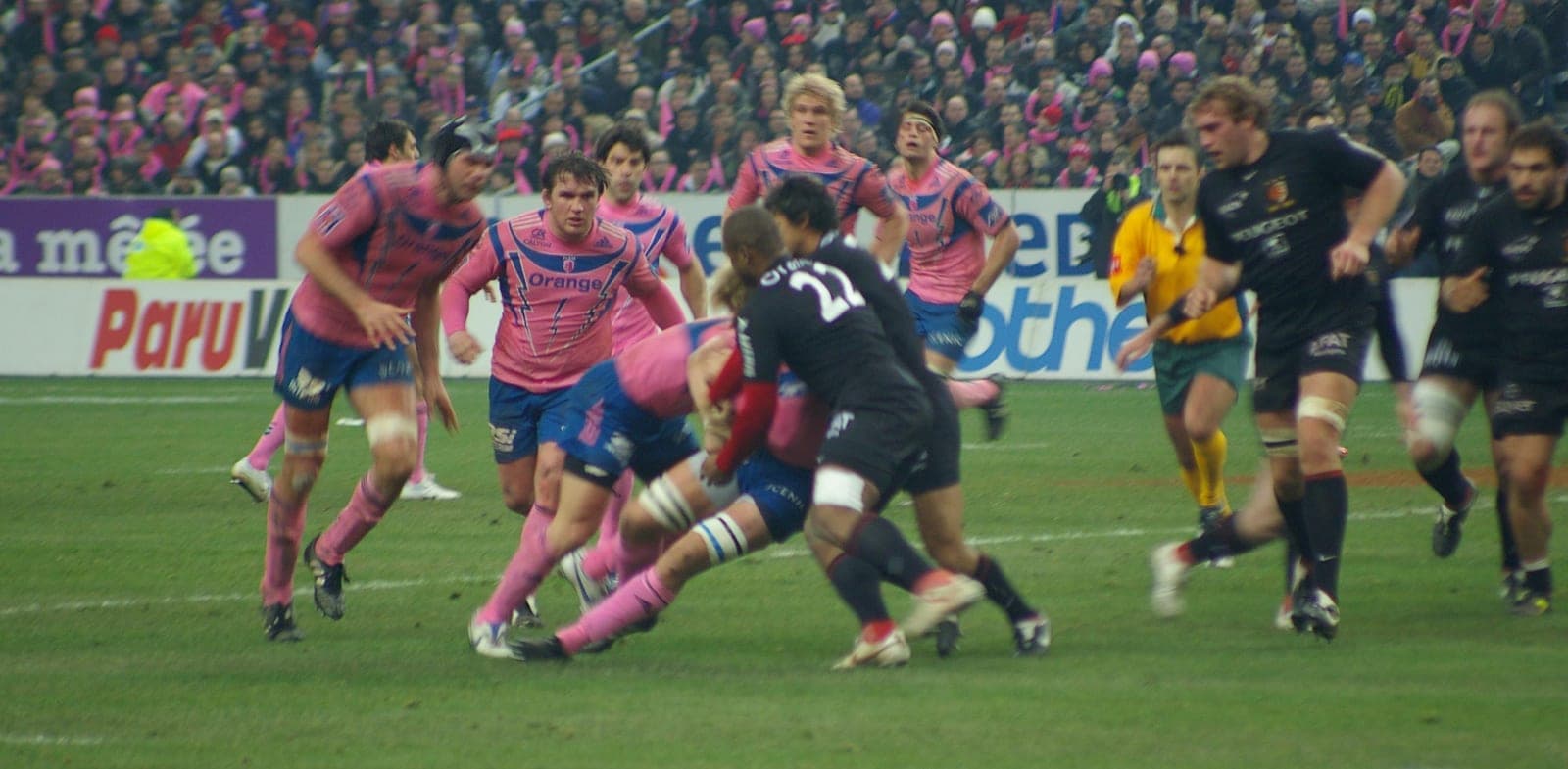
Related positions
Scrum-half
The scrum-half is rugby’s link between forwards and backs, feeding the scrum and delivering quick, accurate passes to launch attacks.
Fly-half
The fly-half is rugby’s chief decision-maker and tactical kicker, directing the backline and controlling how the team attacks.
Hooker
The hooker is a front-row forward in rugby who wins the ball in the scrum and typically throws the ball into the line-out.
Sources
The rules, dimensions and specifications on this page were read from these documents.
- Laws of the Game: Rugby Union — World Rugby, Law 3 — Team; Law 19 — Scrum; Law 18 — Lineout (read 2026-09-12)
How it connects
The meaning-bearing relationships that place Rugby union forwards in the wider knowledge graph — each one with the reason it exists.
Prerequisite of
These need this one first.
Frequently learned together
Taught side by side in the same stage of a learning path.
- Rugby union backsRugby union forwards declares Rugby union backs as “frequently learned together” in its sport cluster.
- Scrum-halfBoth are taught in the “Find your position or role” stage of the Rugby learning path.
- Fly-halfBoth are taught in the “Find your position or role” stage of the Rugby learning path.
- HookerBoth are taught in the “Find your position or role” stage of the Rugby learning path.
- PlaymakerBoth are taught in the “Find your position or role” stage of the Rugby learning path.
Supports
Helps the training or recovery side of these.
Explore across the knowledge base
Follow the threads that connect Rugby union forwards to the rest of SocialSportHub.
Rules
- The scrumRugby union's eight-player set piece — the 3-4-1 formation, the referee's crouch-bind-set sequence, where the scrum-half must stand, the throw-in requirements, and how a scrum ends.
- The lineoutHow rugby union restarts play after the ball goes into touch — where the lineout forms, how many players it may contain, the throw requirements, lifting, and the 10-metre offside line.
- The maulThe contest for a ball held off the ground in rugby union — how a maul differs from a ruck, why that difference changes what players may legally do, and why it is a driving weapon.
- Volleyball rotationThe rule that players rotate one position clockwise each time their team wins back the serve.
- Knock-on and forward passThe rule that makes rugby a backwards-passing game — what counts as a knock-on, what makes a pass forward, and why the sanction is usually a scrum rather than a penalty.
Player roles
- PlaymakerThe playmaker is a team's creative hub — the player who orchestrates attacks, controls the tempo and distributes the ball so teammates can score.
- Utility playerA dependable, versatile player who can competently fill several different positions as the team needs, rather than specialising in just one.
Learning paths
Tactics
- Rugby union set-piece strategyWhy the scrum and lineout are attacking platforms rather than restarts — how a set piece fixes defenders in known positions, and what a team is buying when it chooses one over a kick.
- Breakdown strategyThe contest that decides most rugby union matches — when to commit players to a ruck and when to leave it, what a jackal is trying to do, and why the counter-ruck is a gamble.
- Court coverage and rotationVolleyball positioning where players rotate through positions and cover the court as one coordinated unit.
- Rugby union defensive systemsHow a rugby union defence organises fifteen players across the width of the field — the drift, the blitz and the umbrella — and the specific weakness each system accepts.
Sports communication
Go deeper with Rugby union forwards
Everywhere else on the platform that covers Rugby union forwards — assembled from what actually references it, so nothing here is a dead end.
Learn it
Structured courses and paths on the platform that cover this directly.
How this page is maintained
- Content type
- Position
- Provenance
- Tier A — evergreen educational
- Verified external sources
- 0
- Content updated
- 2026-09-01
Evergreen, first-party explanation — it makes no claim that needs an external source. How we handle sources and reviews.