
Rugby
Contact, teamwork and shared effort on the pitch
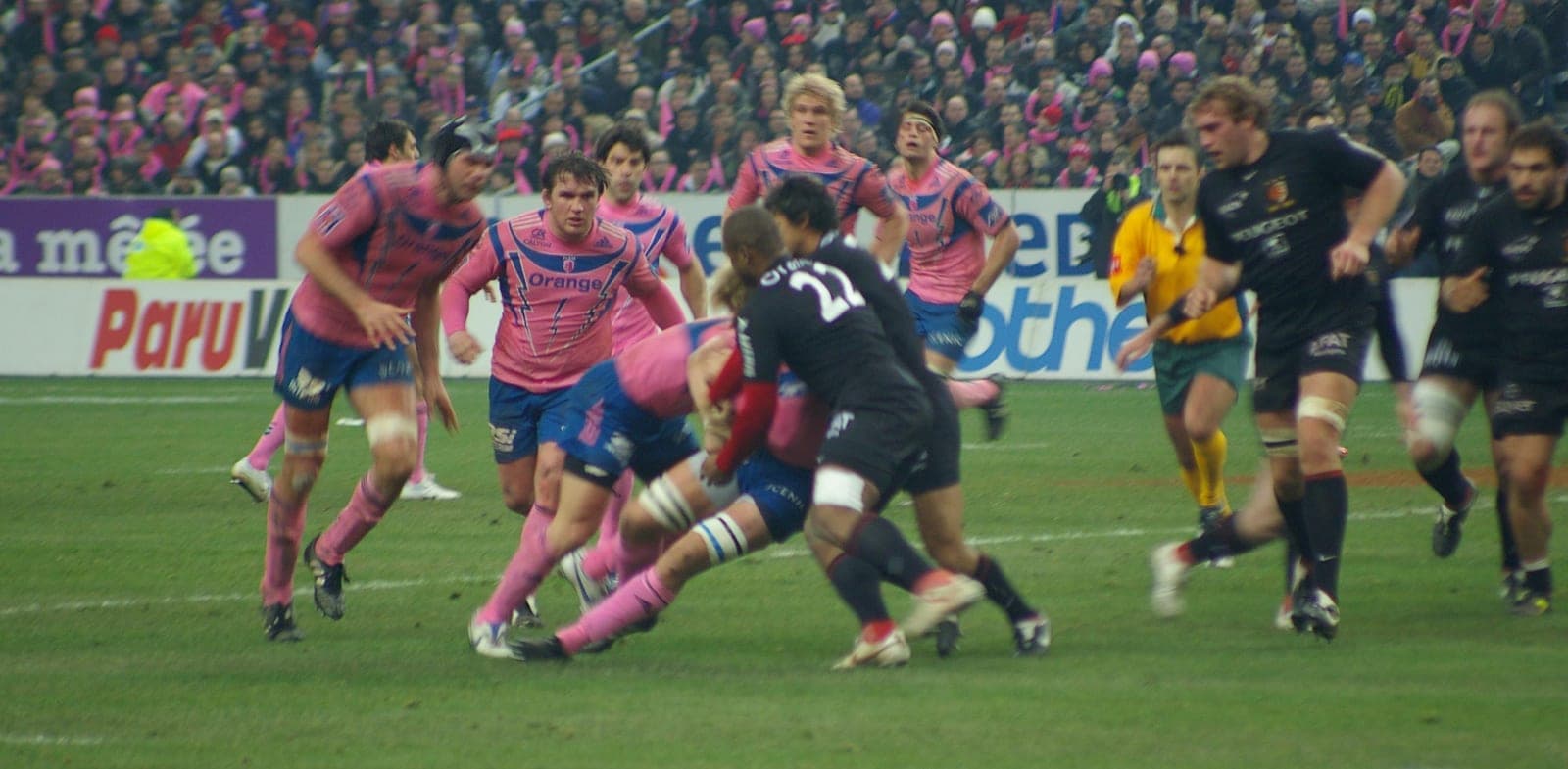

Overview
Rugby is a team sport in which two sides compete to move an oval ball toward the opponent’s line and ground it to score, while also kicking at the posts for additional points. Players carry and pass the ball backward and contest possession through tackling, rucks and set plays.
It is played in several formats, from full-contact games to lower-contact touch and tag variants, so there is a version to suit most levels. The full-contact game rewards teamwork and communication as much as strength, while the reduced-contact formats offer a friendly, accessible way in.
Why rugby is good for your health
- Repeated running and sprinting builds strong cardiovascular fitness
- Develops full-body strength, power and explosive movement
- Improves agility, balance and coordination under pressure
- Combines steady effort with short, intense bursts for all-round conditioning
Physical qualities you’ll build
Rugby is especially good for developing these qualities:
The social side
- A team game that builds camaraderie, trust and belonging
- Clubs are known for their welcoming, social culture on and off the pitch
- Touch and tag formats make it easy for mixed groups to play together
How to start as a beginner
- 1Start with a touch or tag rugby session to learn passing and positioning without contact
- 2Learn to pass and catch the ball moving backward, the core skill of the game
- 3Join a beginners’ or “new to rugby” session at a local club
- 4If moving to the contact game, learn safe tackle technique with a qualified coach
Equipment you’ll need
- MouthguardEssentialRecommended for the contact game
- Rugby boots or studded footwearEssentialStuds grip soft, grassy pitches
- Comfortable sportswearEssential
- A rugby ballOptionalUsually provided at organised sessions
- Padded headgearOptional
Where to play
Rugby is typically played at:
Explore clubs and venues to understand the different places you can play, or see how to find people to play with.
Playing Rugby
The equipment, rules, skills and more that make up the game — each cross-linked into the encyclopedia.
Training for Rugby
Exercises, methods and example plans that help build what Rugby needs — educational, not personalised prescriptions.
Related sports to explore
If you enjoy Rugby, you might also like these.
American Football
A strategic, position-based team sport of set plays, sprinting and coordinated teamwork on a marked field.

Football
The world’s most popular team sport — endless running, teamwork and community in one game.
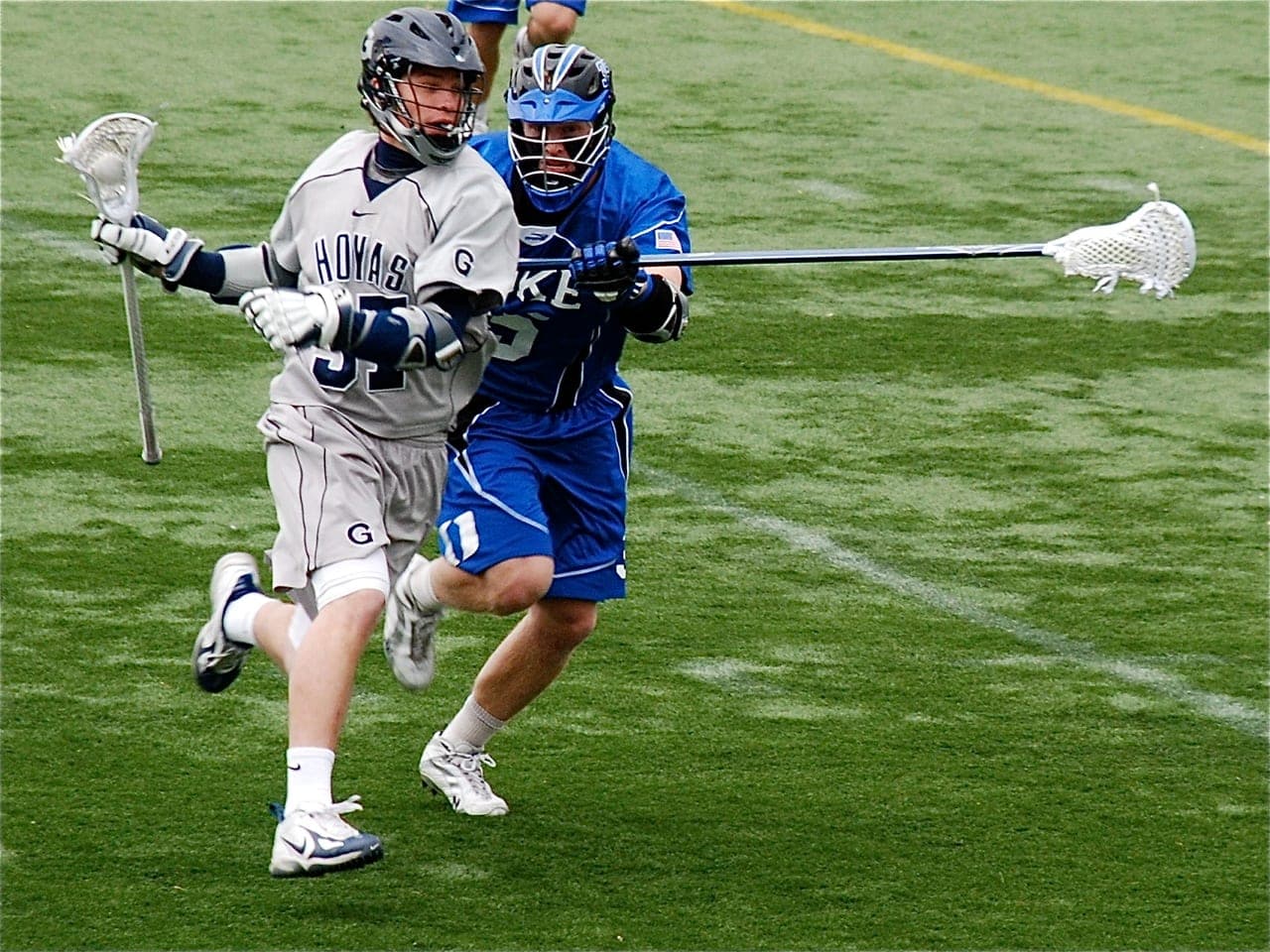
Lacrosse
A fast, stick-and-ball team sport of catching, cradling and shooting a small ball toward a goal.
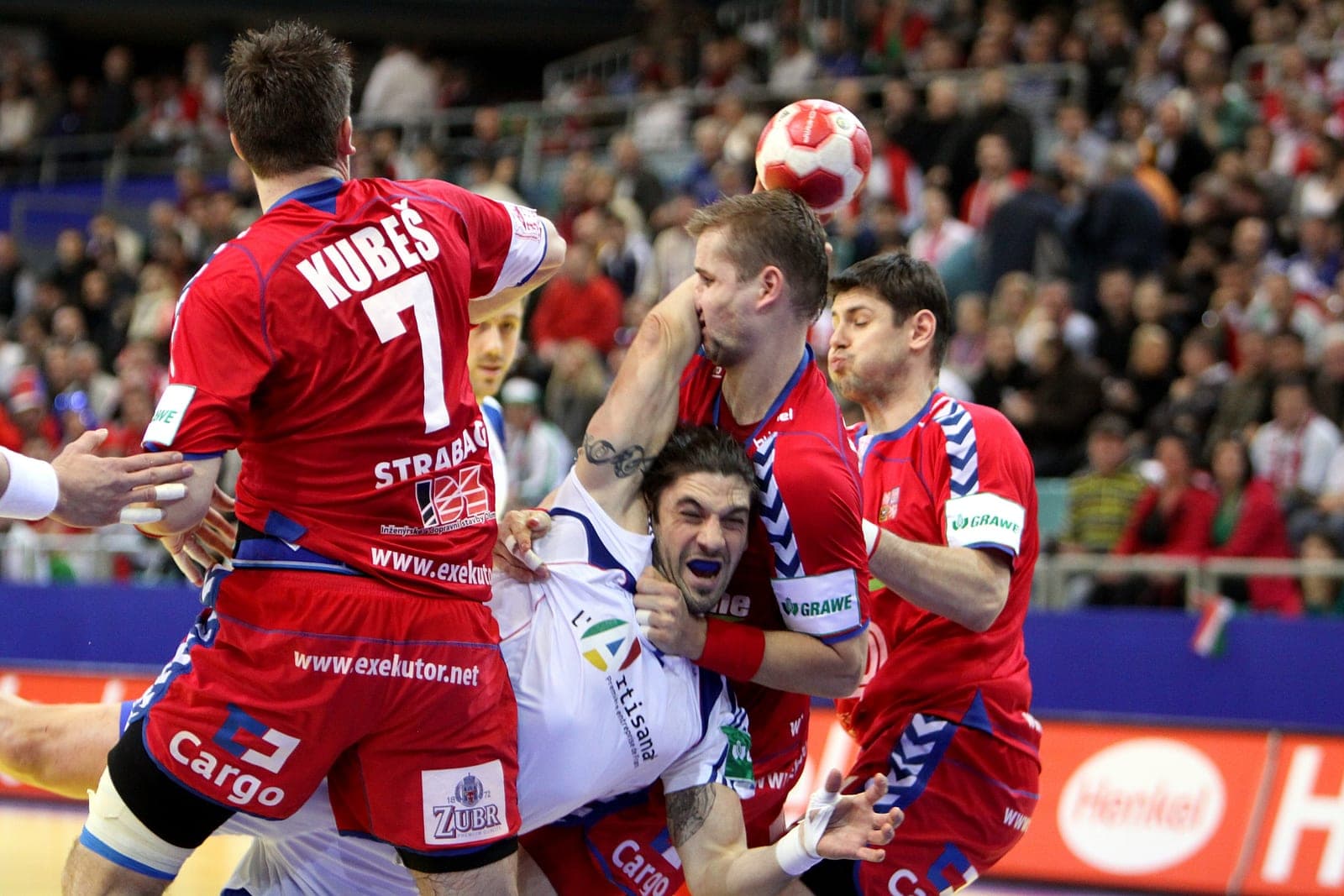
Handball
A fast indoor team sport of passing, jumping and throwing to score with the hands.
Compare Rugby with…
Deciding between Rugby and something similar? See how they line up side by side.
American Football vs Rugby
How they compare on difficulty, intensity, kit and what suits you.
Football vs Rugby
How they compare on difficulty, intensity, kit and what suits you.
Handball vs Rugby
How they compare on difficulty, intensity, kit and what suits you.
Lacrosse vs Rugby
How they compare on difficulty, intensity, kit and what suits you.
Reach your goals with Rugby
People take up Rugby for all kinds of reasons. Here is what it can help you work towards.
How it connects
The meaning-bearing relationships that place Rugby in the wider knowledge graph — each one with the reason it exists.
Alternative to
Comparable enough that people choose between them.
- American FootballRugby and American Football are close enough that the platform maintains a side-by-side comparison of them.
- FootballRugby and Football are close enough that the platform maintains a side-by-side comparison of them.
- HandballRugby and Handball are close enough that the platform maintains a side-by-side comparison of them.
- LacrosseRugby and Lacrosse are close enough that the platform maintains a side-by-side comparison of them.
Helps achieve
A recognised route towards these goals.
Explore across the knowledge base
Follow the threads that connect Rugby to the rest of SocialSportHub.
Learning paths
Glossary
- Advantage (Rule)A rule that lets play continue after a foul when stopping would benefit the offending team, rather than immediately awarding a free kick.
- Advantage PlayedA decision to let play continue after a foul because stopping it would benefit the team that committed the offence.
- Aggregate (Two-legged Tie)A tie decided by the combined score of two matches, one played at each team's ground.
- Aggregate ScoreThe combined total of scores across two or more matches used to decide a multi-leg tie.
- Assistant Referee (Linesman)A supporting match official who patrols a line or touchline to judge offside, out-of-play, and other calls, advising the main referee.
Movement patterns
- GaitThe cyclic, alternating single-leg pattern of walking and running that carries the body across the ground — the base of most field and endurance sport.
- JumpThe plyometric pattern of projecting the body off the ground through explosive triple extension and controlling the landing — the core expression of lower-body power.
- SquatA knee-dominant pattern: bending the hips, knees and ankles to lower and rise while keeping the torso upright — the foundation of lower-body strength.
- PushPressing a load or the body away from the torso — horizontally or overhead — by extending the shoulders and elbows, developing the chest, shoulders and triceps.
- CarryHolding and transporting a load while keeping the trunk braced and stable — an anti-movement pattern that builds grip, core stability and full-body strength.
Coaching concepts
- Decision-Making PracticeTraining athletes to read cues and choose the right action under pressure — coupling perception to action, not just rehearsing physical technique in isolation.
- Constraints-Led PracticeA coaching approach that adjusts the task, environment or rules so a desired movement or decision emerges in practice, rather than being explicitly instructed.
- Small-Sided GamesPractising in scaled-down versions of a sport — fewer players, smaller area — so skills and decisions happen more often in a game-like setting.
- Session StructureHow a practice session is organised into phases — warm-up, main focus, game application and cool-down — so time is used well and learning sticks.
Skills Academy
- Team-play skillsThe skills that make a team work — combining, covering and communicating through the ball.
- Ball-sport skillsThe skills that recur across ball games — control, passing, dribbling, shooting and defending.
- Object-control skillsHandling a ball or implement — controlling, receiving, passing and moving it with intent.
Go deeper with Rugby
Everywhere else on the platform that covers Rugby — assembled from what actually references it, so nothing here is a dead end.
Learn it
Structured courses and paths on the platform that cover this directly.
See it
Diagrams and step-through visualisations drawn for this subject.
Compare it
Head-to-head studies against the entities people actually weigh it against.
Kit it out
Equipment guidance drawn from the graph, with no brands and no affiliate links.
Take it away
Open data and the whole-platform view of this subject.
How this page is maintained
- Content type
- Sport
- Provenance
- Tier A — evergreen educational
- Verified external sources
- 0
- Content updated
- 2026-07-06
Evergreen, first-party explanation — it makes no claim that needs an external source. How we handle sources and reviews.
Keep going
A sport is most rewarding alongside good habits, sensible nutrition and people to share it with. Here is where to go next.
How movement supports body and mind.
Eat well to feel and perform better.
Build routines that stick.
Ways to meet others and play together.
Where to play and what to expect.
Browse the full list by category.