
Three-hit rule
The volleyball rule that a team may contact the ball at most three times before it must cross the net.
Overview
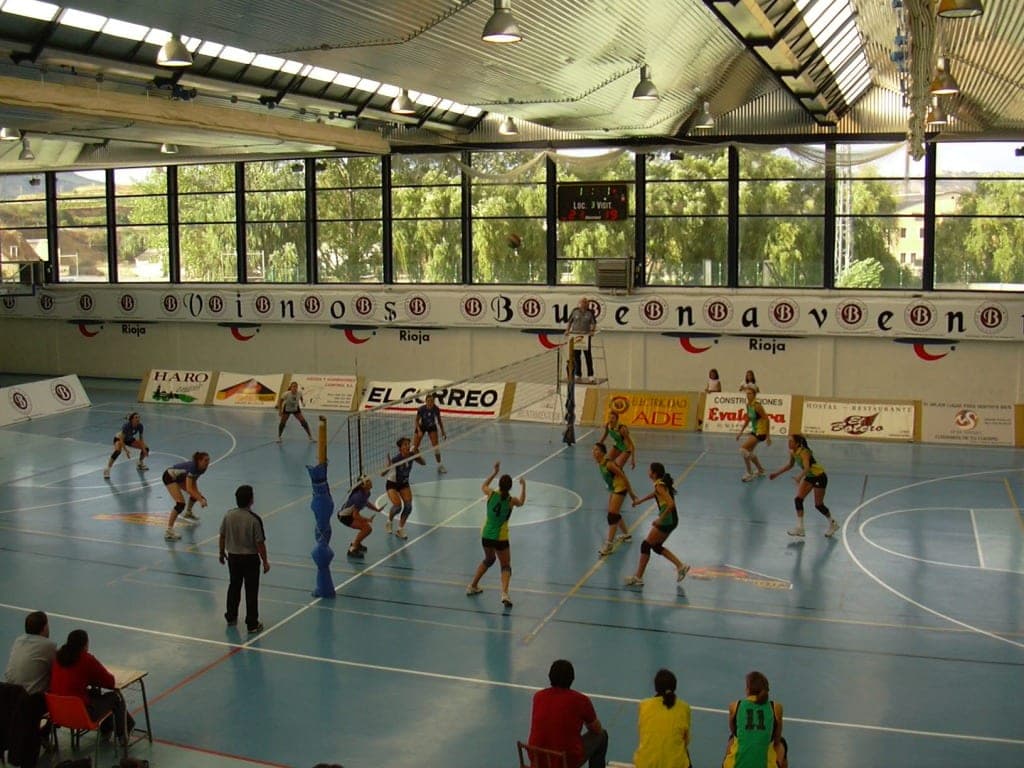
A team is allowed a maximum of three touches to play the ball back over the net, typically a dig to control it, a set to place it, and a spike to attack. Using a fourth touch is a fault and gives the point to the opponents.
No single player may hit the ball twice in a row, apart from certain block situations. A block touch is usually not counted as one of the three team contacts.
Key points
- A team has at most three contacts before returning the ball.
- A fourth touch is a fault and loses the rally.
- The same player may not hit the ball twice in succession, aside from a block.
- A touch off the block is generally not counted as one of the three.
Where it’s used
Sports that use three-hit rule:
Related rules
Out of bounds
The rule that a ball or player leaving the marked playing area is out of play and possession is decided at the boundary.
Volleyball rotation
The rule that players rotate one position clockwise each time their team wins back the serve.
Touching the net
A net-play rule that penalises a player for contacting the net during a rally in net-divided sports.
How it connects
The meaning-bearing relationships that place Three-hit rule in the wider knowledge graph — each one with the reason it exists.
Frequently learned together
Taught side by side in the same stage of a learning path.
- Out of boundsBoth are taught in the “Get to know the game” stage of the Volleyball learning path.
- Volleyball rotationBoth are taught in the “Get to know the game” stage of the Volleyball learning path.
- Touching the netBoth are taught in the “Get to know the game” stage of the Volleyball learning path.
- Ball-handling faultsBoth are taught in the “Get to know the game” stage of the Volleyball learning path.
- Volleyball scoringBoth are taught in the “Get to know the game” stage of the Volleyball learning path.
Explore across the knowledge base
Follow the threads that connect Three-hit rule to the rest of SocialSportHub.
Scoring systems
- Volleyball scoringVolleyball uses rally scoring, in which a point is won on every rally, and matches are decided over a best-of-five sets.
- Basketball scoringBasketball is scored by shooting the ball through the hoop, with baskets worth one, two or three points depending on where the shot is taken.
- Badminton scoringBadminton uses rally scoring to 21 points per game, with matches decided over the best of three games.
- Scoring in rugby unionThe five ways points are scored in rugby union and what each is worth — try, conversion, penalty try, penalty goal and drop goal — with the rule that surprises people about the penalty try.
Officiating
- Penalty SignalA standardized hand or flag signal an official uses to announce a foul, penalty, or restart so players, teammates, and spectators can read the call.
- AdvantageIn many sports, officials let play continue after a foul when stopping would help the offender, so the fouled team keeps the advantage it has gained.
- UmpireA match official who rules on lines, serves and dismissals in racket, bat-and-ball and net sports such as tennis, cricket and baseball — and, in racket sports, also keeps the running score.
Positions
- SetterThe setter is volleyball’s playmaker, taking the team’s second contact and delivering accurate sets for hitters to attack.
- Outside hitterThe outside hitter attacks from the left side of the net and is often a volleyball team’s main scoring option.
- The goaltenderHockey's most specialised position — how a goaltender covers a 1.83 m by 1.22 m net, what the butterfly style is for, and the rule protections and restrictions unique to the role.
- LiberoThe libero is a defensive volleyball specialist who wears a contrasting shirt, plays only in the back row, and cannot attack the ball above the height of the net.
- Middle blockerThe middle blocker plays in the centre of the net, leading the team’s blocking and attacking with fast, quick sets.
Techniques
- Volleyball SpikeA powerful attacking hit that drives the ball sharply downward over the net into the opponent's court, usually after an approach and jump.
- Table tennis serve techniqueHow to serve legally and still create an advantage — generating spin within the rules, keeping the ball short, and why disguise must come from contact rather than concealment.
- Volleyball DigA defensive contact that keeps a hard-driven ball in play by passing it up off the forearms, usually from a low position.
- Flat, slice and kick servesThe three serves and what actually separates them — the contact point on the ball and the toss that makes it possible — plus what each one does to the ball after it bounces.
- VolleyA shot played near the net by blocking the ball out of the air before it bounces, using a short, firm punch rather than a full swing.
Go deeper with Three-hit rule
Everywhere else on the platform that covers Three-hit rule — assembled from what actually references it, so nothing here is a dead end.
Learn it
Structured courses and paths on the platform that cover this directly.
Take it away
Open data and the whole-platform view of this subject.
How this page is maintained
- Content type
- Rule
- Provenance
- Tier A — evergreen educational
- Verified external sources
- 0
- Content updated
- 2026-09-12
Evergreen, first-party explanation — it makes no claim that needs an external source. How we handle sources and reviews.