
Outside hitter
The outside hitter attacks from the left side of the net and is often a volleyball team’s main scoring option.
Overview
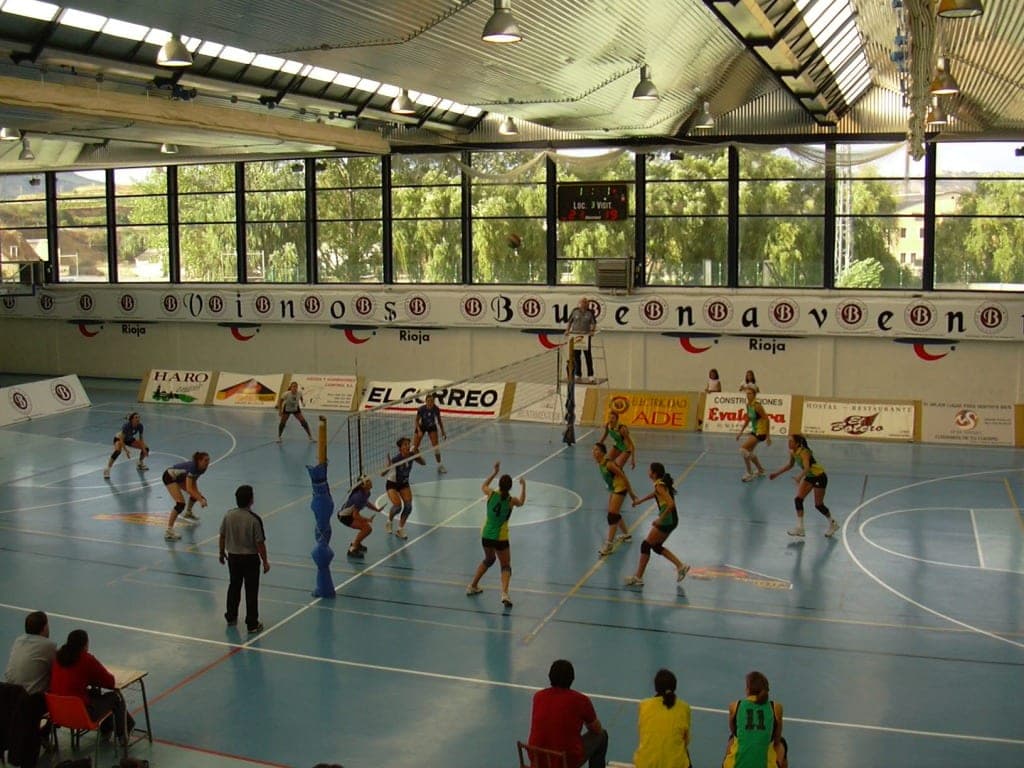
The outside hitter, also called the left-side hitter, is a primary attacker who spikes from the front-left and often from the back row too. They receive many of the team’s sets, including in difficult situations.
Because they play all the way around the court, outside hitters also take part in serve-receive and defence, making them well-rounded, high-volume players.
Responsibilities
- Attacks and spikes from the left side of the net.
- Receives the majority of sets, including under pressure.
- Takes part in serve-receive and passing.
- Defends in the back row and covers tips.
- Provides a reliable, all-round scoring option.
Where it’s used
Sports that use outside hitter:
Related positions
Setter
The setter is volleyball’s playmaker, taking the team’s second contact and delivering accurate sets for hitters to attack.
Middle blocker
The middle blocker plays in the centre of the net, leading the team’s blocking and attacking with fast, quick sets.
Libero
The libero is a defensive volleyball specialist who wears a contrasting shirt, plays only in the back row, and cannot attack the ball above the height of the net.
How it connects
The meaning-bearing relationships that place Outside hitter in the wider knowledge graph — each one with the reason it exists.
Frequently learned together
Taught side by side in the same stage of a learning path.
- SetterBoth are taught in the “Find your position or role” stage of the Volleyball learning path.
- Middle blockerBoth are taught in the “Find your position or role” stage of the Volleyball learning path.
- LiberoBoth are taught in the “Find your position or role” stage of the Volleyball learning path.
- OppositeBoth are taught in the “Find your position or role” stage of the Volleyball learning path.
- PlaymakerBoth are taught in the “Find your position or role” stage of the Volleyball learning path.
Explore across the knowledge base
Follow the threads that connect Outside hitter to the rest of SocialSportHub.
Player roles
- PlaymakerThe playmaker is a team's creative hub — the player who orchestrates attacks, controls the tempo and distributes the ball so teammates can score.
- FinisherA finisher is the attacking outlet in a team sport whose main job is converting chances into points — the striker, goal shooter or go-to scorer.
- SweeperA covering defender who plays behind the main defensive line, free of a fixed marking job, to read danger and clean up attacks that slip past teammates.
- Target playerA target player is a focal attacker who receives, holds up and links play for others, often physically strong and good in the air or with the hands.
Skills
Tactics
- Serve-receive formationHow a volleyball team arranges its passers to receive the serve and set up a clean first attack.
- The forecheckHow a hockey team attacks in the opposition's defensive zone without the puck — the 1-2-2, 2-1-2 and trap approaches, and what each one risks to win the puck back.
- Net position and the lobThe tactical core of padel — why the pair at the net wins most points, why the lob is the main weapon for taking that position, and how the walls make the exchange repeatable.
- Breakaway and pelotonThe cycling tension between the main pack riding together and small groups that break clear to gain time.
- Court coverage and rotationVolleyball positioning where players rotate through positions and cover the court as one coordinated unit.
Rules
- Three-hit ruleThe volleyball rule that a team may contact the ball at most three times before it must cross the net.
- Touching the netA net-play rule that penalises a player for contacting the net during a rally in net-divided sports.
- Volleyball rotationThe rule that players rotate one position clockwise each time their team wins back the serve.
Scoring systems
- Volleyball scoringVolleyball uses rally scoring, in which a point is won on every rally, and matches are decided over a best-of-five sets.
- Runs and boundaries in cricketHow runs are actually scored in cricket — by running, by finding the boundary, and by the penalties the fielding side concedes — and how each kind is credited in the scorebook.
- Football (soccer) scoringFootball is scored by goals, with each goal worth one point and the team scoring the most goals winning the match.
- Scoring in rugby unionThe five ways points are scored in rugby union and what each is worth — try, conversion, penalty try, penalty goal and drop goal — with the rule that surprises people about the penalty try.
- Tennis scoringTennis is scored in points, games and sets, using the distinctive 15–30–40 point sequence and a win-by-two margin at every level.
Go deeper with Outside hitter
Everywhere else on the platform that covers Outside hitter — assembled from what actually references it, so nothing here is a dead end.
Learn it
Structured courses and paths on the platform that cover this directly.
How this page is maintained
- Content type
- Position
- Provenance
- Tier A — evergreen educational
- Verified external sources
- 0
- Content updated
- 2026-09-12
Evergreen, first-party explanation — it makes no claim that needs an external source. How we handle sources and reviews.