
Out of bounds
The rule that a ball or player leaving the marked playing area is out of play and possession is decided at the boundary.
Overview
Most court and field sports mark a boundary, and the ball is out of play once it fully crosses that line. In basketball the ball is out when it or the player holding it touches the floor outside the sidelines or baseline, and possession passes to the team that did not cause it to go out.
The exact test for the boundary varies by sport — whether the whole ball must cross the line, and whether the line itself counts as out — but the shared idea is that play only continues inside the marked area.
Key points
- The boundary lines are usually treated as out of play.
- A player standing out of bounds while holding the ball is out.
- Possession normally goes to the team that did not send the ball out.
- The precise test differs from sport to sport.
Where it’s used
Sports that use out of bounds:

Basketball
A fast, dynamic team sport of running, jumping and quick decisions on court.
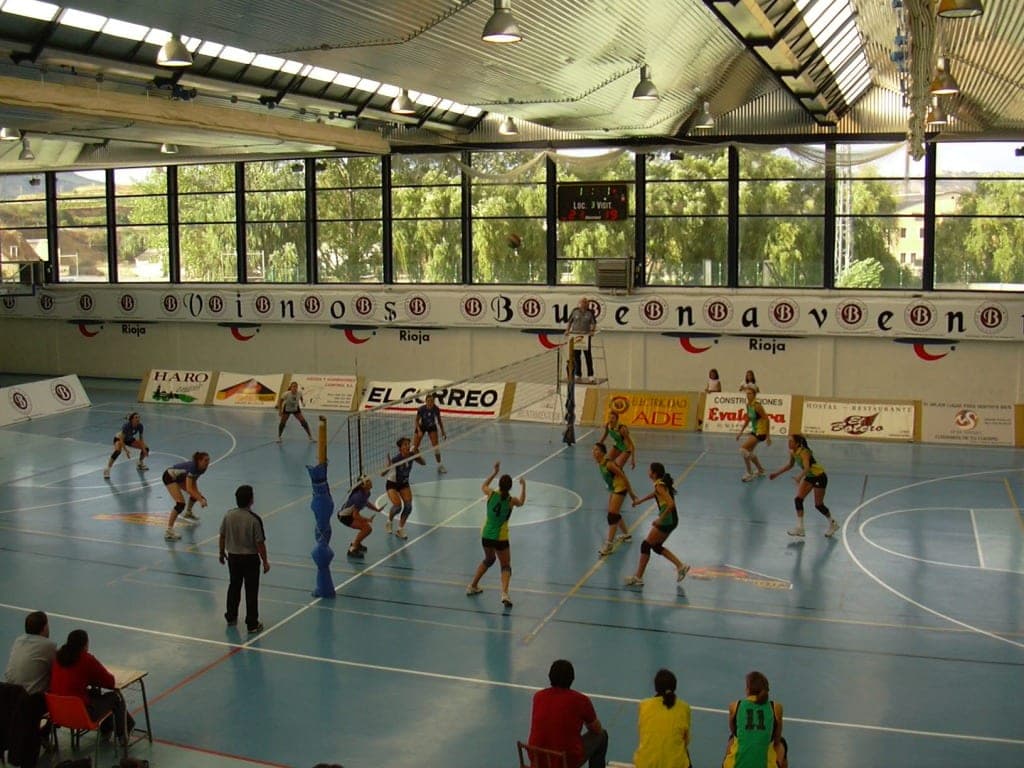
Volleyball
A non-contact team sport of rallies, jumps and teamwork — indoors or on the beach.
American Football
A strategic, position-based team sport of set plays, sprinting and coordinated teamwork on a marked field.
Related rules
Traveling
A basketball violation for moving illegally with the ball without dribbling it.
Double dribble
A basketball violation for dribbling with two hands at once, or for dribbling again after picking up the ball.
Shot clock
A timing rule that requires the attacking basketball team to attempt a shot within a set number of seconds.
How it connects
The meaning-bearing relationships that place Out of bounds in the wider knowledge graph — each one with the reason it exists.
Frequently learned together
Taught side by side in the same stage of a learning path.
- Volleyball rotationBoth are taught in the “Get to know the game” stage of the Volleyball learning path.
- Three-hit ruleBoth are taught in the “Get to know the game” stage of the Volleyball learning path.
- Touching the netBoth are taught in the “Get to know the game” stage of the Volleyball learning path.
- Ball-handling faultsBoth are taught in the “Get to know the game” stage of the Volleyball learning path.
- Volleyball scoringBoth are taught in the “Get to know the game” stage of the Volleyball learning path.
Explore across the knowledge base
Follow the threads that connect Out of bounds to the rest of SocialSportHub.
Officiating
- RefereeThe primary on-field official who enforces the rules, controls play, penalises fouls, awards restarts, and blows the whistle to start and stop a match.
- UmpireA match official who rules on lines, serves and dismissals in racket, bat-and-ball and net sports such as tennis, cricket and baseball — and, in racket sports, also keeps the running score.
- Line JudgeA boundary-line official who calls whether the ball or player is in or out and flags foot faults, working under the head referee across many sports.
- Video ReviewVideo review lets officials re-examine footage of a contested moment to confirm or overturn a close call — a goal, a line, a foul — an aid used across many sports.
- Out-of-Bounds CallAn official's ruling that the ball or a player in possession has left the legal playing area, stopping play and handing a restart or possession to the opponent.
Learning paths
- Learn BasketballA structured, educational learning path for basketball — from the rules to skills, techniques, tactics and training.
- Learn VolleyballA structured, educational learning path for volleyball — from the rules to skills, techniques, tactics and training.
- Learn American FootballA structured, educational learning path for american football — from the rules to skills, techniques, tactics and training.
Go deeper with Out of bounds
Everywhere else on the platform that covers Out of bounds — assembled from what actually references it, so nothing here is a dead end.
Learn it
Structured courses and paths on the platform that cover this directly.
Take it away
Open data and the whole-platform view of this subject.
How this page is maintained
- Content type
- Rule
- Provenance
- Tier A — evergreen educational
- Verified external sources
- 0
- Content updated
- 2026-09-12
Evergreen, first-party explanation — it makes no claim that needs an external source. How we handle sources and reviews.