
Approaching the net
How a point is moved forward — which balls justify an approach, why the approach is hit down the line, and the transition volley that has to be played from no-man's land.
Overview
Coming to the net is not a style; it is a response to a specific ball. A short ball, a defensive slice, or a serve that has pulled the opponent wide all create the conditions for an approach. Approaching without one of those conditions hands the opponent a passing shot.
The approach has three parts: the ball that allows it, the approach shot itself, and the transition through the middle of the court where the first volley has to be played.
Why the approach goes down the line
Approaching down the line is the standard advice and it is geometric rather than conventional. A ball hit down the line travels a shorter distance than a crosscourt ball, so it arrives sooner and gives the approaching player more time to get in.
More importantly, it lets the approaching player cover the passing shot. Hitting down the line puts the opponent in a corner, and the net player only has to cover that corner's angles — whereas approaching crosscourt leaves the whole down-the-line pass open.
The transition volley
A player moving forward will usually have to play one volley from around the service line — the area sometimes called no-man's land. It is the hardest volley in tennis because the ball arrives at or below net height and there is no time to get closer.
The answer is to play it deep rather than to try to win the point with it. A deep transition volley buys the time needed to take the final step forward, from which the next volley is played from a genuinely strong position.
Closing and the lob
After each volley the net player moves forward again. Standing still at the service line is the worst available position: too far back to cut off angles and too far forward to defend a lob.
The lob is the main counter, which is why closing is not the same as crowding the net. A net player who closes to a sensible distance can still retreat for an overhead; one who stands on top of the net cannot.
Key points
- Approach only on a ball that justifies it, or you concede a passing shot.
- Down the line is shorter, so the approaching player gets further forward.
- Approaching down the line also makes the passing shot easier to cover.
- The transition volley from near the service line should be hit deep.
- Keep closing after each volley, but not so far that a lob cannot be covered.
Where it’s used
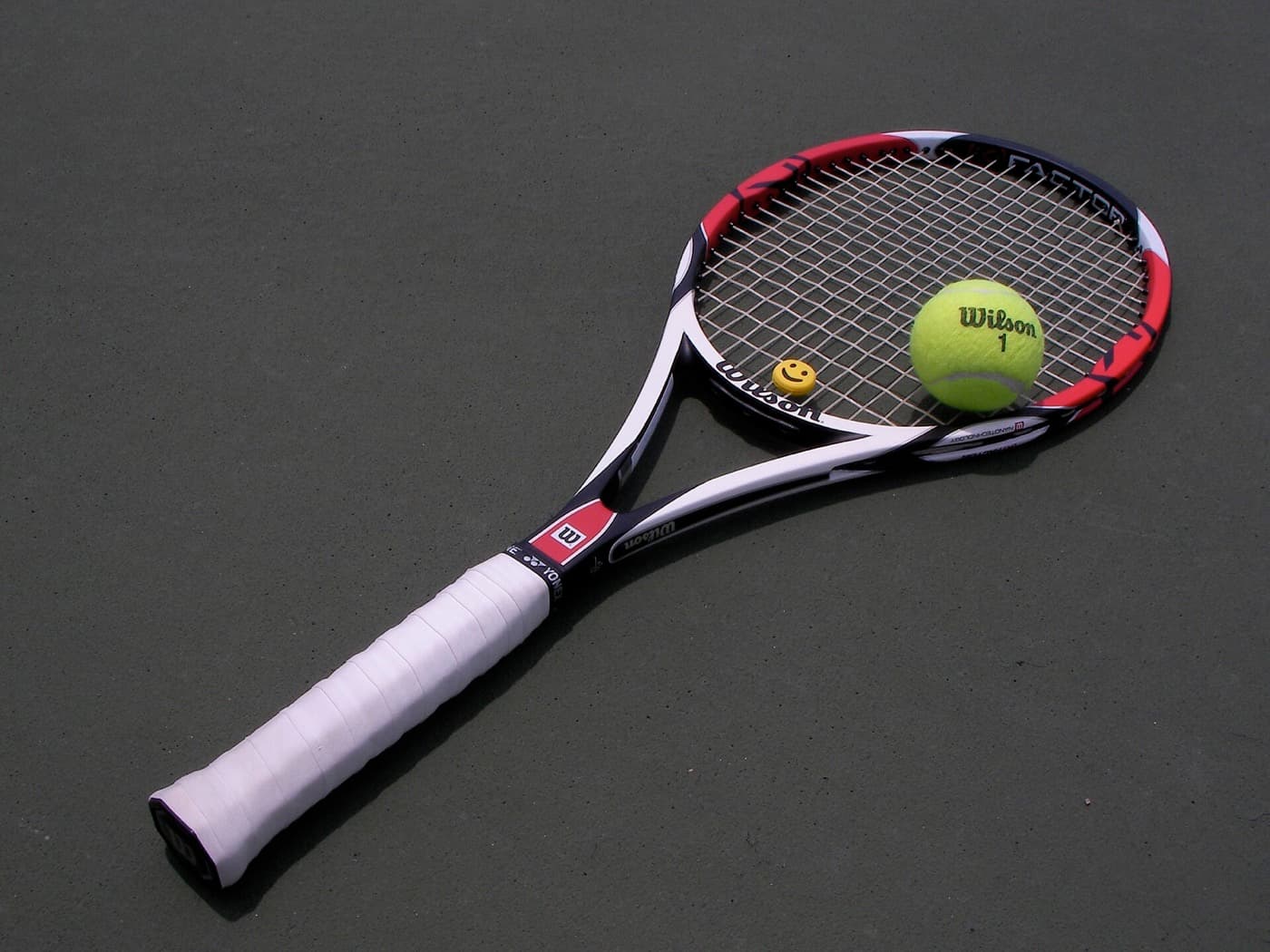
Sports that use approaching the net:
Related tactics
Serve and volley
An attacking tennis tactic where the server follows their serve to the net to finish the point with a volley.
Baseline play
A patient tennis style built around rallying from the back of the court and constructing points with groundstrokes.
Doubles formation
How a pair positions itself on court — one up, one back, or both at the net — to control space in doubles.
Sources
The rules, dimensions and specifications on this page were read from these documents.
- ITF Rules of Tennis — International Tennis Federation, 2026, Rule 1 — The court (read 2026-09-12)
How it connects
The meaning-bearing relationships that place Approaching the net in the wider knowledge graph — each one with the reason it exists.
Builds on
Understanding these first makes this one make sense.
Progresses from
The step that comes before this one in a curated learning order.
Frequently learned together
Taught side by side in the same stage of a learning path.
- Serve and volleyBoth are taught in the “Understand tactics & strategy” stage of the Tennis learning path.
- Baseline playBoth are taught in the “Understand tactics & strategy” stage of the Tennis learning path.
- Doubles formationBoth are taught in the “Understand tactics & strategy” stage of the Tennis learning path.
- Net playBoth are taught in the “Understand tactics & strategy” stage of the Tennis learning path.
- Crosscourt and down the lineBoth are taught in the “Understand tactics & strategy” stage of the Tennis learning path.
Supported by
These help the training or recovery side of this.
Used with
Turns up alongside this across the same sports.
Explore across the knowledge base
Follow the threads that connect Approaching the net to the rest of SocialSportHub.
Techniques
- The slice in tennisThe underspin stroke that changes a rally's height and pace — how slice keeps the ball low, when it is defensive and when it is an attack, and what it does on different surfaces.
- VolleyA shot played near the net by blocking the ball out of the air before it bounces, using a short, firm punch rather than a full swing.
- Volleyball SpikeA powerful attacking hit that drives the ball sharply downward over the net into the opponent's court, usually after an approach and jump.
- Padel BandejaA controlled overhead shot in padel, hit with slice and moderate pace to keep the player at the net without over-committing.
- Table tennis serve techniqueHow to serve legally and still create an advantage — generating spin within the rules, keeping the ball short, and why disguise must come from contact rather than concealment.
Learning paths
Rules
- Tennis serving rulesThe rules governing how a tennis point begins, including where the server stands and where the serve must land.
- No-ballThe illegal delivery in cricket — where the bowler's feet must land, what the Laws say about straightening the arm, and why a no-ball costs a run and has to be bowled again.
- LetA call that stops a point and has it replayed without penalty, used across several racket sports.
- How a point is won in table tennisThe full list of ways a player scores — the returns that fail, the ball through the net, the double hit, the free-hand touch, and the moving-table rule most players never meet.
- Badminton serve rulesThe rules for how a badminton serve must be delivered and where it must land.
Go deeper with Approaching the net
Everywhere else on the platform that covers Approaching the net — assembled from what actually references it, so nothing here is a dead end.
Learn it
Structured courses and paths on the platform that cover this directly.
How this page is maintained
- Content type
- Tactic
- Provenance
- Tier A — evergreen educational
- Verified external sources
- 0
- Content updated
- 2026-09-12
Evergreen, first-party explanation — it makes no claim that needs an external source. How we handle sources and reviews.