
One legal football can hold nearly twice the pressure of another
Law 2 specifies the ball in five lines. Read the tolerances rather than the numbers and the specification turns out to be unusually loose in the one property that most changes how the ball behaves — and to be pinned to a place and a moment that no match actually occupies.
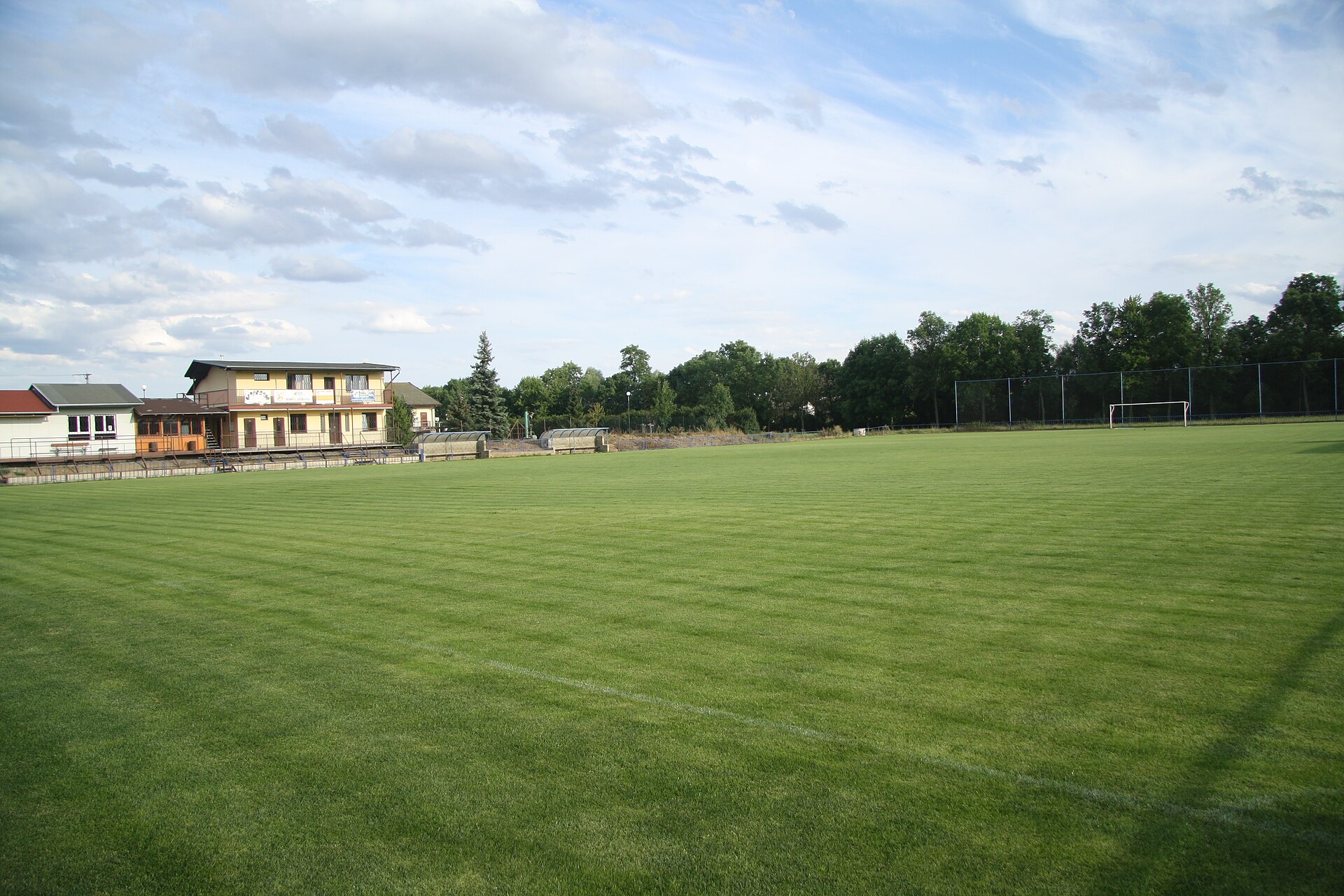
Law 2 is one of the shortest laws in football, and the first part of it is a list.
All balls must be spherical, made of suitable material, of a circumference between 68 cm and 70 cm, between 410 g and 450 g in weight at the start of the match, and of a pressure equal to 0.6–1.1 atmosphere at sea level.
Reference The five qualities and measurements a ball must satisfy, from Law 2.1.
Five requirements. The interesting thing is not any of the numbers. It is how wide each tolerance is, and how differently wide they are from one another.
The tolerances, side by side
Circumference may vary by 2 cm on 68 — a range of 2.9 per cent. Because volume goes as the cube of a linear dimension, the largest legal ball encloses about 9.1 per cent more air than the smallest.
Mass may vary by 40 g on 410 — 9.8 per cent.
Pressure may vary from 0.6 to 1.1 atmospheres. The upper limit is 1.83 times the lower.
How much Law 2 lets a football vary
Permitted range as a percentage of the smallest legal value
The numbers behind this chart
| Row | Permitted range as a percentage of the smallest legal value | Detail |
|---|---|---|
| Circumference | 3 | 68–70 cm |
| Enclosed volume | 9 | derived from circumference |
| Mass at kick-off | 10 | 410–450 g |
| Inflation pressure | 83 | 0.6–1.1 atmosphere at sea level |
Source The IFAB, Laws of the Game 2026/27, Law 2.1.
Method Each value is (maximum − minimum) ÷ minimum, expressed as a percentage. Volume is derived from circumference by cubing the ratio of the two limits; it is not separately specified in Law 2.
The law is tight about how big the ball is, loose about how heavy it is, and very nearly indifferent to how hard it is.
That ordering is the wrong way round for the game. Circumference is the property a player notices least: two centimetres on a 22 cm ball is barely perceptible in the air. Pressure is the property they notice most. It sets how far the ball deforms on contact, how much of the energy of a strike comes back out of it, how it sits on a first touch, how it feels against a forehead. A ball at 0.6 atmospheres and a ball at 1.1 are two different objects to play with, and Law 2 calls them both legal.
Two clauses with conditions attached
Read the wording again and two qualifiers do real work.
“At the start of the match.” The mass requirement has a time index. A ball is 410–450 g at kick-off, and Law 2 says nothing about what it may weigh at any point afterwards. This is not an oversight; it is the only workable rule for an object played outdoors on grass. A leather-covered ball in rain gains water, and a specification that had to hold for ninety minutes would be unenforceable in exactly the conditions where it mattered. So the law abandons the claim rather than pretend to it.
“At sea level.” The pressure requirement has a place index — and, unlike the mass clause, this one is left dangling. Atmospheric pressure falls with altitude, so a gauge reading taken in a stadium two thousand metres up describes a different physical situation from the same reading at the coast. Law 2 states its condition and then offers no adjustment for the many stadiums that do not meet it.
Other sports have gone further. The ITF specifies a High Altitude tennis ball for play above 1,219 m, and a pressureless Type 2 ball that may be used above that altitude provided it has been acclimatised for sixty days or more at the altitude of the specific tournament.
Reference The High Altitude ball type, the 1,219 m threshold, and the sixty-day acclimatisation requirement for a pressureless ball, from the ITF’s ball specification and its notes.
Sixty days of acclimatisation is a demanding rule to write and a demanding one to keep. Tennis wrote it because its ball is small, light and struck at speed, so the air it flies through dominates its behaviour; football’s ball is heavier and slower relative to its size, and the sport has never judged the correction worth the machinery. Law 2 marks where the specification stops being exact and leaves it there.
Where the real specification lives
The reason the law can afford to be loose is that it is not the whole standard.
Law 2 requires that balls in official competitions organised by FIFA or the confederations bear one of the marks of the FIFA Quality Programme for Footballs. And it says exactly what the mark means: that the ball has been tested and meets the specific technical requirements for that mark, additional to the minimum specifications stipulated in Law 2, and approved by The IFAB.
Reference The FIFA Quality Programme requirement, and the statement that each mark’s requirements are additional to Law 2’s minimum specifications and must be approved by The IFAB, from Law 2.1.
That single sentence rearranges the picture. Law 2 is a floor, not a specification. The properties a top-level ball actually has to satisfy — the ones covering roundness under repeated impact, water uptake, rebound consistency and shape retention — live in a testing programme, not in the laws. What the laws retain is the right of approval over that programme.
It is a reasonable division. Laws should be things a referee can apply with a pump and a tape measure, and testing regimes should be things a laboratory can run. But it means the familiar figures — 68 to 70 centimetres, 410 to 450 grams — describe the minimum a ball must clear to be a football at all, and not the ball anyone plays with in a competition that has a quality mark.
What the law protects instead
The rest of Law 2 is about custody, and it is stricter than the specification is.
A defective ball stops play, with a dropped-ball restart; if the ball fails at a kick-off, goal kick, corner, free kick, penalty or throw-in, that restart is retaken instead. During a penalty kick, if the ball becomes defective after it moves forward and before it touches a player, crossbar or posts, the kick is retaken. The ball may not be changed during the match without the referee’s permission. Additional balls may be placed around the field, and their use is under the referee’s control.
Reference The defective-ball procedure, the restart rules for set pieces and penalties, the prohibition on changing the ball without permission, and the referee’s control of additional balls, from Law 2.2 and Law 2.3.
And there is a clause about advertising: no commercial advertising on the ball in FIFA, confederation or national association competitions, other than the competition’s own logo, the organiser’s, and the manufacturer’s trademark — with competition regulations free to restrict even the size and number of those.
Reference The advertising restriction and the exceptions to it, from Law 2.1.
Put the two halves together and the law’s priorities are legible. It cares comparatively little about how hard the ball is and a great deal about who controls which ball is in play, and about what may be printed on it. Those are the things that can be manipulated to advantage during a match, and the things a referee can actually police.
The tolerance on inflation pressure is wide because nobody has found a way for it to be exploited without the players noticing first. A law is not a description of what matters. It is a list of the ways a thing can go wrong that somebody has to be able to stop.
Read the evergreen pages
This piece is an argument. These are the reference pages on SocialSportHub that document the same subjects.
References
- [1]The IFABGoverning body. Laws of the Game 2026/27 — Law 2, The Ball. Accessed 6 September 2026.
- [2]International Tennis FederationGoverning body. ITF Approved Tennis Balls, Classified Surfaces & Recognised Courts 2026 — Appendix I, The Ball. Accessed 6 September 2026.
Continue reading
Editor’s pick
Two pitches, both legal, one two-and-a-half times the other
Law 1 gives the football pitch a range and every marking on it a single number. Draw the legal extremes at the same scale and the consequence is unmistakable: the penalty areas cover a third of the smallest permitted field and an eighth of the largest.
Editor’s pick
Four approved tennis balls, one mass, and the two numbers that separate them
The ITF approves four balls for adult tennis. Put their specifications side by side and they agree exactly on weight and on how far they squash — and differ on diameter, on how high they bounce, and on how much shape they have got back before the load comes off.
More on football
Football spent a century leaving time to the referee. The 2026/27 Laws put numbers on it
Ten seconds to leave the field when substituted. A minute off after treatment. A five-second countdown, visibly signalled, on throw-ins and goal kicks. The changes are small individually and they add up to a different way of regulating delay.