
Athletics wrote its recent history into the definition of a shoe
The Athletic Shoe Regulations define an approved shoe in four clauses, and each clause names a different date. Read as a chronology rather than a definition, it is the record of a governing body absorbing a technology it did not anticipate.
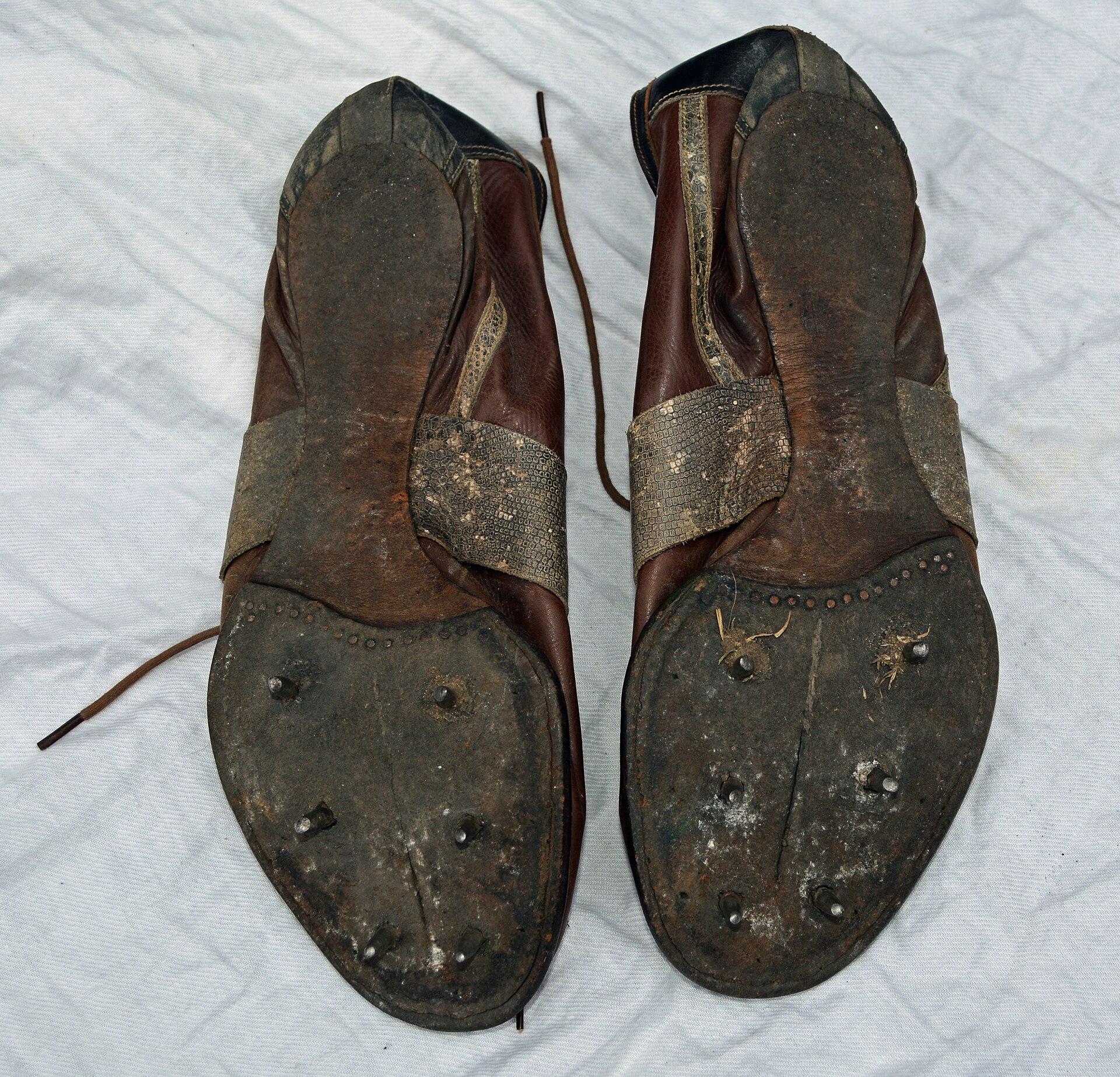
Definitions in a rulebook are usually the dullest part. They fix what a word means so the rest of the document can use it. The Athletic Shoe Regulations open with a definition that does something else: it tells you when everything happened.
An Approved Shoe is one that:
- was worn before 1 January 2016, which is deemed to meet the requirements of the regulations if it meets the maximum sole thicknesses set out in Appendix 2; or
- was an Available Shoe approved by the Chief Executive Officer, or their nominee, under Technical Rule 5 as in force prior to 1 January 2022; or
- was an Available Shoe or, where applicable, a Development Shoe approved under the regulations in force since 1 January 2022 until the effective date of the current regulations; or
- is an Available Shoe or a Development Shoe meeting the current requirements and approved by the Chief Executive Officer or their nominee.
With one exception attached to all four: any shoe that has for any reason been removed from the List of Approved Athletic Shoes.
Reference The four-clause definition of an Approved Shoe, its references to 1 January 2016, Technical Rule 5 in force prior to 1 January 2022, the regulations in force since that date, and the current regulations, and the exclusion of shoes removed from the List, from the Specific Definitions.
Four clauses, three dates, and a list you can be taken off. That is not a definition of a shoe. It is a settlement.
Reading it as a timeline
Turn the clauses around and a sequence appears.
Before 2016, there is no approval regime in the modern sense. The clause does not say those shoes were approved; it says they are deemed to meet the requirements provided they satisfy the thickness table. A retrospective test applied to footwear that predates the test.
Before 1 January 2022, shoes were approved by the Chief Executive Officer under a provision of the Technical Rules — a clause inside the general rules of competition, administered by an individual.
From 1 January 2022, there are dedicated regulations, and the Development Shoe appears as a category for the first time in the sequence.
From 20 April 2026, the current regulations apply, with the same officer approving under a broader framework.
The direction of travel is consistent: from no scheme, to a clause inside the competition rules, to a standalone regulation, to a standalone regulation with an independent examination body and its own appendices. That is what a governing body does when a category of equipment turns out to matter more than the rules assumed.
The clause that expired a generation of shoes
There is a fifth date, and it is not in the definitions. It is in Regulation 8, and it is the harshest sentence in the document.
From 1 November 2024, an Athletic Shoe with a sole greater than the maximum thicknesses set out in the new sole thickness table in Appendix 2, and in force from the same date, is no longer approved and cannot be worn in World Rankings Competitions.
Reference That from 1 November 2024 a shoe with a sole thicker than the new Appendix 2 table is no longer approved and cannot be worn in World Rankings Competitions, from Regulation 8.1.
Compare that with the 2016 clause. Shoes from before 2016 are deemed compliant if they meet the thickness table. Shoes approved under a previous regime lose that approval if they exceed the new table. The regulations grandfather the distant past and de-approve the recent past, and the dividing line is whether the shoe was built to exploit a rule that has since moved.
That is the shape of a regulator responding to a technology shock. Old equipment is not the problem and is left alone. Equipment designed against the previous limit is exactly the problem, and it is withdrawn.
The mechanism for changing its mind
The definitions also build in the ability to reverse a decision, and they do it twice.
Every clause is qualified by the exclusion of shoes removed from the List of Approved Athletic Shoes for any reason. Approval is not a property of a shoe; it is an entry that can be deleted.
And the regulations name a body to examine one: an Independent Body, meaning a suitably qualified expert body, laboratory or institute appointed by the Chief Executive Officer or their nominee to carry out functions under the regulations.
Reference The definition of the Independent Body as a suitably qualified expert body, laboratory or institute appointed by the Chief Executive Officer or their nominee to carry out functions under the regulations, from the Specific Definitions.
Where a shoe is submitted to that body for examination, the measurement carries a 5 per cent sole-thickness tolerance — one millimetre for a 20 mm limit and two for a 40 mm one.
Reference The 5 per cent measurement tolerance applied where a shoe is submitted for examination and investigation by the Independent Body, and its worked values, from Regulation 8.4.2.
The tolerance appears in the investigation path, not in the approval path. Approval is measured against the table on a standard sample; investigation, which happens after a shoe is already in competition and where an adverse finding has consequences for an athlete, gets the margin. The document is more generous when it is taking something away than when it is granting it.
What a chronology in a definition costs
There is a price for writing history into a definition, and it is legibility.
To know whether a shoe is approved, you must know when it was worn, which regime it was approved under, whether the regime that approved it has since been superseded, whether it exceeds a table that changed in 2024, and whether it is currently on a list. Five questions, of which only one is about the shoe.
The alternative — repealing the old clauses and starting again — would be simpler to read and would strand every shoe approved under a previous regime, including footwear athletes already own and manufacturers already sell. World Athletics chose accumulated complexity over a clean break, which is the ordinary choice of any institution that has to keep functioning while it changes its mind.
The javelin, when its specification was revised, did not need this. An implement is supplied by the organiser and checked before the competition, so a rule change replaces the entire population at once. Shoes belong to athletes, are bought years in advance and are worn by thousands of people the governing body has never met. A rule about them has to arrive gradually, and gradually is what these four clauses record.
The document is called the Athletic Shoe Regulations. Its first substantive paragraph is a history of itself.
Read the evergreen pages
This piece is an argument. These are the reference pages on SocialSportHub that document the same subjects.
References
- [1]World AthleticsGoverning body. C2.1A — Athletic Shoe Regulations, approved 19 March 2026, effective 20 April 2026: Specific Definitions, Regulations 8 and 12, and Appendix 2 (World Athletics Book of Rules). Accessed 6 September 2026.
Continue reading
Editor’s pick
The shoe rule never mentions a spring
World Athletics' shoe regulations are read as a limit on how much energy a sole may return. Read the document and the limits are on something else entirely: a thickness at two specified points, the topology of a rigid structure, and whether anyone can buy the shoe.
Editor’s pick
The javelin was redesigned to fly worse, and not for the reason usually given
In 1986 the men's implement was changed so that it would come down nose-first. The world record is the reason everyone cites; World Athletics' own account gives a different one — and the rule that made it work is not about the centre of gravity at all.

More on running
The false-start rule rests on a number the research disputes
World Athletics treats a reaction time under 0.100 seconds as evidence that a sprinter moved before the gun. That threshold is a claim about human physiology, and a study on instrumented blocks found five of nine athletes averaging under it.