
The tennis net sags on purpose, and the rules say by how much
Rule 1 gives the net a height at the posts and a different, lower height in the middle, then requires a strap to hold the middle down. The 15-centimetre difference is the only deliberate asymmetry on a court that is otherwise perfectly symmetrical.
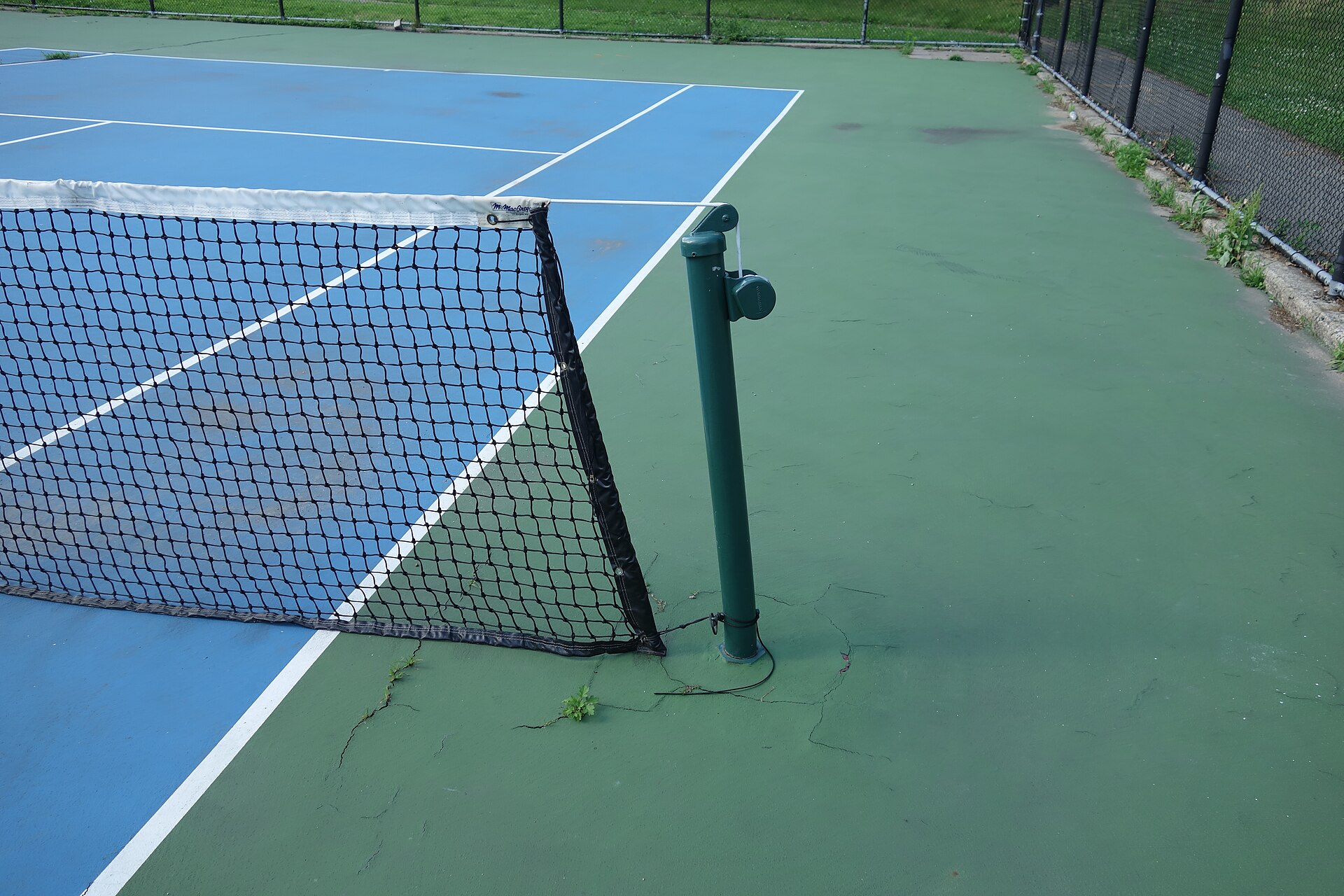
A tennis court is a symmetrical object. The same rectangle each side of the net, the same service boxes, the same baselines and sidelines, measured to the outside of every line. There is exactly one place where the rules deliberately break the symmetry, and it runs across the middle of the court.
The net is suspended from posts at a height of 3½ feet, or 1.07 m. It must be fully extended so that it completely fills the space between the two posts, with a mesh small enough that a ball cannot pass through. And the height of the net shall be 3 feet — 0.914 m — at the centre, where it shall be held down tightly by a strap.
Reference The net-post height of 1.07 m, the requirement that the net completely fill the space between the posts with a mesh a ball cannot pass through, the centre height of 0.914 m, and the strap holding it down, from Rule 1.
Fifteen and a half centimetres lower in the middle than at the ends, and not because the net sags — because a strap pulls it down until it does.
What the shape does
The consequence is that the cheapest place to hit a ball over a tennis net is the centre of the court, and the most expensive is down the line.
That is the opposite of what the rest of the court rewards. Angles are made near the sidelines; a cross-court shot has more court to land in than a straight one, and the geometry of the rectangle pushes play towards the corners. The net pushes back. Every metre a player moves the ball away from the middle, the barrier it has to clear rises.
The two effects are in tension by design, and that tension is where the sport’s shot selection lives. A safe shot down the middle clears a 0.914 m net with the shortest flight; an aggressive shot into a corner clears something nearer 1.07 m with the longest. The court says go wide; the net charges for it.
The furniture, specified to the centimetre
Rule 1 does not stop at the two heights. It specifies the hardware that produces them, and the level of detail is a clue to what matters.
The maximum diameter of the cord or metal cable holding the net is 0.8 cm. The strap may be at most 5 cm wide. The band covering the cord and the top of the net must be between 5 cm and 6.35 cm deep on each side. The strap and band must be completely white.
Reference The 0.8 cm maximum cord or cable diameter, the 5 cm maximum strap width, the 5–6.35 cm band depth on each side, and the requirement that both be completely white, from Rule 1.
The parts that make a tennis net a tennis net
Centimetres — heights and dimensions as Rule 1 states them
The numbers behind this chart
| Row | Centimetres — heights and dimensions as Rule 1 states them | Detail |
|---|---|---|
| Net height at the posts | 107.0 | 3½ feet — Rule 1 |
| Net height at the centre | 91.4 | 3 feet, held by a strap |
| Band depth, each side | 5.0 to 6.4 | covers the cord and the top of the net |
| Strap width, maximum | 5.0 | holds the centre down |
| Cord or cable diameter, max | 0.8 | the thing the net hangs from |
Source ITF, Rules of Tennis 2026, Rule 1.
Method Values as stated in Rule 1, converted to centimetres from the SI figures the rule gives in metres. Where the rule gives a range, both ends are plotted.
Every one of those numbers exists because the object it describes sits exactly where a ball might clip it. A thicker cable, a wider strap or a deeper band would each add a few millimetres to the effective height of the barrier at the point the rule has most carefully specified. The rule is not describing a net; it is bounding how much of the net is not net.
The whiteness requirement is of a piece with it. The strap and band mark the top of the barrier at the two places a player most needs to judge it, and the rule fixes their colour so that judgement does not depend on what a club chose.
Posts outside the court, and the sticks that replace them
The posts have their own geometry, and it changes with what is being played.
For doubles, the centres of the net posts are 0.914 m outside the doubles court on each side. For singles played with a singles net, the posts sit 0.914 m outside the singles court. But if a doubles net is used for singles, the net must be supported at 1.07 m by two singles sticks, whose centres are 0.914 m outside the singles court on each side.
Reference The net-post positions 0.914 m outside the doubles and singles courts, and the requirement that a doubles net used for singles be supported at 1.07 m by singles sticks 0.914 m outside the singles court, from Rule 1.
That last provision is what preserves the shape of the game across formats. Without it, a singles match on a doubles court would be played over a net that only reaches 1.07 m out at the doubles posts — well outside the court in play — so the barrier at the singles sideline would be substantially lower than 1.07 m. The singles sticks restore the correct height at the correct place, so that the tax on a wide shot is the same whichever format is being played on the same court.
The sticks and posts are themselves bounded. Net posts may be no more than 15 cm square or 15 cm in diameter; singles sticks no more than 7.5 cm square or in diameter; and neither may stand more than 2.5 cm above the top of the net cord.
Reference The 15 cm limit on net posts, the 7.5 cm limit on singles sticks, and the 2.5 cm maximum by which either may stand above the net cord, from Rule 1.
The 2.5 cm limit is the same idea as the cable diameter. A post that towered over the net would extend the barrier upward beyond the height the rule specifies, at the very edge of the court, which is where the ball passes closest to it.
The lines, and where a court is measured
The rest of Rule 1 is the court proper, and its measuring convention is worth stating because it inverts what most people assume.
Servicelines are drawn between the singles sidelines, 6.40 m from each side of the net and parallel with it, and the area between the serviceline and the net is divided into two equal service courts by the centre serviceline. Each baseline is divided in half by a centre mark 10 cm long, drawn inside the court.
Reference The servicelines 6.40 m from each side of the net between the singles sidelines, the division into service courts by the centre serviceline, and the 10 cm centre mark drawn inside the court, from Rule 1.
Line widths are then specified: the centre serviceline and centre mark 5 cm wide, the other lines between 2.5 cm and 5 cm, except the baselines, which may be up to 10 cm.
Reference The 5 cm width of the centre serviceline and centre mark, the 2.5–5 cm range for other lines, and the 10 cm maximum for baselines, from Rule 1.
And then the rule that makes those widths matter: all court measurements shall be made to the outside of the lines, and all lines shall be of the same colour, clearly contrasting with the surface.
Reference That all court measurements are made to the outside of the lines, and that all lines must be the same colour and clearly contrast with the surface, from Rule 1.
Measuring to the outside means a wide line grows the court. A baseline at its 10 cm maximum puts the back of the court 7.5 cm further from the net than the same baseline drawn at 2.5 cm — because the measurement runs to the far edge, and the rest of the paint falls inside the area it bounds. That is why the widths are capped, and why the baseline, the one line a ball most often lands near, gets its own larger allowance and its own separate limit.
A tennis court, read this way, is a set of decisions about where a boundary is when the boundary has thickness — and a net that is two different heights because a rule decided which shots should be cheap.
Read the evergreen pages
This piece is an argument. These are the reference pages on SocialSportHub that document the same subjects.
References
- [1]International Tennis FederationGoverning body. Rules of Tennis 2026 — Rule 1, The Court: the net, net posts, singles sticks and court lines. Accessed 6 September 2026.
Continue reading
Editor’s pick
Four approved tennis balls, one mass, and the two numbers that separate them
The ITF approves four balls for adult tennis. Put their specifications side by side and they agree exactly on weight and on how far they squash — and differ on diameter, on how high they bounce, and on how much shape they have got back before the load comes off.
Editor’s pick
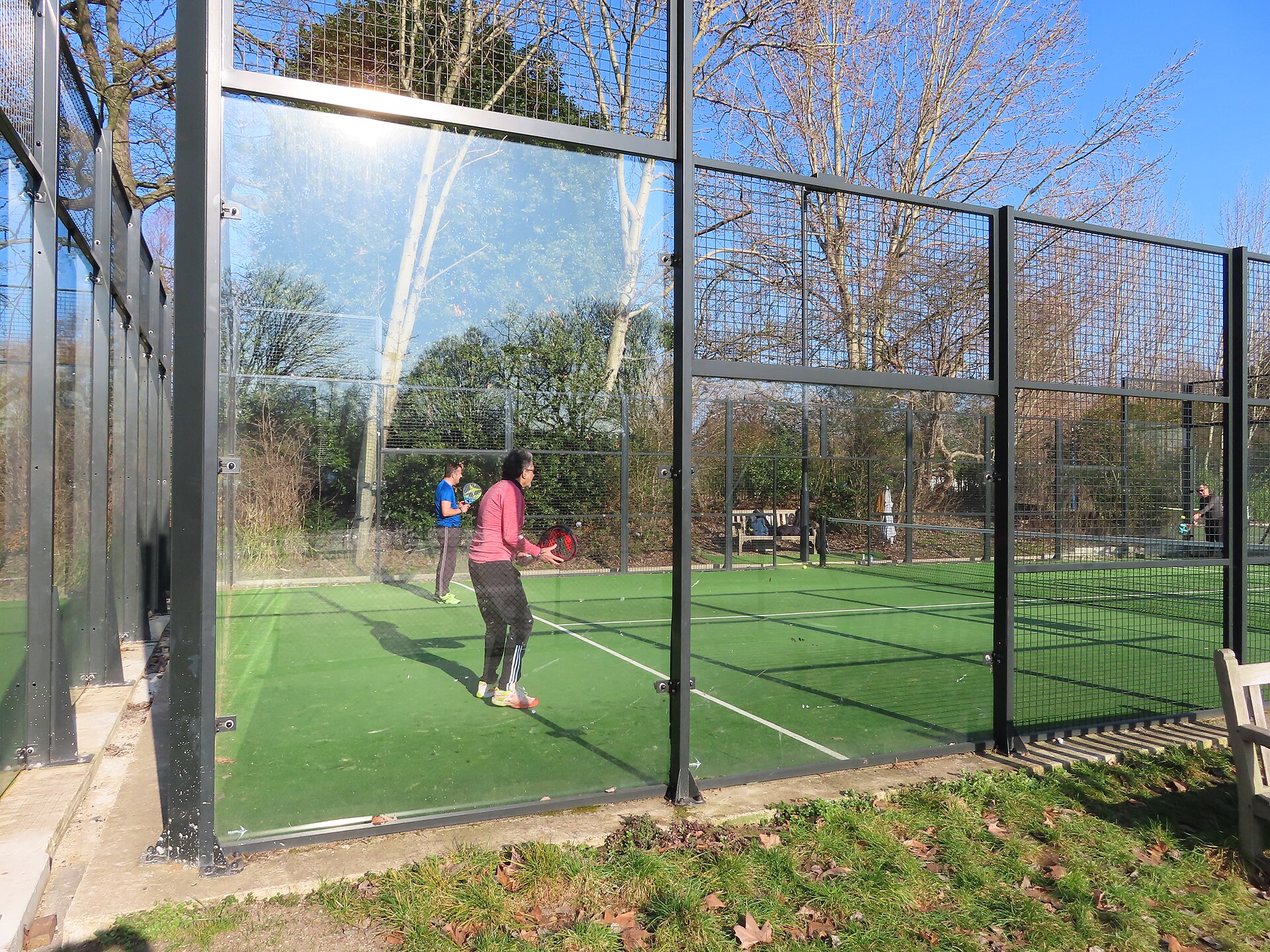
Why every racquet sport drew a different court
A padel ball and a tennis ball are almost the same object. The ground they are hit on is not — because two of these sports decided that a boundary should return the ball instead of ending the point.
More on tennis
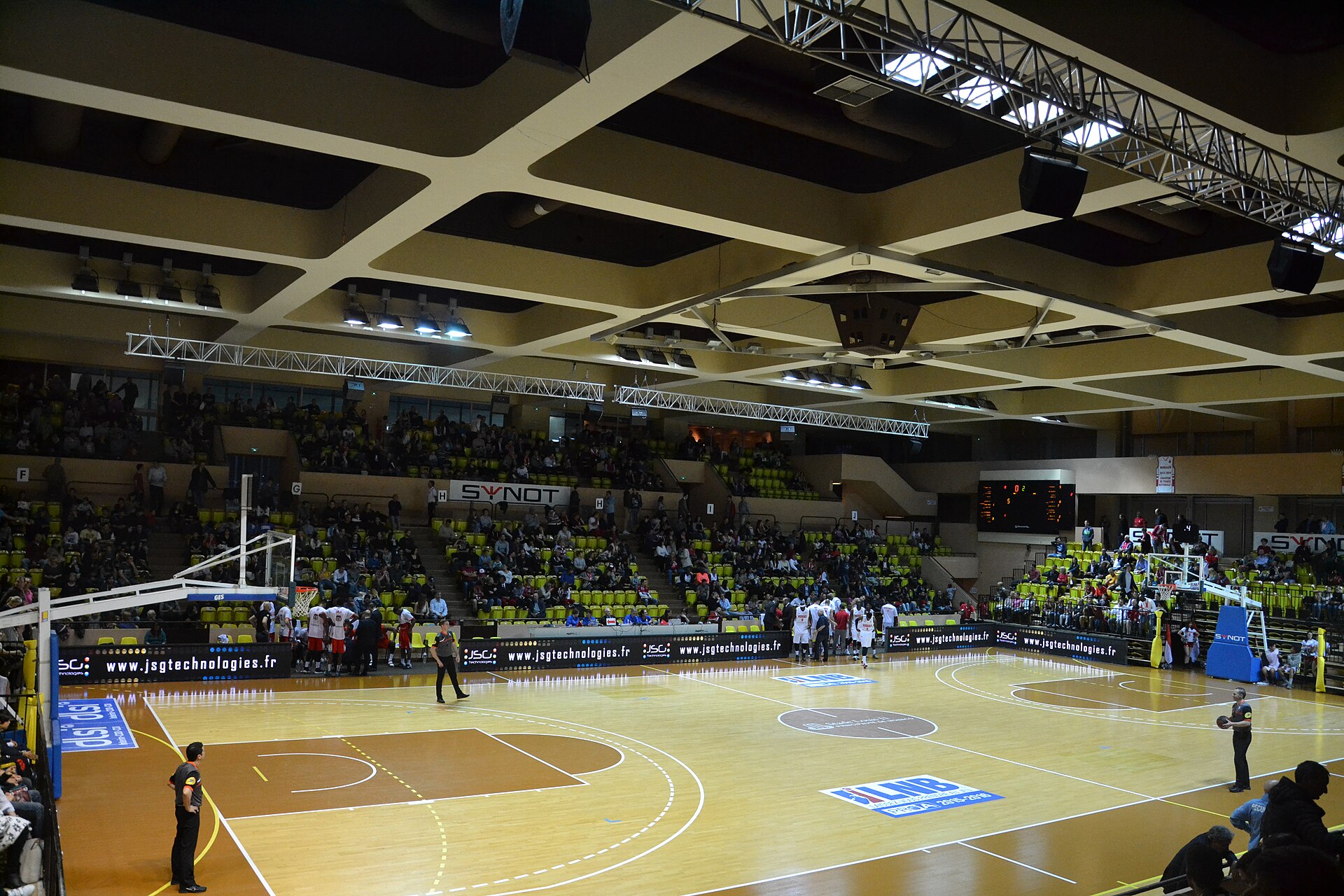
Five sports paint a line around the court. Only four of them agree it is part of it
A ball on the line is in, unless you are playing basketball, where the boundary line is not court at all. The disagreement is written into the rulebooks, and it decides which edge of the paint the tape measure is held against.