
Why every racquet sport drew a different court
A padel ball and a tennis ball are almost the same object. The ground they are hit on is not — because two of these sports decided that a boundary should return the ball instead of ending the point.
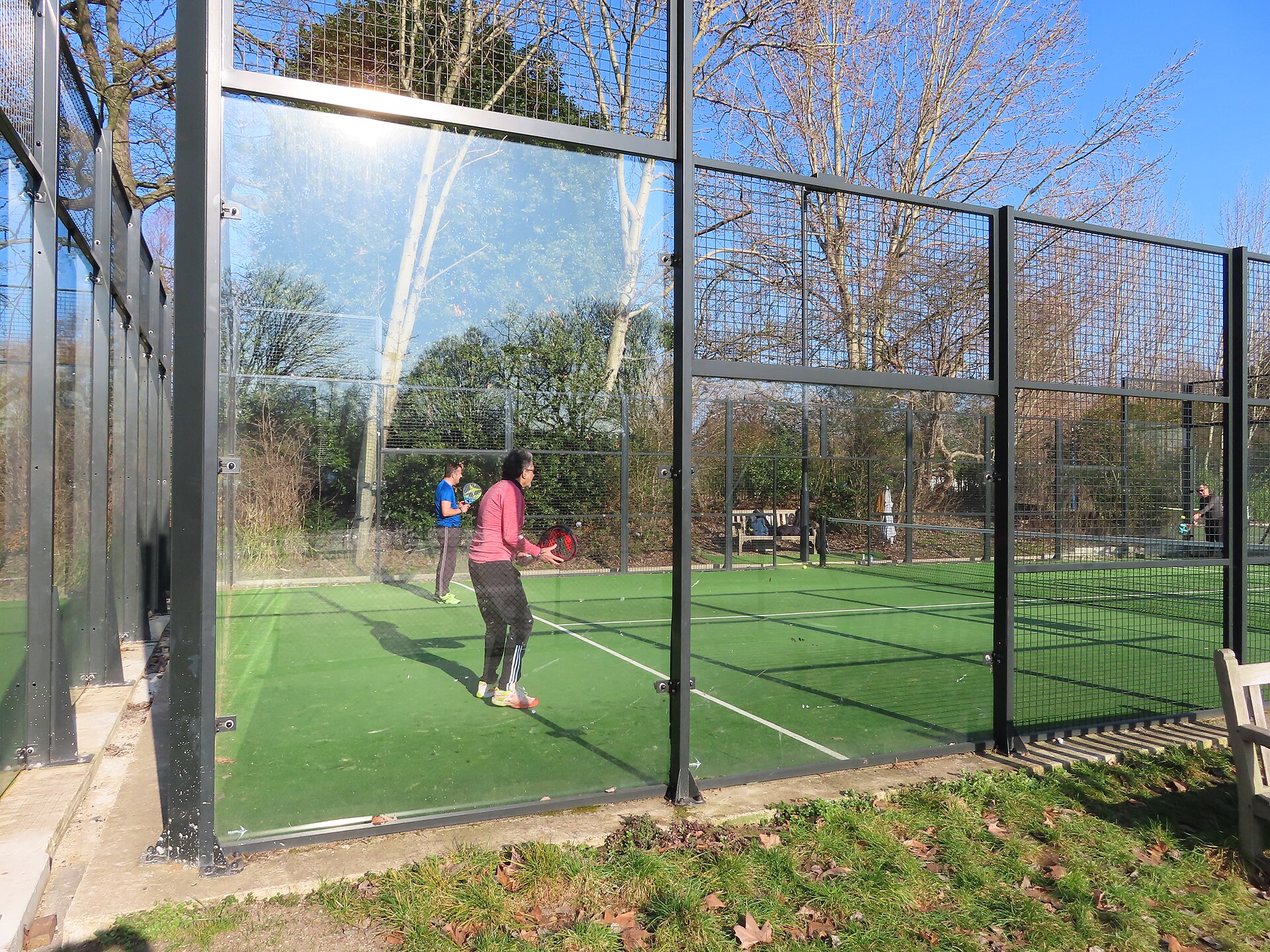
The International Padel Federation specifies a ball 6.35 to 6.77 cm across, weighing 56.0 to 59.4 grams, that must bounce 135 to 145 cm when dropped onto a hard surface from 2.54 m. The ITF’s medium-pace tennis ball is 6.54 to 6.86 cm across, weighs 56.0 to 59.4 grams and rebounds 135 to 147 cm. The same mass to the tenth of a gram; diameters within two millimetres at both ends of the range; rebound windows sharing a floor and parting by two centimetres at the ceiling. For the purpose of designing a court, that is one projectile.
Reference Padel ball diameter, mass, bounce range and drop height as specified by the International Padel Federation.
Reference Tennis ball mass, size and rebound for the Type 2 (medium) ball, Appendix I of the ITF Rules of Tennis.
The ground underneath them is not. A padel court is a sealed rectangle 20 m by 10 m. A doubles tennis court is 23.77 m by 10.97 m, and for international competitions the ITF sets a recommended minimum of 6.40 m between each baseline and the backstop and 3.66 m between each sideline and the sidestop. Add those to the court and the smallest enclosure the guidance contemplates is 36.57 m by 18.29 m.
Reference Court dimensions from Rule 1; the recommended minimum distances to backstops and sidestops for international competitions are given in the note to Appendix X. The enclosure figure is those three numbers added together, not a dimension the Rules print.
The same ball, on roughly a third of the ground. The difference is not the ball or the racquet. It is that padel encloses its court in glass and mesh, and the ball stays alive when it hits them.
A court is a solution, not a container. Each racquet sport starts with an implement and a projectile and has to answer two questions: how far does the projectile travel before it stops being playable, and what happens when it reaches the edge. Everything else follows.
The projectile sets the length
Tennis regulates its ball as an object. Appendix I of the Rules of Tennis fixes mass, size, rebound, forward and return deformation and the permissible change under a durability test — laboratory properties, with no reference to a court. Badminton does something stranger.
The BWF describes a feathered shuttle precisely enough: 16 feathers, each 62 to 70 mm long, a base 25 to 28 mm across, a mass of 4.74 to 5.50 grams. Then it defines the shuttle’s pace by distance. A tester uses a full underhand stroke, making contact over the back boundary line, hitting upward and parallel to the side lines; a shuttle of correct speed lands not less than 530 mm and not more than 990 mm short of the other back boundary line.
Reference Feathered shuttle specification — including the 58 to 68 mm circle on which the feather tips lie — and the shuttle speed test, Laws 2 and 3 of the BWF Laws of Badminton.
That is a projectile calibrated to a court, not a court sized around a projectile. A badminton court is 13.40 m by 6.10 m — the Laws give its diagonal as 14.723 m, the diagonal of exactly that rectangle — and a correct shuttle struck from one end comes to earth within a metre of the other. A shuttlecock is not a ball but a drag device: that 25-to-28 mm base at the front, with the feather tips splaying out behind it to a circle of 58 to 68 mm. The Laws never state how fast it slows down, because the speed test states it as geometry: the court is sized to what the shuttle can do, not to what a player can hit.
Reference The court dimensions are not printed in the Laws text: Diagram A notes the full-court diagonal as 14.723 m, which is the diagonal of a 13.40 m by 6.10 m rectangle, and Law 1 requires a net at least 6.1 m wide with the posts on the doubles side lines.
The rest of the laws follow. A shuttle touching the ceiling or the side walls is a fault, so the room around the court is terminal rather than playable. The service must fly upward from the server’s racquet, with the whole shuttle below 1.15 m from the surface of the court at contact and the racquet striking the base first — an absolute height measured from the floor, not from the server’s body.
Reference Faults for a shuttle touching the ceiling or side walls (Law 13) and the service requirements including the 1.15 m height (Law 9).
The wall is not a boundary
Squash inverts the arrangement. The World Squash Federation’s international singles court is 9750 mm long and 6400 mm wide — shorter than a badminton court, and 300 mm wider — and it holds both players at once, because there is no net: the lines on its floor mark out service boxes, not territory. Nothing on that floor is out.
The out-of-bounds is drawn on the walls instead. The lower edge of the front-wall line sits 4570 mm above the floor and the back-wall line at 2130 mm, with the side-wall line angled between them; the front wall also carries a service line at 1780 mm and, at its base, the tin, whose top stands 480 mm up.
Reference Dimensions of an international singles court, WSF Specifications for Squash Courts.
The rules say it plainly. A return is good if it is struck correctly before the ball has bounced twice on the floor and reaches the front wall — directly or after hitting any other wall or walls — above the tin and below the out-line. A return is out if it hits a wall on or above the out-line, hits the top edge of any wall, or passes over one.
Reference Definitions of a good return and of out, and Rule 6, World Squash Singles Rules.
The contrast with tennis is exact. Tennis puts its boundary on the ground and leaves the air open: a ball past the baseline is gone, and the court has to be ringed with run-back for the ones that are not. Squash puts its boundary in the air and leaves the ground open: a ball played into a side wall is not an error but a route to the front wall.
One of those wall heights is explicitly a dial. The standard tin height is 480 mm, but the specification records that 430 mm is preferred for professional tournaments, and recommends that courts likely to host events be built with an adjustable tin. Fifty millimetres of front wall is what the sport reaches for when it wants to change how rallies end.
Reference Standard and lowered tin heights, and the recommendation for an adjustable tin, WSF Specifications for Squash Courts.
Padel takes the same idea and keeps the net. Its enclosure is 4 m high at the ends — the first 3 m a wall of transparent or solid material, the last metre metal fencing — with the sides a mix of wall sections and mesh. Inside, the court is 20 m by 10 m, the service lines sit 6.95 m from the net, and the net is 0.88 m at the centre, rising to 0.92 m at the ends.
Reference Court and enclosure dimensions, service line distance and net heights, FIP Rules of Padel.
The wall’s status in the rules is precise and deliberately one-sided. A ball that hits any part of the court after bouncing on the opponent’s ground stays in play — and the rules define parts of the court as the insides of the walls, the metal fence, the ground, the net and the posts. But a player whose shot reaches an opponent’s wall or fence without bouncing first loses the point, as does one whose shot strikes their own fence or floor.
Reference The ball remaining in play off the walls, mesh, net and posts after bouncing, and the losing-point clauses for hitting an opponent’s wall on the full, FIP Rules of Padel.
That asymmetry is the whole design. The glass belongs to the defender: a ball that has already landed gets a second life, so the deep drive that would end a tennis point comes back off the wall to be played again. It gives the attacker nothing, because aiming at it is forbidden. The serve is written the same way: bounced first, struck at or below waist level.
Reference Service requirements — the bounce, the waist-height limit and the foot in contact with the ground, FIP Rules of Padel.
A padel court is not a small tennis court, then. It is a tennis court whose out-of-bounds has been lifted off the floor, stood up as a wall, and instructed to hit back.
Table tennis regulates the surface, not the ball
The ITTF playing surface lies 76 cm above the floor, with a white side line 2 cm wide along each 2.74 m edge and a white end line along each 1.525 m edge. The net stands 15.25 cm above the surface. The ball is 40 mm across and weighs 2.7 g.
Reference Table, net assembly and ball specifications, Laws 2.1 to 2.3 of the Laws of Table Tennis.
The revealing specification is not a dimension. Tennis certifies the rebound of its ball; table tennis certifies the rebound of its table. The playing surface may be of any material provided it yields a uniform bounce of about 23 cm when a standard ball is dropped on to it from 30 cm. The ball is pinned to two numbers, 40 mm and 2.7 g; the table’s material is left open and pinned instead to how it behaves. The law is written where the variation lives.
Reference The uniform-bounce requirement for the playing surface, Law 2.1.3.
Raising that plane 76 cm does the rest. The boundary is a table edge: a ball that leaves it needs no line and no run-back to be out, because there is no surface beneath it. And the space the players use is not the table but the floor around it, which the Laws — exact to the millimetre about a 3 mm doubles centre line — do not describe.
What each shape asks of a body
The movement each one demands is legible from the dimensions.
- Tennis — 23.77 m by 10.97 m for doubles, plus a recommended minimum 6.40 m of run-back at each end. A ball that lands in is still travelling, and there is ground behind the line to chase it onto.
- Badminton — 13.40 m by 6.10 m, ceiling and side walls both faults. Short distances, each to be covered before a decelerating shuttle finishes falling.
- Squash — 9750 mm by 6400 mm, shared. The smallest floor any of these sports draws, occupied by two players at once, with the ball reachable off any wall.
- Padel — 20 m by 10 m, enclosed. Tennis-like distances, but a ball that beats a player returns off the glass, so the same ground gets covered twice in a point.
- Table tennis — a 2.74 m by 1.525 m surface, 76 cm up. The only ground the Laws describe is the tabletop; the footwork happens off it.
Only squash puts opponents on the same floor, and its rule book pays for it. A whole section is given to interference: after a reasonable follow-through a player must make every effort to clear, so that when the ball rebounds from the front wall the opponent has a fair view of it and access to it. Elsewhere a net or a table edge settles who may stand where.
Reference Rule 8 (Interference), World Squash Singles Rules.
None of these shapes is arbitrary. Each is an enclosure sized so a particular projectile, struck with a particular implement, produces a rally that does not collapse immediately. Tennis needs a large one because a ball keeps travelling after it lands. Badminton needs a small one because a shuttle does not. Table tennis lifted its surface clear of the floor altogether, and wrote its rebound law about the table rather than the ball. Squash and padel found the third answer, the one that changes what out means: instead of enlarging the court until the ball ran out of energy inside it, they closed it, and made the edge hit back.
Read the evergreen pages
This piece is an argument. These are the reference pages on SocialSportHub that document the same subjects.
References
- [1]International Padel FederationGoverning body. Rules of Padel. Accessed 2 September 2026.
- [2]International Tennis FederationGoverning body. Rules of Tennis 2026 (Rule 1 The Court, Appendix I The Ball, Appendix X). Accessed 2 September 2026.
- [3]Badminton World FederationGoverning body. BWF Statutes, Section 4.1: Laws of Badminton. Accessed 2 September 2026.
- [4]World Squash FederationGoverning body. Specifications for Squash Courts. Accessed 2 September 2026.
- [5]World SquashReference. World Squash Singles Rules 2025. Accessed 2 September 2026.
- [6]International Table Tennis FederationGoverning body. ITTF Statutes 2026, Chapter 2: The Laws of Table Tennis. Accessed 2 September 2026.
Continue reading
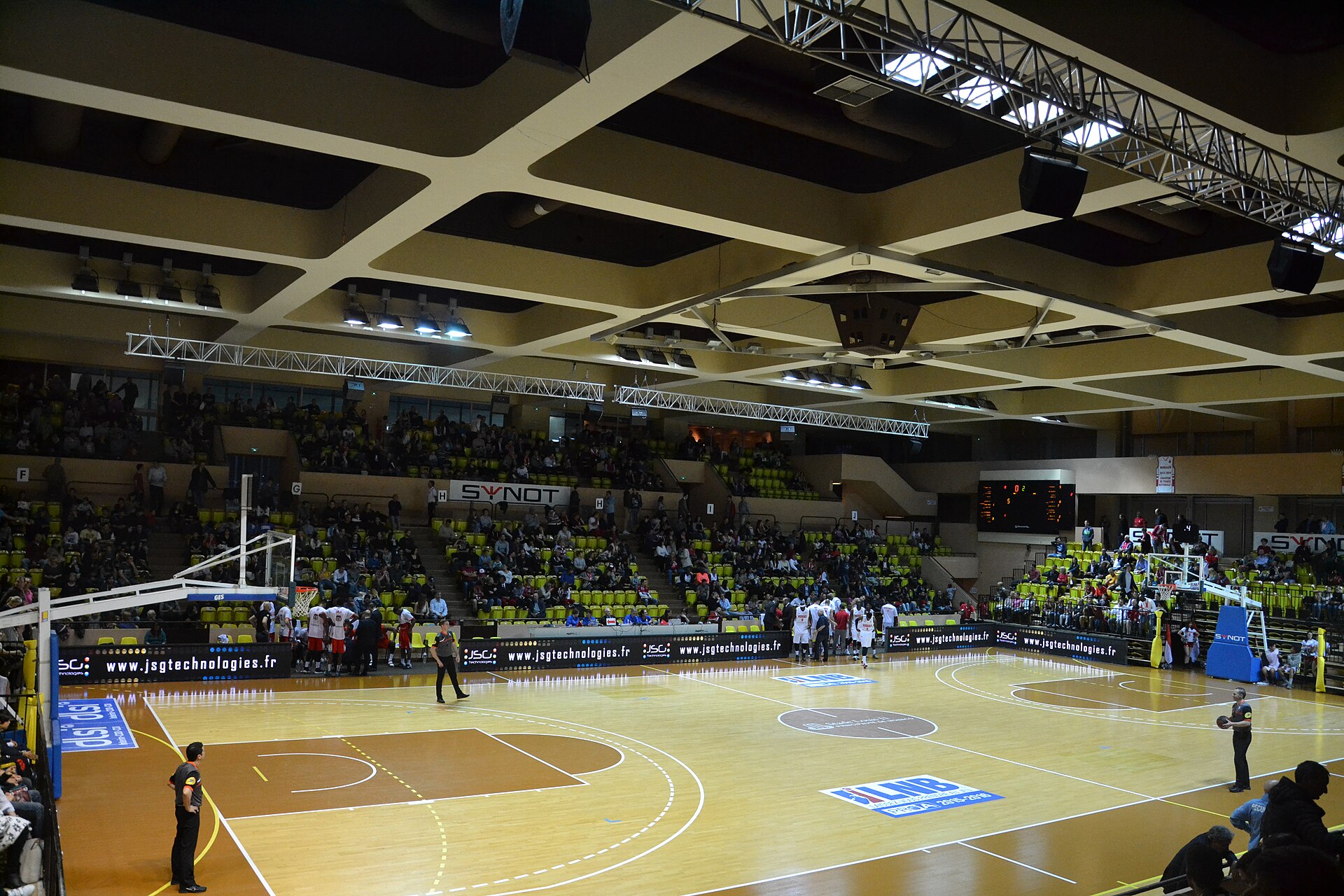
More on tennis
Five sports paint a line around the court. Only four of them agree it is part of it
A ball on the line is in, unless you are playing basketball, where the boundary line is not court at all. The disagreement is written into the rulebooks, and it decides which edge of the paint the tape measure is held against.
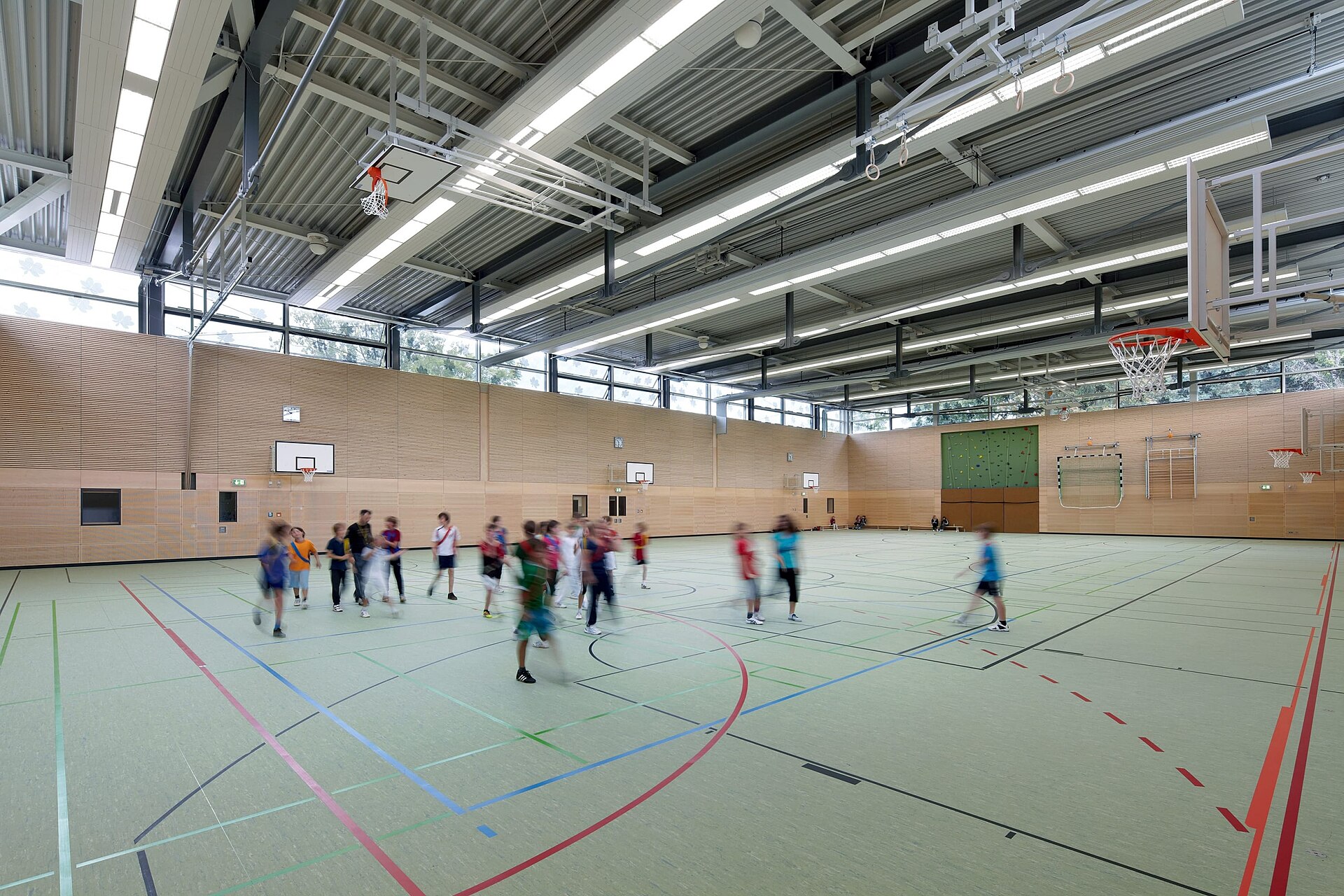
More on badminton
Badminton draws two courts on one floor, and swaps between them mid-rally
Singles and doubles use different sidelines and different back boundaries for the serve — and the two disagreements point in opposite directions. Doubles serves into a wider, shorter box; singles into a narrower, longer one.
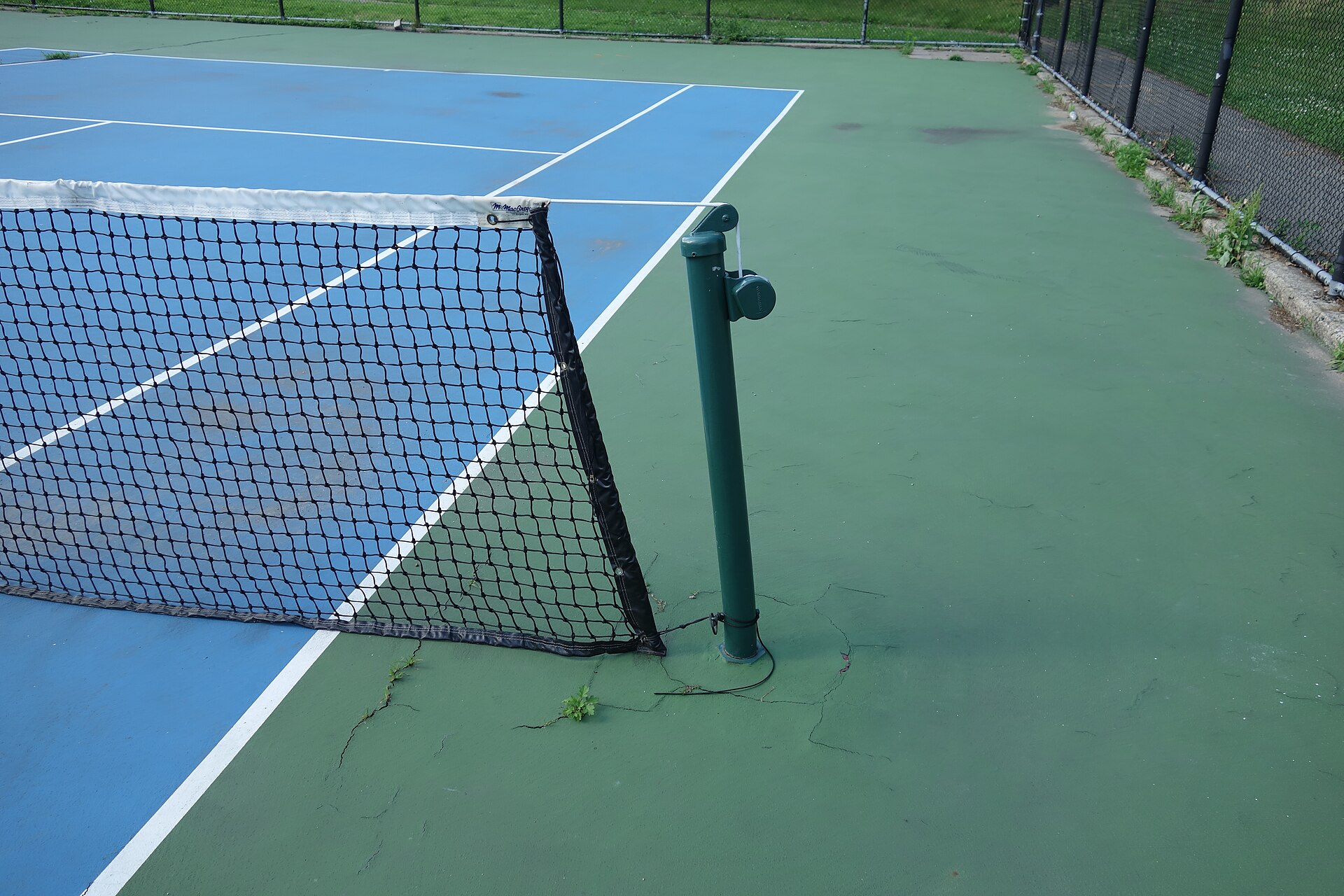
More on tennis
Three sports hang a cord between two posts, and all three answer the sag differently
A strung net always dips in the middle. Tennis decided to make the dip 156 millimetres and mandated a strap to produce it; badminton lets it be 26; volleyball forbids it and allows 20 millimetres of error. One physical fact, three regulatory answers.