
Basketball scoring
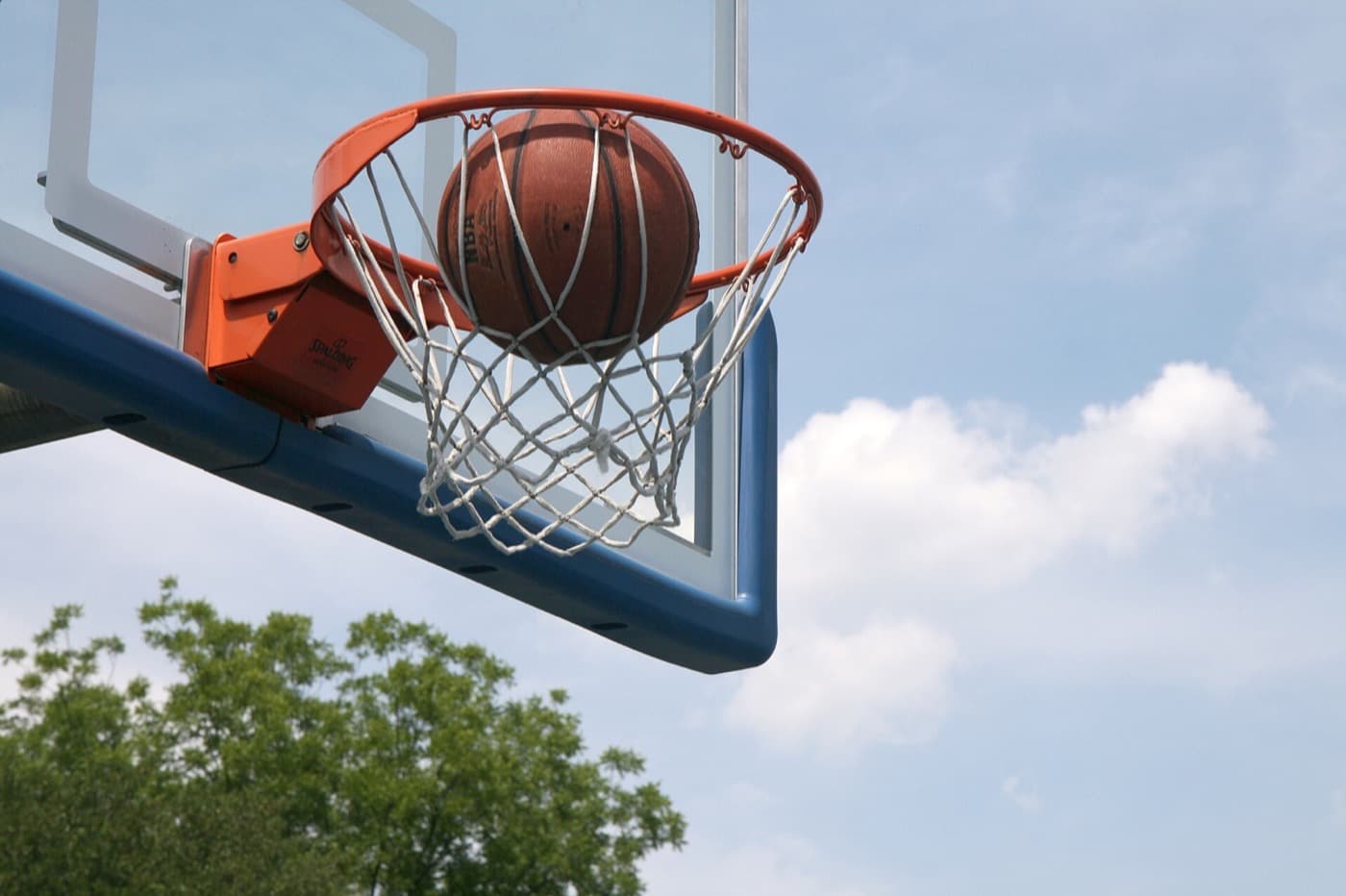
Basketball is scored by shooting the ball through the hoop, with baskets worth one, two or three points depending on where the shot is taken.
Overview
Points in basketball come from putting the ball through the opponent's hoop. A basket made from open play inside the three-point line is worth two points, one made from behind that line is worth three, and a free throw awarded after a foul is worth one.
The team with the most points when time runs out wins. Because scoring happens constantly throughout a game, totals are high compared with many sports, and a tied score at the end sends the game to overtime periods until a winner emerges.
How it works
- A basket scored from inside the three-point arc counts for two points.
- A basket scored from behind the three-point line counts for three points.
- A successful free throw, awarded after certain fouls, counts for one point.
- The running score updates continuously; the team ahead when time expires wins.
- If the scores are level at full time, the game continues in overtime periods until one team leads at the buzzer.
Where it’s used
Sports that use basketball scoring:
Explore across the knowledge base
Follow the threads that connect Basketball scoring to the rest of SocialSportHub.
Officiating
- ScorekeeperThe official who keeps the authoritative record of a contest — score, fouls, and statistics — usually seated at a scorer's table beside the timekeeper.
- Video ReviewVideo review lets officials re-examine footage of a contested moment to confirm or overturn a close call — a goal, a line, a foul — an aid used across many sports.
- Foul callA foul call is an official's ruling that a player broke a rule of contact or conduct, triggering a penalty such as a free kick, free throw or penalty.
- AdvantageIn many sports, officials let play continue after a foul when stopping would help the offender, so the fouled team keeps the advantage it has gained.
Rules
- Shot clockA timing rule that requires the attacking basketball team to attempt a shot within a set number of seconds.
- Personal fouls and free throwsThe basketball rules covering illegal contact and the uncontested shots awarded when a player is fouled.
- GoaltendingA basketball violation for interfering with a shot while the ball is on its downward path to the basket or above the rim.
- Three-hit ruleThe volleyball rule that a team may contact the ball at most three times before it must cross the net.
- Throw-inThe method of restarting football when the ball fully crosses a side line, taken by throwing it back into play.
Positions
- Shooting guardThe shooting guard is a perimeter player whose main role is to score, especially from mid-range and beyond the three-point line.
- Power forwardThe power forward plays near the basket in basketball, using strength to rebound, score inside, and defend the paint.
- Point guardThe point guard is basketball’s primary ball-handler and playmaker, running the offence and setting up teammates to score.
- CenterThe center is usually the tallest player on a basketball team, playing near the basket to score inside, rebound, and protect the rim.
- Small forwardThe small forward is a versatile wing player in basketball who can score inside and outside while also defending multiple positions.
How this page is maintained
- Content type
- Scoring system
- Provenance
- Tier A — evergreen educational
- Verified external sources
- 0
- Content updated
- 2026-09-12
Evergreen, first-party explanation — it makes no claim that needs an external source. How we handle sources and reviews.