
High press
A football tactic where a team hunts the ball high up the pitch to win it back close to the opponent’s goal.
Overview
The high press pushes the whole team forward to pressure opponents in their own defensive third, aiming to force a mistake and regain possession near the goal they are attacking.
It relies on coordinated, aggressive movement, compact spacing between lines and high work rate. Winning the ball high up the pitch creates quick scoring chances, but the tactic leaves space in behind if the press is beaten.
Key points
- Pressing is triggered collectively — often the moment a defender takes a heavy touch or receives facing their own goal.
- Attackers cut off passing lanes to force play towards the touchline or a weaker opponent.
- The defensive line pushes up to keep the team compact and reduce space to play through.
- Winning the ball high creates short, direct routes to goal.
- If the first line of pressure is bypassed, opponents can counter into the space behind the defence.
Where it’s used
Sports that use high press:

Football
The world’s most popular team sport — endless running, teamwork and community in one game.
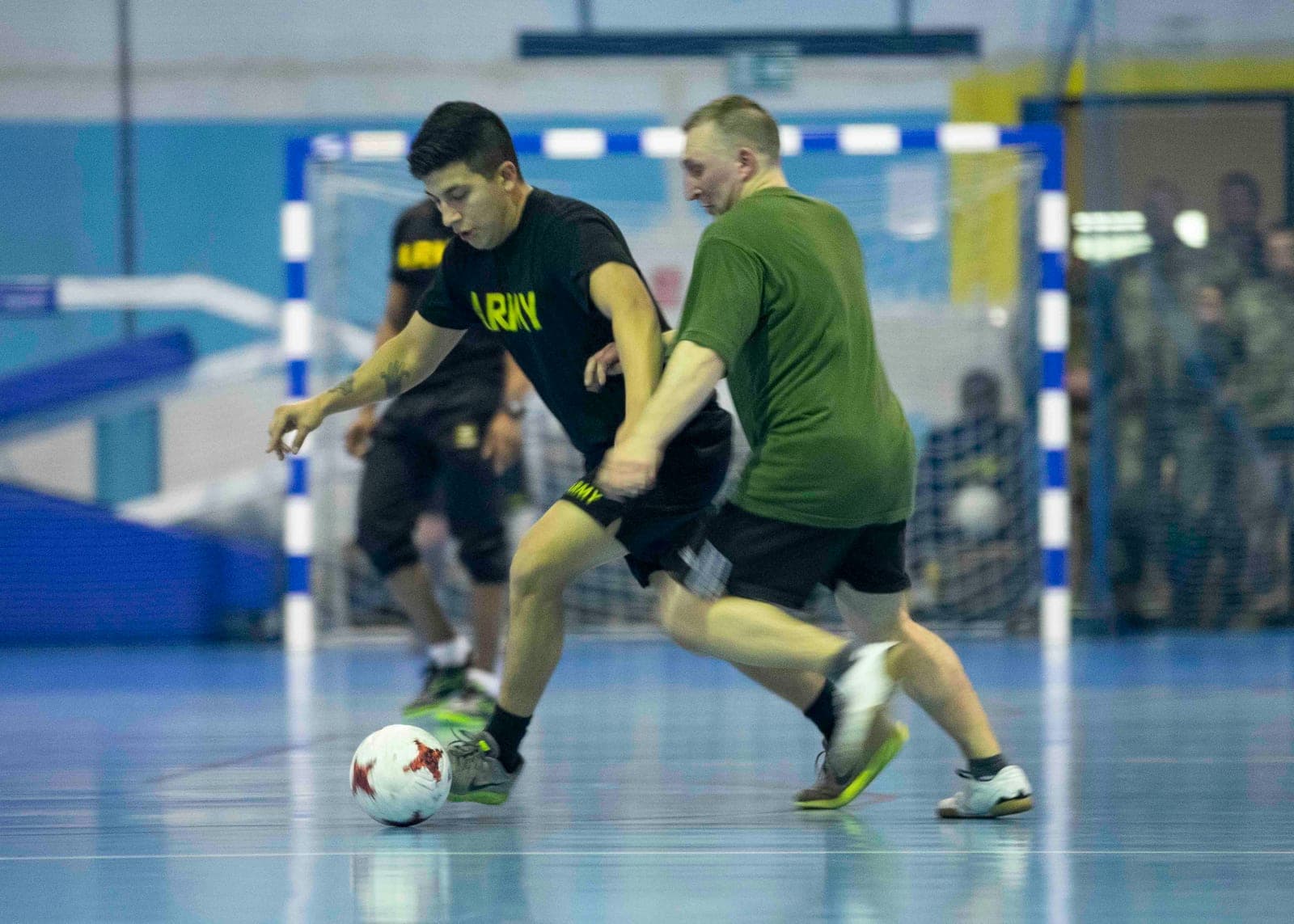
Futsal
A fast, small-sided indoor form of football played on a hard court with a low-bounce ball.
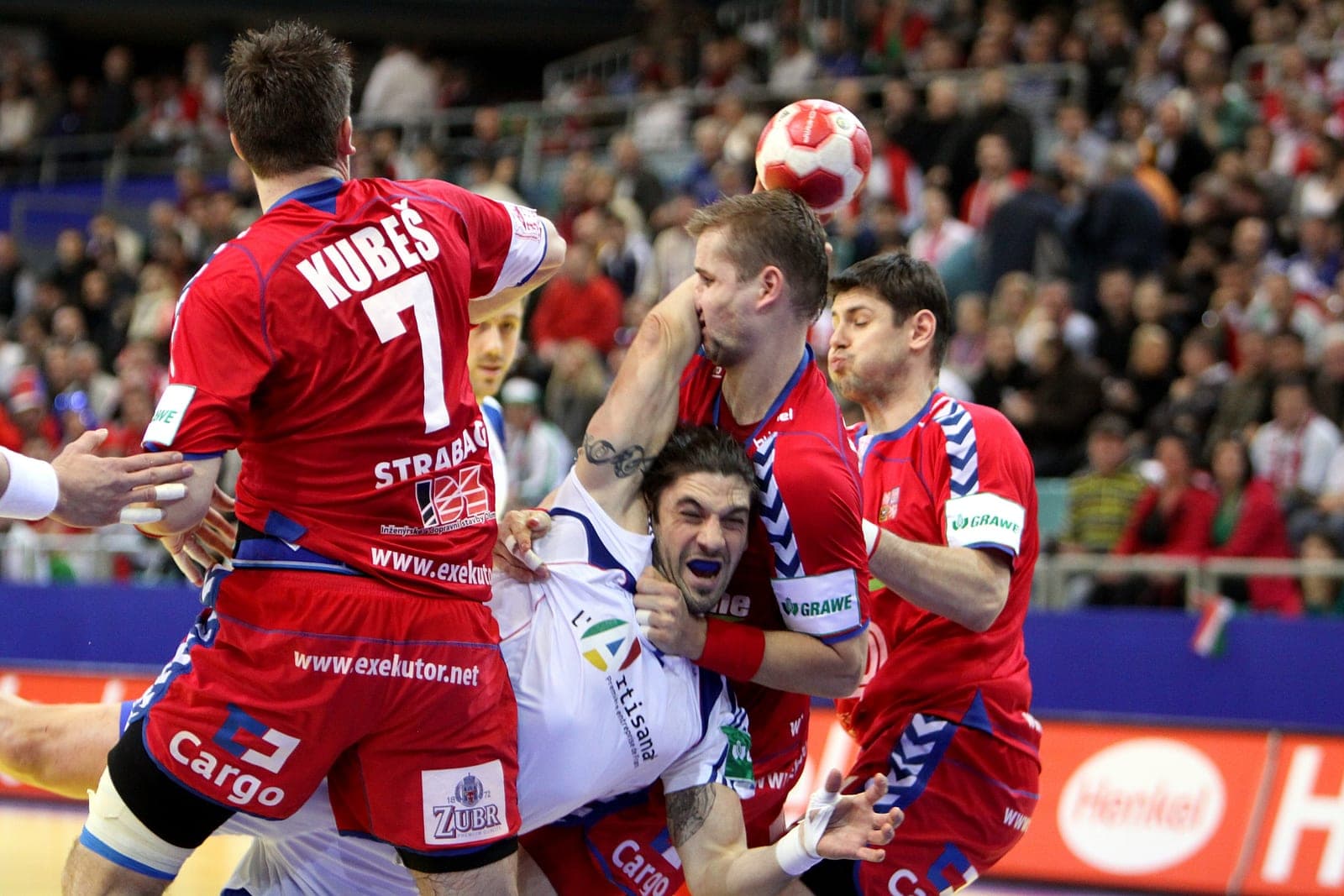
Handball
A fast indoor team sport of passing, jumping and throwing to score with the hands.
Related tactics
Possession play
A patient football style that keeps the ball through short passing to control the game and tire opponents.
Counter-attack
Winning the ball and moving forward at speed to attack before the opponent can reorganise their defence.
Offside trap
A defensive football tactic where the back line steps up together to leave an attacker offside.
How it connects
The meaning-bearing relationships that place High press in the wider knowledge graph — each one with the reason it exists.
Frequently learned together
Taught side by side in the same stage of a learning path.
- Possession playBoth are taught in the “Understand tactics & strategy” stage of the Football learning path.
- Counter-attackBoth are taught in the “Understand tactics & strategy” stage of the Football learning path.
- Offside trapBoth are taught in the “Understand tactics & strategy” stage of the Football learning path.
- Set-piece playBoth are taught in the “Understand tactics & strategy” stage of the Football learning path.
- Wing playBoth are taught in the “Understand tactics & strategy” stage of the Football learning path.
Explore across the knowledge base
Follow the threads that connect High press to the rest of SocialSportHub.
Strategies
- Game managementAdapting how a team or athlete plays to the scoreline and time remaining — protecting a lead, chasing a result or seeing out the closing stages.
- Possession vs Direct PlayThe strategic choice between retaining the ball to build attacks patiently and moving it forward quickly and directly toward the goal.
- Attacking vs Defensive BalanceThe overarching choice a team or athlete makes about how much to commit to creating scoring chances versus avoiding conceding, and when to shift it.
- Controlling TempoControlling tempo is the strategy of dictating the pace and rhythm of play — speeding up or slowing down — to suit your strengths and unsettle opponents.
- Zone vs Man MarkingTwo defensive systems compared: zonal marking guards areas of the field, while man-to-man marking assigns each defender a specific opponent to track.
Player roles
- Ball-winnerA ball-winner is the player tasked with regaining possession through pressing, tackling and interceptions — a team's tireless defensive workhorse.
- FinisherA finisher is the attacking outlet in a team sport whose main job is converting chances into points — the striker, goal shooter or go-to scorer.
- PlaymakerThe playmaker is a team's creative hub — the player who orchestrates attacks, controls the tempo and distributes the ball so teammates can score.
Positions
- StrikerA striker is the main attacking player in football, positioned furthest forward with the primary job of scoring goals.
- PivotThe pivot is a handball attacker who plays close to the opposition defence, setting screens and looking for chances near the goal area.
- WingerA winger is an attacking player who operates in the wide areas of the pitch, using pace and dribbling to beat defenders and create chances.
- Central midfielderA central midfielder operates in the middle of the pitch, linking defence and attack while contributing to both.
- Full-backA full-back is a defender who plays on the left or right side of the defence, defending the flank while also supporting attacks down the wing.
Learning paths
- Learn FootballA structured, educational learning path for football — from the rules to skills, techniques, tactics and training.
- Learn FutsalA structured, educational learning path for futsal — from the rules to skills, techniques, tactics and training.
- Learn HandballA structured, educational learning path for handball — from the rules to skills, techniques, tactics and training.
Coaching concepts
- Decision-Making PracticeTraining athletes to read cues and choose the right action under pressure — coupling perception to action, not just rehearsing physical technique in isolation.
- Constraints-Led PracticeA coaching approach that adjusts the task, environment or rules so a desired movement or decision emerges in practice, rather than being explicitly instructed.
- Small-Sided GamesPractising in scaled-down versions of a sport — fewer players, smaller area — so skills and decisions happen more often in a game-like setting.
- Transfer of TrainingWhether practice carries over to real performance — and why game-like, varied practice tends to transfer better than isolated, repetitive drills.
Exercises
- Bench pressA pressing exercise lying on a bench, lowering a weight to the chest and pushing it back up.
- Push-upA classic upper-body pushing exercise where you lower and press your body up from the floor.
- Calf raiseA movement where you press up onto the balls of your feet to work the calves.
- Goblet squatA squat variation where you hold a single weight close to your chest for balance and control.
- High kneesA running-in-place cardio drill where you lift the knees high with a quick rhythm.
Go deeper with High press
Everywhere else on the platform that covers High press — assembled from what actually references it, so nothing here is a dead end.
Learn it
Structured courses and paths on the platform that cover this directly.
How this page is maintained
- Content type
- Tactic
- Provenance
- Tier A — evergreen educational
- Verified external sources
- 0
- Content updated
- 2026-09-12
Evergreen, first-party explanation — it makes no claim that needs an external source. How we handle sources and reviews.