
Power
The rate at which the body produces mechanical work, defined as the product of force and the speed at which that force is applied.
Definition
In sports science, power is the amount of work done per unit of time, or equivalently force multiplied by velocity. A powerful athlete can apply large forces quickly, which is why power, rather than maximal strength alone, governs actions such as jumping, throwing, sprint starts and hitting.
Because power depends on both how much force is produced and how fast, it can be developed either by getting stronger or by moving loads faster, so most programmes train across the force-velocity spectrum. It should not be confused with strength, which is the ability to produce force regardless of time, or with explosiveness, which emphasises how rapidly force rises from a standstill.
Where you’ll hear “power”
Sports that use this term:

Basketball
A fast, dynamic team sport of running, jumping and quick decisions on court.
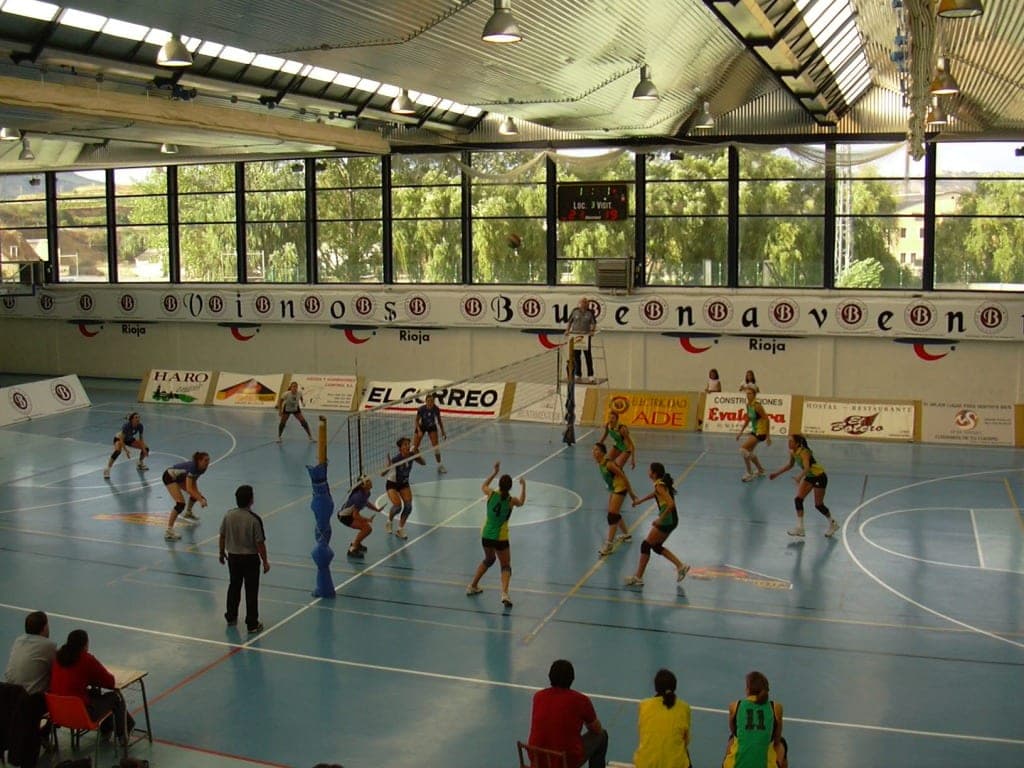
Volleyball
A non-contact team sport of rallies, jumps and teamwork — indoors or on the beach.

Football
The world’s most popular team sport — endless running, teamwork and community in one game.

Fitness
Strength and general fitness training — the foundation that supports every other sport.
Explore across the knowledge base
Follow the threads that connect Power to the rest of SocialSportHub.
Movement patterns
- AccelerationThe athletic pattern of building speed from a standing or slow start by driving large horizontal forces into the ground to project the body forward.
- BoundAn exaggerated, horizontal springing stride that transfers from one leg to the opposite leg with a long flight phase, amplifying the mechanics of running.
- KickA ballistic single-support leg swing that whips force from the plant foot through the hip and knee to strike or propel a ball or target with the foot, distinct from the weight-bearing steps of locomotion.
- StrikeA ballistic, whole-body hitting action that channels ground-generated force through a proximal-to-distal kinetic chain to deliver momentum to a target via the hand, an implement or a body part at the moment of contact.
- ThrowPropelling an object by releasing it from the hand, driven by a proximal-to-distal kinetic-chain sequence that summates speed from the legs through the trunk and arm to the release point.
Sports science
- Force and powerThe difference between how much force the body can produce and how quickly it can produce it — the mechanics behind strength and explosiveness.
- Energy systemsHow the body supplies energy for movement — the different pathways that power everything from an explosive jump to a long, steady run.
- BiomechanicsThe study of how the body produces and controls movement — the mechanics behind every technique in sport.
- The kinetic chainThe idea that the body’s segments work as a linked chain, passing force from the ground up through the hips, trunk and limbs.
- Aerobic and anaerobic energyThe difference between energy the body produces with oxygen and energy it produces without it — a core idea behind why different efforts feel and last so differently.
Physical qualities
- PowerProducing force quickly — strength expressed at speed, as in a jump or a sprint start.
- Muscular strengthHow much force your muscles can produce in a single effort — the quality behind lifting, pushing, holding and driving off the ground.
- Muscular enduranceThe ability of a muscle group to keep working for many repetitions without tiring.
- SpeedHow quickly you can move your body or a part of it from one point to another.
Go deeper with Power
Everywhere else on the platform that covers Power — assembled from what actually references it, so nothing here is a dead end.
Take it away
Open data and the whole-platform view of this subject.
How this page is maintained
- Content type
- Term
- Provenance
- Tier A — evergreen educational
- Verified external sources
- 0
- Content updated
- 2026-09-01
Evergreen, first-party explanation — it makes no claim that needs an external source. How we handle sources and reviews.