
Plyometrics
Plyometrics are jumping and bounding drills that train muscles to produce force quickly, developing power and springiness through explosive movement.
Overview
Plyometrics are drills built around quick, explosive movements — jumps, hops, bounds and skips. The common thread is a fast switch from lengthening to shortening in the working muscles, the action behind a spring off the ground, which trains the body to produce force rapidly.
Because they develop power and reactive springiness, plyometric drills feature in the training of many sports that involve jumping, sprinting or changing direction. Simple examples include skipping with a rope, low hops and gentle bounding; more advanced versions raise the height or speed of the movements.
These are quality-over-quantity drills: efforts are usually short and crisp with full recovery between them, and controlled landings matter more than doing lots of repetitions. Beginners typically start low and unhurried, building familiarity before adding height or pace.
How to do it
- 1Warm up thoroughly with easy movement first.
- 2Perform a short set of controlled hops or jumps, focusing on balanced, quiet landings.
- 3Take full recovery before the next effort.
- 4Keep the number of efforts modest and the quality high.
- 5Finish with an easy cool-down.
Key points
- Plyometrics revolve around quick, explosive movements like jumps and hops.
- They train the muscles to produce force rapidly.
- They are common in sports involving jumping, sprinting or cutting.
- Quality beats quantity — crisp efforts with full recovery between.
- Beginners start low and slow, adding height or speed only gradually.
A note on training information
Where it’s used
Sports this relates to:

Basketball
A fast, dynamic team sport of running, jumping and quick decisions on court.
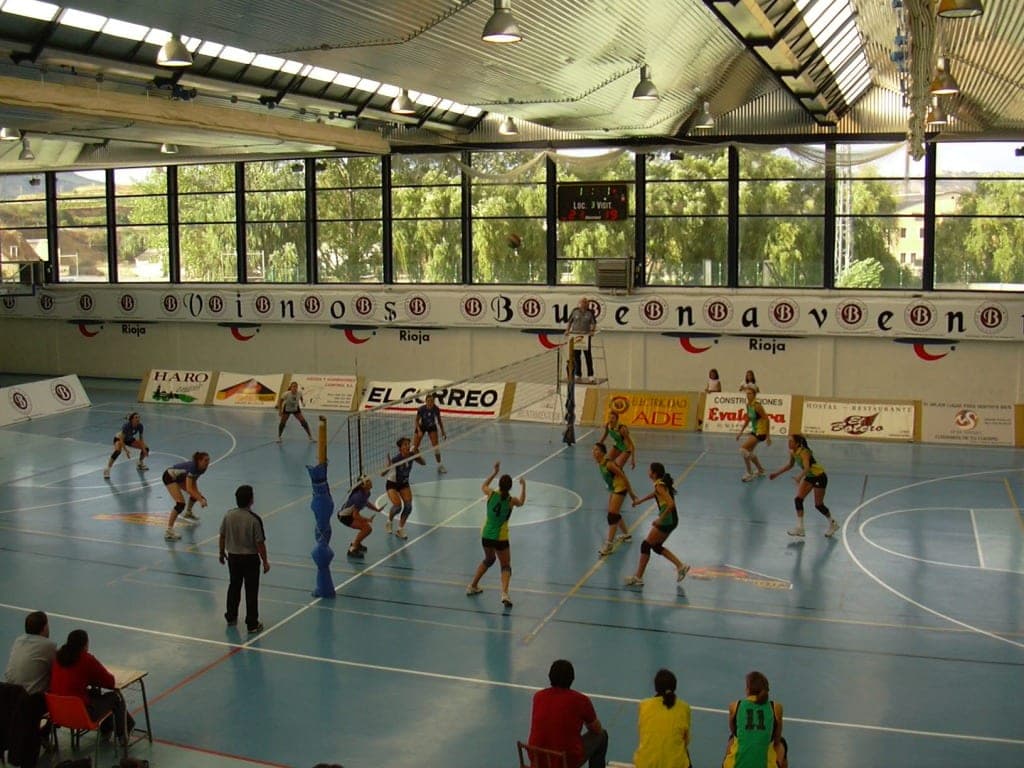
Volleyball
A non-contact team sport of rallies, jumps and teamwork — indoors or on the beach.

Running
The most accessible endurance sport — no venue, just shoes and the open road or trail.

Football
The world’s most popular team sport — endless running, teamwork and community in one game.
Functional Fitness
Varied, whole-body training built around everyday movement patterns like squatting, lifting and carrying.
Related training methods
Interval Training
Interval training alternates short bursts of harder effort with easier recovery periods, letting you accumulate more quality work than a single continuous push.
Steady-State Cardio
Steady-state cardio means holding one comfortable, continuous pace for the whole session, building an aerobic base without the peaks of interval work.
Circuit Training
Circuit training moves you through a series of stations back to back with little rest, blending strength and cardio into one time-efficient session.
How it connects
The meaning-bearing relationships that place Plyometrics in the wider knowledge graph — each one with the reason it exists.
Frequently learned together
Taught side by side in the same stage of a learning path.
- How to warm upBoth are taught in the “Train your body for it” stage of the Football learning path.
- Cardiovascular enduranceBoth are taught in the “Train your body for it” stage of the Football learning path.
- SpeedBoth are taught in the “Train your body for it” stage of the Football learning path.
- AgilityBoth are taught in the “Train your body for it” stage of the Football learning path.
- CoordinationBoth are taught in the “Train your body for it” stage of the Football learning path.
Explore across the knowledge base
Follow the threads that connect Plyometrics to the rest of SocialSportHub.
Skills
- JumpingThe skill of leaping powerfully and with timing to reach or contest the ball in the air.
- SpikingThe volleyball skill of jumping and striking the ball forcefully down into the opponent’s court.
- SprintingThe skill of running or riding at maximum controlled speed over a short distance.
- Ball controlThe skill of receiving and settling the ball quickly so it is ready to use.
Sports science
- The kinetic chainThe idea that the body’s segments work as a linked chain, passing force from the ground up through the hips, trunk and limbs.
- Force and powerThe difference between how much force the body can produce and how quickly it can produce it — the mechanics behind strength and explosiveness.
- Energy systemsHow the body supplies energy for movement — the different pathways that power everything from an explosive jump to a long, steady run.
- Motor controlHow the brain and nervous system organise the muscles to produce coordinated, controlled movement.
Learning paths
- Learn FootballA structured, educational learning path for football — from the rules to skills, techniques, tactics and training.
- Learn BasketballA structured, educational learning path for basketball — from the rules to skills, techniques, tactics and training.
- Learn VolleyballA structured, educational learning path for volleyball — from the rules to skills, techniques, tactics and training.
- Learn RunningA structured, educational learning path for running — from the rules to skills, techniques, tactics and training.
Movement patterns
- JumpThe plyometric pattern of projecting the body off the ground through explosive triple extension and controlling the landing — the core expression of lower-body power.
- SquatA knee-dominant pattern: bending the hips, knees and ankles to lower and rise while keeping the torso upright — the foundation of lower-body strength.
- PushPressing a load or the body away from the torso — horizontally or overhead — by extending the shoulders and elbows, developing the chest, shoulders and triceps.
- LungeA split-stance, single-leg-emphasis pattern: stepping or dropping into a staggered stance and pushing back up to build single-leg strength, balance and stability.
- HingeA hip-dominant pattern: bend forward at the hips with a flat back, minimal knee bend, then drive the hips tall — powers pulling from the floor and jumping.
Coaching concepts
- ProgressionBuilding skill and training load in gradual, manageable steps so each stage prepares the next, moving from simple to complex and easy to hard.
- Repetition QualityThe attention and intent behind each repetition matter more than raw volume — focused, well-executed reps build skill faster than mindless numbers.
Go deeper with Plyometrics
Everywhere else on the platform that covers Plyometrics — assembled from what actually references it, so nothing here is a dead end.
Learn it
Structured courses and paths on the platform that cover this directly.
How this page is maintained
- Content type
- Training method
- Provenance
- Tier A — evergreen educational
- Verified external sources
- 0
- Content updated
- 2026-07-06
Evergreen, first-party explanation — it makes no claim that needs an external source. How we handle sources and reviews.