
Biomechanics
The study of how the body produces and controls movement — the mechanics behind every technique in sport.
Overview
Biomechanics is the study of movement through the lens of mechanics — how muscles, bones and joints work together as a system of levers to produce force, speed and control. Every technique in sport, from a tennis serve to a running stride, is a biomechanical solution to a simple problem: how to move the body, or an implement, effectively and repeatably.
Learning the basics of biomechanics helps make sense of why techniques are coached the way they are. Good movement tends to be efficient — using the right joints in the right order, transferring force smoothly and wasting little effort. It is an educational lens rather than a prescription: the details of any one person’s movement are best guided by a qualified coach or professional.
The science
- The body moves as a system of levers — joints and muscles producing and controlling force.
- Efficient technique tends to sequence joints so force transfers smoothly, often from the ground up.
- Most sports skills are biomechanical solutions to producing speed, force or accuracy.
- Small changes in angle, timing or leverage can change how a movement feels and works.
- It is a lens for understanding movement, not a set of fixed rules for any one person.
Why it matters
- It explains why techniques are coached in a particular sequence and posture.
- It connects the movement patterns and skills that recur across many different sports.
- It underpins how power, speed and coordination are produced and trained.
Educational only
Where it shows up
Sports where this concept is especially visible — each with a clear guide.
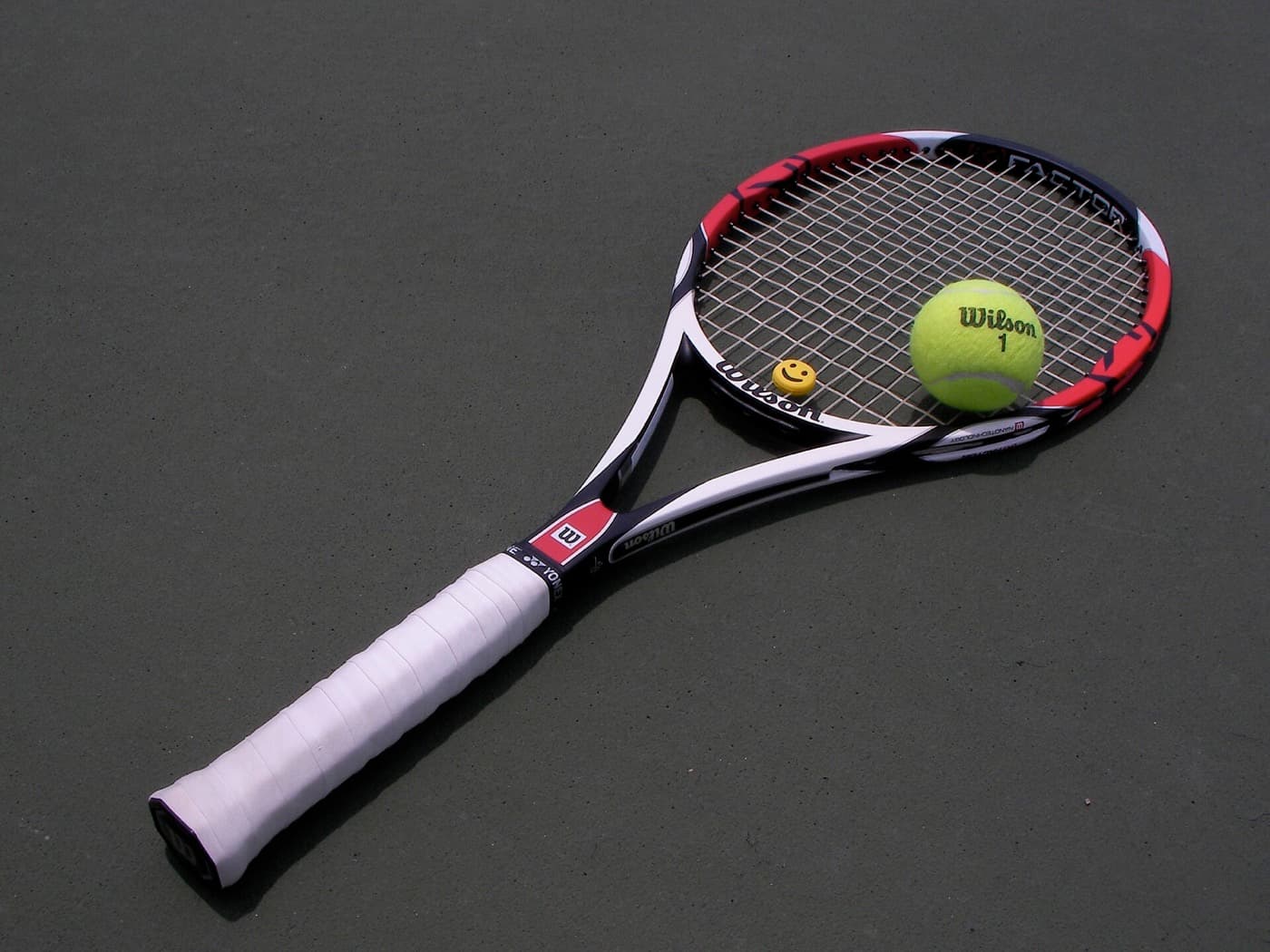
Tennis
A singles or doubles racquet sport that blends agility, strategy and stamina on court.

Running
The most accessible endurance sport — no venue, just shoes and the open road or trail.

Swimming
A full-body, low-impact endurance sport suitable for almost every age and ability.

Football
The world’s most popular team sport — endless running, teamwork and community in one game.
Frequently asked questions
What is biomechanics in sport?
It is the study of how the body moves as a mechanical system — how joints, muscles and levers produce and control force. It helps explain why techniques are taught the way they are, but the specifics for any individual are best guided by a qualified coach.
How it connects
The meaning-bearing relationships that place Biomechanics in the wider knowledge graph — each one with the reason it exists.
Explains
Covers the underlying "why" for these.
- TennisBiomechanics is one of the sports-science concepts that covers Tennis.
- RunningBiomechanics is one of the sports-science concepts that covers Running.
- SwimmingBiomechanics is one of the sports-science concepts that covers Swimming.
- FootballBiomechanics is one of the sports-science concepts that covers Football.
Explore across the knowledge base
Follow the threads that connect Biomechanics to the rest of SocialSportHub.
Movement patterns
- AccelerationThe athletic pattern of building speed from a standing or slow start by driving large horizontal forces into the ground to project the body forward.
- BackpedalControlled backward locomotion performed while facing forward, staying low and pushing off the balls of the feet in short strides to stay reactive and keep play in view.
- BoundAn exaggerated, horizontal springing stride that transfers from one leg to the opposite leg with a long flight phase, amplifying the mechanics of running.
- CatchReceiving a moving object and securing it under control, absorbing its momentum by yielding along its path so kinetic energy is dissipated rather than rebounded away.
- Change of DirectionA planned redirection of the body from one movement vector to another, requiring an athlete to decelerate existing momentum and reaccelerate along a new line between two known points.
Knowledge Atlas
- Explore by ScienceThe "why" layer — biomechanics, energy systems, motor learning and training principles behind performance.
- Explore by TechniqueThe specific, named ways skills are executed in each sport — linked to the skills, movements and sports behind them.
- Explore by MovementThe fundamental patterns and cross-sport athletic movements the body is built on.
Movement comparisons
- Glide vs SlideGlide vs Slide: how these two movements differ, what they share, and how to tell them apart — from mechanics to the sports that use them.
- Landing vs SquatLanding vs Squat: how these two movements differ, what they share, and how to tell them apart — from mechanics to the sports that use them.
- Lunge vs ReachLunge vs Reach: how these two movements differ, what they share, and how to tell them apart — from mechanics to the sports that use them.
- Kick vs LungeKick vs Lunge: how these two movements differ, what they share, and how to tell them apart — from mechanics to the sports that use them.
- Jump vs LandingJump vs Landing: how these two movements differ, what they share, and how to tell them apart — from mechanics to the sports that use them.
Techniques
- Tennis ServeThe overhead stroke that starts every point, hit from behind the baseline into the diagonally opposite service box.
- Playing the walls in padelThe skill that separates padel from every other racket sport — reading a rebound off glass, positioning behind the bounce rather than at it, and using your own back wall to attack.
- Running FormThe efficient posture and stride mechanics of distance running, keeping the body relaxed and the cadence smooth.
- Bunker ShotThe greenside sand shot where the club enters the sand behind the ball and lifts it out on a cushion of sand.
- Swing bowlingHow a cricket ball is made to curve in the air — the seam position and surface asymmetry behind conventional and reverse swing, and why swing is a property of the ball as much as the bowler.
Go deeper with Biomechanics
Everywhere else on the platform that covers Biomechanics — assembled from what actually references it, so nothing here is a dead end.
Question it
Research topics that name this entity among their connections.
Take it away
Open data and the whole-platform view of this subject.
How this page is maintained
- Content type
- Sports science concept
- Provenance
- Tier A — evergreen educational
- Verified external sources
- 0
- Content updated
- 2026-07-09
Evergreen, first-party explanation — it makes no claim that needs an external source. How we handle sources and reviews.