
Force and power
The difference between how much force the body can produce and how quickly it can produce it — the mechanics behind strength and explosiveness.
Overview
Force and power are related but different ideas. Force is simply a push or a pull — how hard the body can act on the ground, an opponent or an implement. Power adds time to the picture: it describes how quickly that force can be produced. Two athletes might be able to produce a similar maximum force, yet the one who can apply it faster is the more powerful.
This distinction is why strength and power are trained and talked about separately. Strength is about how much force is available; power is about expressing force rapidly, as in a jump, a sprint or a throw. Both draw on the same muscles and movements, and how they are best developed for an individual is a question for a qualified coach.
The science
- Force is a push or a pull; power is force produced quickly.
- Strength describes how much force is available; power describes how fast it is applied.
- Explosive actions — jumping, sprinting, throwing — depend heavily on power.
- Power combines strength and speed, so both can contribute to it.
- The same movements can build force or power depending on how they are done.
The kinetic chain
How force is transferred through the body
- 1
Ground & base
Force begins from a stable contact with the ground.
- 2
Legs drive
The large leg muscles generate and transfer force upward.
- 3
Hips & core
The hips and trunk link lower and upper body and add rotation.
- 4
Trunk & shoulder
Force passes through the trunk into the shoulder girdle.
- 5
Arm & hand
The arm accelerates the hand, racket, bat or ball.
Why it matters
- It explains why jumping and sprinting draw on more than raw strength.
- It underpins methods like plyometrics that target fast force production.
- It clarifies the difference between the strength and power qualities.
Educational only
Where it shows up
Sports where this concept is especially visible — each with a clear guide.

Basketball
A fast, dynamic team sport of running, jumping and quick decisions on court.
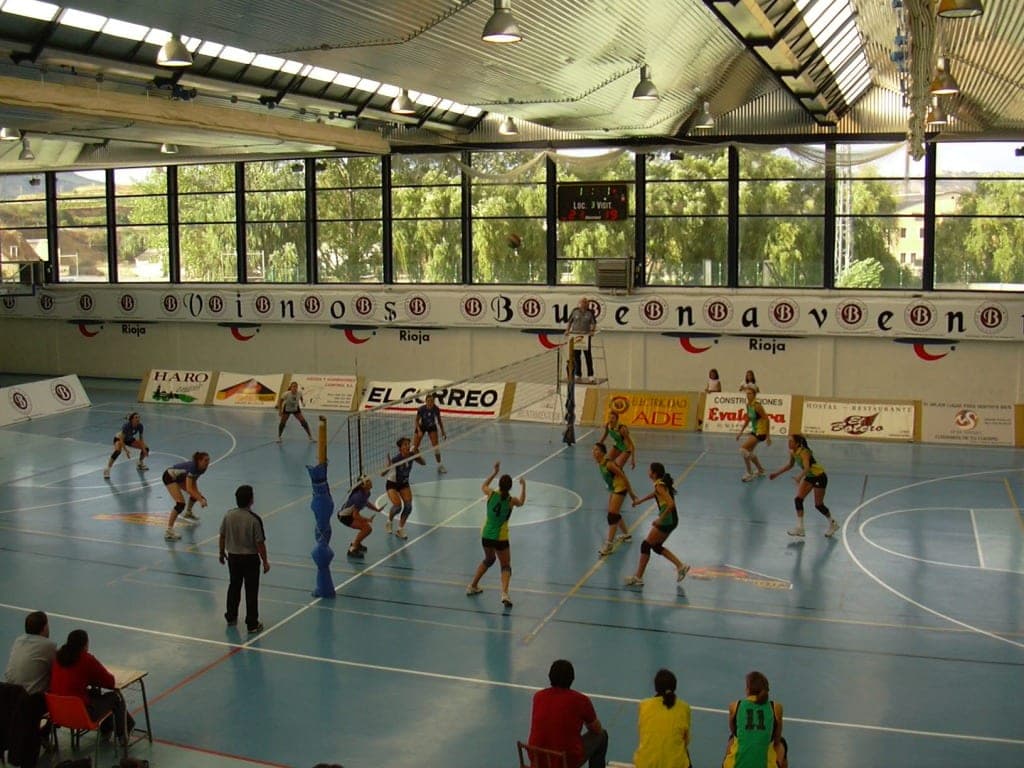
Volleyball
A non-contact team sport of rallies, jumps and teamwork — indoors or on the beach.

Tennis
A singles or doubles racquet sport that blends agility, strategy and stamina on court.

Football
The world’s most popular team sport — endless running, teamwork and community in one game.
Frequently asked questions
What is the difference between force and power?
Force is how hard the body can push or pull, while power is how quickly that force can be produced. An athlete can be very strong yet not especially powerful if they cannot apply their force fast; developing either for a particular person is best guided by a qualified coach.
How it connects
The meaning-bearing relationships that place Force and power in the wider knowledge graph — each one with the reason it exists.
Explains
Covers the underlying "why" for these.
- BasketballForce and power is one of the sports-science concepts that covers Basketball.
- VolleyballForce and power is one of the sports-science concepts that covers Volleyball.
- TennisForce and power is one of the sports-science concepts that covers Tennis.
- FootballForce and power is one of the sports-science concepts that covers Football.
Explore across the knowledge base
Follow the threads that connect Force and power to the rest of SocialSportHub.
Movement patterns
- AccelerationThe athletic pattern of building speed from a standing or slow start by driving large horizontal forces into the ground to project the body forward.
- BoundAn exaggerated, horizontal springing stride that transfers from one leg to the opposite leg with a long flight phase, amplifying the mechanics of running.
- CatchReceiving a moving object and securing it under control, absorbing its momentum by yielding along its path so kinetic energy is dissipated rather than rebounded away.
- Change of DirectionA planned redirection of the body from one movement vector to another, requiring an athlete to decelerate existing momentum and reaccelerate along a new line between two known points.
- CutA sharp, frequently reactive plant-and-redirect performed in a single decisive foot contact to evade an opponent or abruptly alter a line of travel.
Training methods
- PlyometricsPlyometrics are jumping and bounding drills that train muscles to produce force quickly, developing power and springiness through explosive movement.
- Strength TrainingStrength training uses resistance — bodyweight, bands or weights — to challenge your muscles so they gradually adapt and get stronger over time.
Coaching concepts
Knowledge Atlas
Movement comparisons
- Landing vs SquatLanding vs Squat: how these two movements differ, what they share, and how to tell them apart — from mechanics to the sports that use them.
- Deceleration vs LandingDeceleration vs Landing: how these two movements differ, what they share, and how to tell them apart — from mechanics to the sports that use them.
- Jump vs LandingJump vs Landing: how these two movements differ, what they share, and how to tell them apart — from mechanics to the sports that use them.
- Hop vs LandingHop vs Landing: how these two movements differ, what they share, and how to tell them apart — from mechanics to the sports that use them.
- Crossover Step vs RotationCrossover Step vs Rotation: how these two movements differ, what they share, and how to tell them apart — from mechanics to the sports that use them.
Go deeper with Force and power
Everywhere else on the platform that covers Force and power — assembled from what actually references it, so nothing here is a dead end.
Question it
Research topics that name this entity among their connections.
Take it away
Open data and the whole-platform view of this subject.
How this page is maintained
- Content type
- Sports science concept
- Provenance
- Tier A — evergreen educational
- Verified external sources
- 0
- Content updated
- 2026-07-09
Evergreen, first-party explanation — it makes no claim that needs an external source. How we handle sources and reviews.