
Thin air breaks every ball sport, and three of them fixed it in three different ways
Tennis approves a separate high-altitude ball and requires sixty days of acclimatisation. Badminton lets a national association change the shuttle. Football states its pressure specification 'at sea level' and stops there.
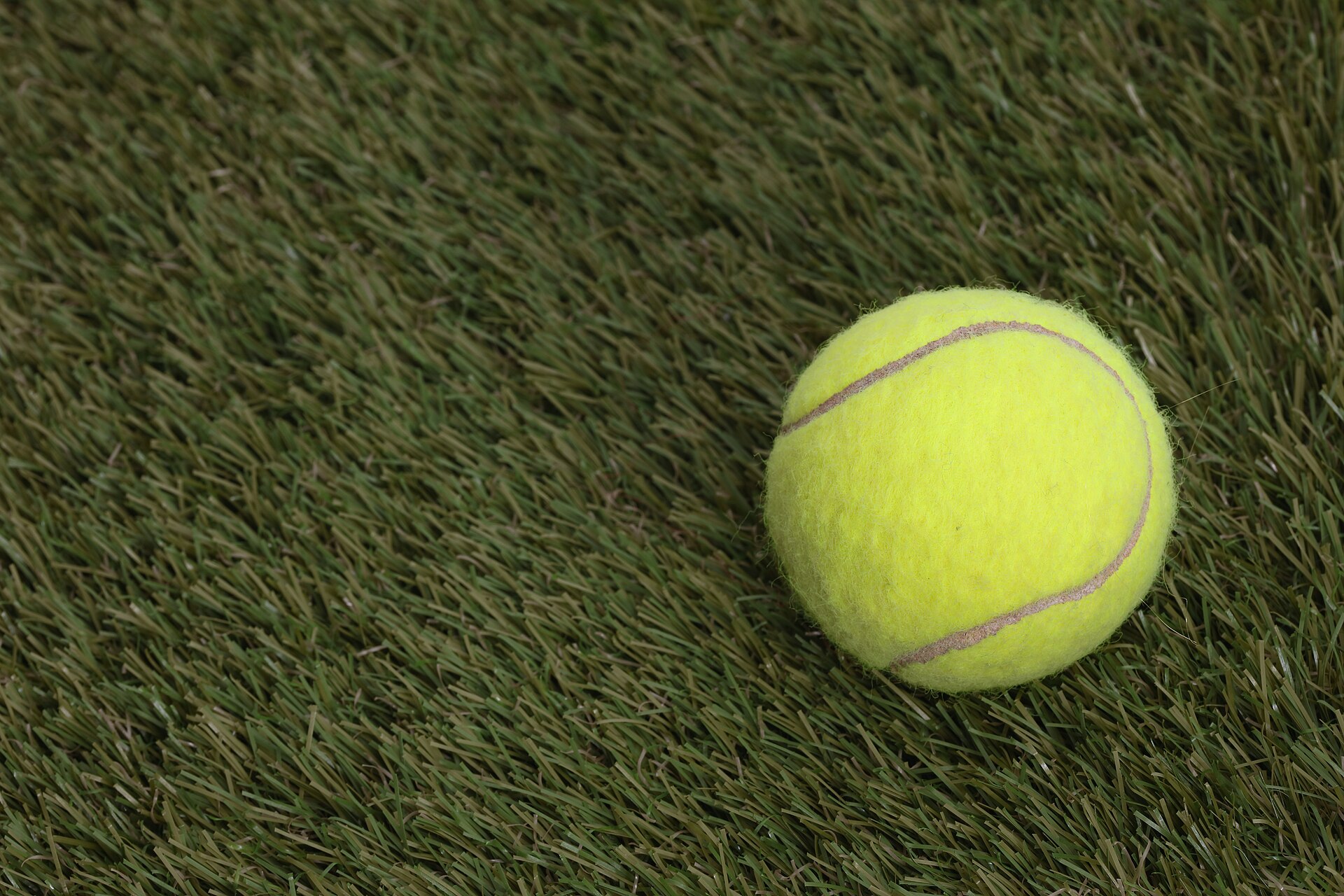
Air gets thinner with height. A ball struck through thinner air meets less drag, flies further and bounces off the air less — and if the ball is inflated, the pressure inside it now differs from the pressure outside by more than it was designed to.
None of that is controversial, and it affects every sport played with a ball in the air. What is interesting is that three governing bodies, looking at the same physics, wrote three answers that share no structure at all.
Tennis: a different ball, and sixty days
The ITF’s response is the most elaborate. Its ball specification table has four columns for adult play, and one of them is headed High Altitude.
That ball has the same mass range as the others, 56.0 to 59.4 grams, and the same size as Types 1 and 2 — but a rebound of 122 to 135 cm where Type 1 rebounds 138 to 151 and Types 2 and 3 rebound 135 to 147. Its entire permitted range sits at or below the bottom of theirs. It is pressurised, and it is specified for high-altitude play above 1,219 m only.
Reference The High Altitude ball’s mass, size and rebound of 122–135 cm against 138–151 for Type 1 and 135–147 for Types 2 and 3, and that it is pressurised and specified for high-altitude play above 1,219 m only, from the ball specification table and its notes.
Thinner air removes drag, so the ITF removes bounce. The correction is applied to a different property from the one the altitude affects, which is possible only because the specification treats size, rebound and deformation as independent levers.
Then the clause that goes further than any other rule in this comparison. A Type 2 ball may be pressurised or pressureless; a pressureless one shall have an internal pressure no greater than 7 kPa, may be used for high-altitude play above 1,219 m, and shall have been acclimatised for sixty days or more at the altitude of the specific tournament.
Reference That a pressureless Type 2 ball has an internal pressure no greater than 7 kPa, may be used above 1,219 m, and must have been acclimatised for sixty days or more at the altitude of the specific tournament, from the notes to the ball specification table.
That is a rule about logistics as much as about physics. A ball with no internal pressure equilibrates with the air around it, and equilibration takes time; the ITF fixes how much time and where it must be spent. Nothing else in this Journal’s reading of six federations’ rulebooks makes a demand of that kind.
The ITF also offers a simpler route, and names it: the Type 3 ball — the slow ball, larger than the others at 7.00 to 7.30 cm — is permitted and recommended for high-altitude play on any court surface type above 1,219 m.
Reference That the Type 3 ball is also permitted and recommended for high-altitude play on any court surface type above 1,219 m, from the introduction and the notes to the specification table.
Two solutions to one problem, from opposite directions: take energy out of the bounce, or add frontal area to restore the drag the altitude removed.
Badminton: change the object, keep the flight
Badminton’s answer is one sentence, and it delegates.
Where altitude or climate make the standard shuttle unsuitable, the specification may be modified — with the approval of the national Member Association, and provided the general design, speed and flight do not vary.
Reference The permission to modify the shuttle specification with Member Association approval where atmospheric conditions due to altitude or climate make the standard shuttle unsuitable, subject to no variation in general design, speed and flight, from Law 2.3.3.
Read what is held constant and what is released. The dimensions may change. The flight may not.
That is only possible because badminton certifies its shuttle by flight in the first place, through a landing window 460 mm wide at the far end of the court. With a performance test in hand, a governing body can safely let the object vary, because it can still tell whether the result is right.
Reference The speed test and the landing window it defines, from Law 3.
And note who decides: the Member Association concerned. Not the world body. The rule pushes the judgement down to the people who know what the air is doing in that hall.
Badminton’s clause is also broader than tennis’s in one respect. It covers altitude or climate — temperature and humidity change air density too, and a rule written only about height above sea level would miss them.
Football: name the condition, and stop
Law 2 states that a ball must be of a pressure equal to 0.6 to 1.1 atmosphere — 600 to 1,100 g/cm² — at sea level.
Reference The football’s permitted pressure of 0.6 to 1.1 atmosphere (600–1,100 g/cm²) at sea level, from Law 2.1.
The qualifier is there, and nothing follows it. There is no high-altitude ball, no adjustment table, no delegation to a national association. The Laws identify the reference condition and decline to say what happens away from it.
It would be easy to read that as an oversight. It is more likely a judgement, and the reasons are visible in Law 2 itself.
Football’s pressure tolerance is already enormous — 1.1 is 1.83 times 0.6, a range of 83 per cent. Against a band that wide, the effect of altitude on the pressure difference across the bladder is small in relative terms, and any correction would land inside the tolerance the rule already permits. There is nothing to specify because the specification is loose enough to absorb it.
And football’s ball is the heaviest and slowest, relative to its size, of the three. Drag matters least where mass is greatest, so the flight effect that tennis and badminton must correct for is the smallest of the three cases.
What the three answers have in common
Only one thing, and it is worth naming: each sport corrected in the register it already knew how to measure.
Tennis specifies its ball through several independent properties, so it corrects by changing one of them — rebound, or size — and adds a new approved type. Badminton specifies its shuttle through a flight test, so it corrects by letting the object change and holding the flight fixed. Football specifies pressure with a wide band and no performance test, so it has no register in which to make a correction, and states the reference condition instead.
None of them is wrong. But it does mean that a reader who asks “how does this sport handle altitude?” is really asking a question about the sport’s measurement system, and will get an answer shaped by that rather than by the physics — which is the same for all three.
One caution
Nothing above establishes how much difference altitude actually makes to any of the three sports. That would require measurements this article has not made and none of these rulebooks contains: the ITF, the BWF and the IFAB state what a legal object is, not how far a ball flies in Bogotá.
What the documents do establish is which sports thought the question was worth writing a rule about, what each rule holds constant, and who each of them trusts to make the call. On that, the three could not be more different — and all three were reading the same barometer.
Read the evergreen pages
This piece is an argument. These are the reference pages on SocialSportHub that document the same subjects.
References
- [1]International Tennis FederationGoverning body. ITF Approved Tennis Balls, Classified Surfaces & Recognised Courts 2026 — Appendix I, The Ball, and the notes to the ball specification table. Accessed 6 September 2026.
- [2]Badminton World FederationGoverning body. BWF Statutes, Section 4.1: Laws of Badminton, in force 26 April 2025 — Law 2, Shuttle. Accessed 6 September 2026.
- [3]The IFABGoverning body. Laws of the Game 2026/27 — Law 2, The Ball. Accessed 6 September 2026.
Continue reading
Editor’s pick
Four approved tennis balls, one mass, and the two numbers that separate them
The ITF approves four balls for adult tennis. Put their specifications side by side and they agree exactly on weight and on how far they squash — and differ on diameter, on how high they bounce, and on how much shape they have got back before the load comes off.
Editor’s pick
Five rulebooks, five projectiles, and no agreement on how exact a ball has to be
A legal shuttlecock may vary in mass by 16 per cent and a legal tennis ball by 6. A football's inflation pressure may nearly double. And the golf ball has no permitted range at all — its rule bounds it in one direction only.
More on football
Football spent a century leaving time to the referee. The 2026/27 Laws put numbers on it
Ten seconds to leave the field when substituted. A minute off after treatment. A five-second countdown, visibly signalled, on throw-ins and goal kicks. The changes are small individually and they add up to a different way of regulating delay.