
Albatross
In golf, a score of three strokes under par on a single hole.
Definition
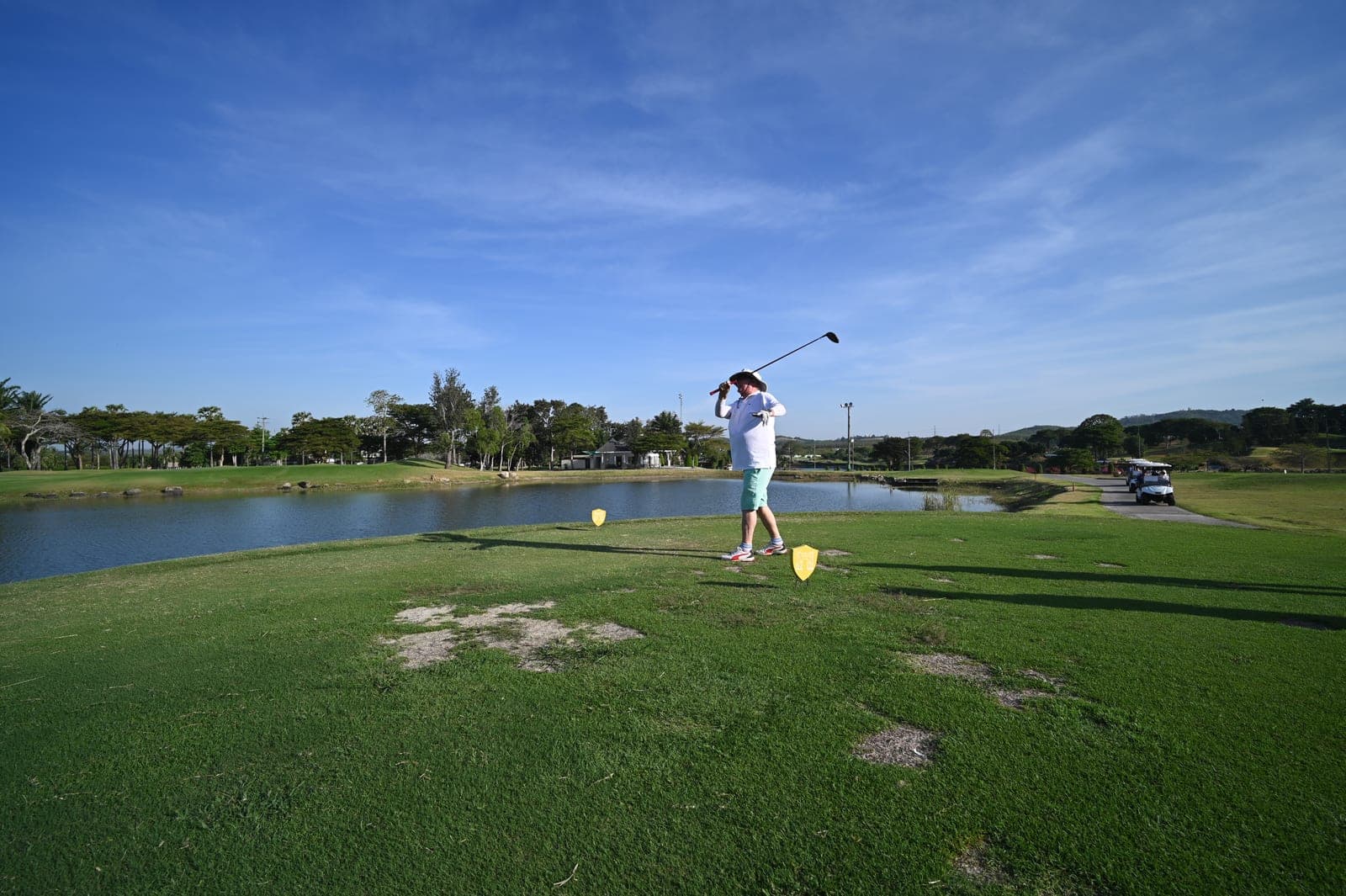
An albatross is a golf score of three under par on one hole, for example a two on a par five, or a hole-in-one on a par four. It sits above a birdie (one under) and an eagle (two under) in golf's family of under-par scores and is one of the rarest achievements in the sport.
In the United States the same score is commonly called a "double eagle." Because it requires either a holed second shot on a long hole or an ace on a par four, an albatross is far less common than an eagle and rarer still than a hole-in-one on a par three. The name follows golf's bird theme, in which progressively better scores take the names of increasingly impressive birds.
Where you’ll hear “albatross”
Sports that use this term:
How it connects
The meaning-bearing relationships that place Albatross in the wider knowledge graph — each one with the reason it exists.
Commonly confused with
Close enough to be mixed up — the distinction is worth knowing.
Explore across the knowledge base
Follow the threads that connect Albatross to the rest of SocialSportHub.
Disciplines
- Individual medleyThe individual medley (IM) combines all four strokes in a set order — butterfly, backstroke, breaststroke, then freestyle — testing all-round swimming across a single event.
- ScullingSculling is the discipline in which each rower uses two oars, one in each hand, propelling the boat symmetrically from both sides.
- KumiteKumite is the sparring discipline of karate, in which two athletes exchange controlled strikes and kicks under judged rules.
- ÉpéeÉpée is a fencing weapon with point-only touches valid anywhere on the body and no right-of-way, so both fencers can score at once.
- Big AirBig air is a freestyle snowboarding discipline in which riders perform a single trick off one large jump, focusing on difficulty and execution.
Positions
- Shooting guardThe shooting guard is a perimeter player whose main role is to score, especially from mid-range and beyond the three-point line.
- Small forwardThe small forward is a versatile wing player in basketball who can score inside and outside while also defending multiple positions.
- Point guardThe point guard is basketball’s primary ball-handler and playmaker, running the offence and setting up teammates to score.
- Power forwardThe power forward plays near the basket in basketball, using strength to rebound, score inside, and defend the paint.
- CenterThe center is usually the tallest player on a basketball team, playing near the basket to score inside, rebound, and protect the rim.
Player roles
- PlaymakerThe playmaker is a team's creative hub — the player who orchestrates attacks, controls the tempo and distributes the ball so teammates can score.
- All-RounderAn all-rounder is a versatile player who contributes across attack and defence rather than specialising in a single phase, position, or skill.
- Ball-winnerA ball-winner is the player tasked with regaining possession through pressing, tackling and interceptions — a team's tireless defensive workhorse.
- AnchorThe anchor is a cross-sport holding role: a steadying, defensive-minded player who shields the back line, screens danger and gives teammates a reliable base.
- Utility playerA dependable, versatile player who can competently fill several different positions as the team needs, rather than specialising in just one.
Practice & sessions
- Decision-making sessionA session built around choosing well under pressure — reading the situation and picking the right option, not just executing a skill.
- Technical sessionA session built around technique — grooving and refining the mechanics of how a movement or shot is executed.
- Conditioning sessionA session built around physical conditioning — developing the fitness qualities a sport draws on, rather than its skills or tactics.
- Team practicePractising with a full team — working on roles, patterns of play and communication so the group performs together, usually under a coach.
- Tactical sessionA session built around tactics — how you use space, position and patterns of play, rather than the mechanics of a shot.
Movement patterns
- LandingThe controlled absorption of force at ground contact that ends an airborne phase, dissipating impact through eccentric triple flexion of the ankle, knee and hip.
- GaitThe cyclic, alternating single-leg pattern of walking and running that carries the body across the ground — the base of most field and endurance sport.
- CutA sharp, frequently reactive plant-and-redirect performed in a single decisive foot contact to evade an opponent or abruptly alter a line of travel.
- LungeA split-stance, single-leg-emphasis pattern: stepping or dropping into a staggered stance and pushing back up to build single-leg strength, balance and stability.
- DecelerationThe athletic pattern of actively braking and absorbing momentum to slow or stop under control, producing eccentric forces that oppose the direction of travel.
Go deeper with Albatross
Everywhere else on the platform that covers Albatross — assembled from what actually references it, so nothing here is a dead end.
Take it away
Open data and the whole-platform view of this subject.
How this page is maintained
- Content type
- Term
- Provenance
- Tier A — evergreen educational
- Verified external sources
- 0
- Content updated
- 2026-08-04
Evergreen, first-party explanation — it makes no claim that needs an external source. How we handle sources and reviews.

