
Overview
Deceleration is the active reduction of speed, in which an athlete absorbs and dissipates momentum by producing braking forces that oppose the direction of travel. As speed is shed, the centre of mass shifts back over or behind the base of support, the trunk often leans away from the direction of motion, and the hips and knees sink to lengthen the path over which force is absorbed. The working muscles — quadriceps, glutes, hamstrings, and calves — contract eccentrically, lengthening under tension to control the descent and forward drift of the body rather than to push it along. Net ground-reaction forces are braking rather than propulsive, and because a large amount of momentum is often removed over a short time, peak forces per contact can be high, which is why athletes frequently spread the braking across several shortened, choppier steps. Proprioception and motor control continuously regulate the effort so balance and orientation are preserved as velocity falls.
How deceleration looks in practice depends on entry speed, the space available, and what follows it. A defender closing down an attacker gathers with short stutter-steps and settles into a balanced base; a tennis or squash player brakes hard out of a wide lunge to recover to the middle; an alpine skier bleeds speed through edged, angulated turns; a basketball player plants to stop-and-pop or to jump-stop into two feet. Some decelerations are gradual and rhythmic, absorbed over many strides, while others are a single violent plant that must arrest most of the momentum at once — and very often deceleration is not a full stop at all but a transition that slows the body just enough to redirect and re-accelerate. Surface, footwear, whether an implement or ball is being controlled, and whether the stop is planned or reactive all reshape the pattern, so the shared eccentric-braking template is expressed differently from sport to sport.
What defines it
- Braking (eccentric) muscle action dominates: the quadriceps, glutes, hamstrings, and calves lengthen under load to absorb momentum rather than to generate propulsion.
- The centre of mass shifts back over or behind the base while the hips and knees sink and the trunk leans away from the direction of travel to resist forward drift.
- Momentum is commonly dissipated across several shortened, choppier gather-steps that spread the braking load over multiple ground contacts.
- Net ground-reaction forces are braking rather than propulsive, and peak forces per contact can be high because a large amount of speed is removed in a short window.
- It is frequently a transition rather than an endpoint, slowing the body just enough to set up a change of direction or a re-acceleration in a new line.
How it differs from nearby movements
Movements that look similar but are not the same thing.
- Not the same as a passive stop
- A passive stop lets momentum bleed off gradually as friction and coasting slow the body with minimal muscular effort. Deceleration is active, high-force eccentric control used to shed speed quickly while staying balanced and ready to move again.
- Not the same as landing
- Landing absorbs mainly vertical momentum from an airborne descent onto one or both feet. Deceleration absorbs mainly horizontal momentum during locomotion, usually across several ground contacts — the two are related eccentric-absorption tasks but manage different directions of travel.
- Not the same as acceleration
- The force-opposite of deceleration: acceleration produces net-propulsive forces that add momentum, whereas deceleration produces net-braking forces that remove it.
- Not the same as change-of-direction
- Deceleration is the braking component that slows or stops the body. Change-of-direction is the whole reorientation manoeuvre, which typically includes a deceleration followed by re-acceleration along a new line.
A note on this information
Exercises that train the deceleration
Movements built on this pattern — educational examples, not a prescription.
Squat
A foundational lower-body movement where you bend at the hips and knees to lower down and stand back up.
Bulgarian split squat
A single-leg squat where the back foot is raised on a bench behind you.
Lunge
A single-leg movement where you step forward and bend both knees to lower your body.
Romanian deadlift
A hinge variation focused on the back of the legs, lowering the weight without returning it to the floor.
Wall sit
A holding exercise where you sit against a wall with no chair, holding a squat position still.
Step-up
A movement where you step up onto a raised platform one leg at a time and step back down.
Sports skills that express it
The learnable skills of a sport that this movement underlies.
Footwork
The skill of moving efficiently around the playing area to be in position for each shot or action.
Balance
The skill of keeping the body stable and controlled while still or moving.
Core stability
The skill of engaging the trunk muscles to keep the body strong and controlled through movement.
Marking
The defensive skill of staying close to an opponent to limit their space and options.
Tackling
The skill of legally challenging an opponent to win the ball or stop their progress.
Sports techniques that use it
How the movement shows up in the specific techniques of a sport.
The science and how it’s learned
The concepts that explain this movement and help in learning it.
Learning & coaching
Sports that rely on it

Football
The world’s most popular team sport — endless running, teamwork and community in one game.

Basketball
A fast, dynamic team sport of running, jumping and quick decisions on court.
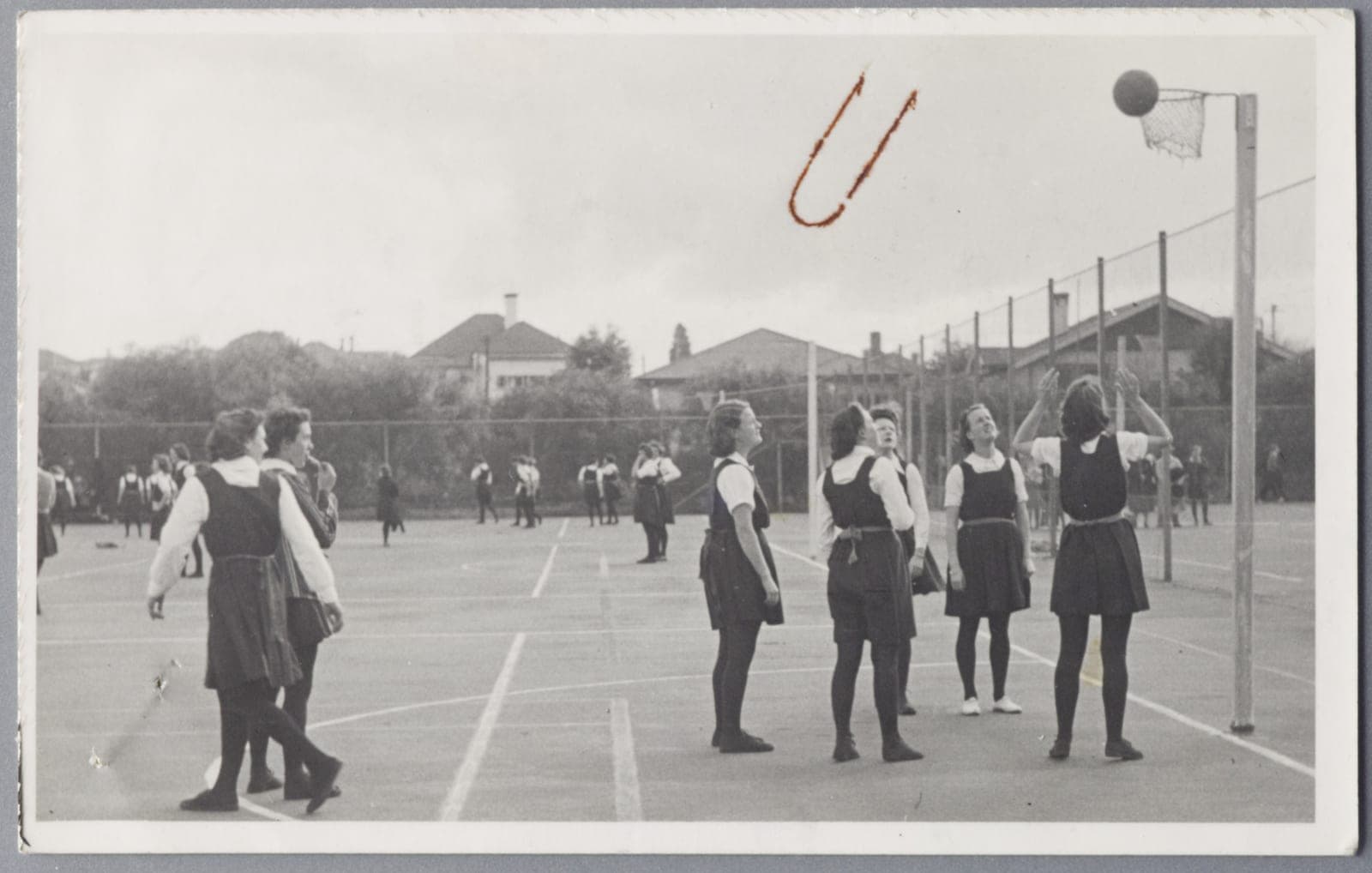
Netball
A non-contact, position-based team sport of quick passing and accurate shooting.
Tennis
A singles or doubles racquet sport that blends agility, strategy and stamina on court.
Squash
A fast, high-intensity indoor racquet sport played inside an enclosed court where the walls stay in play.
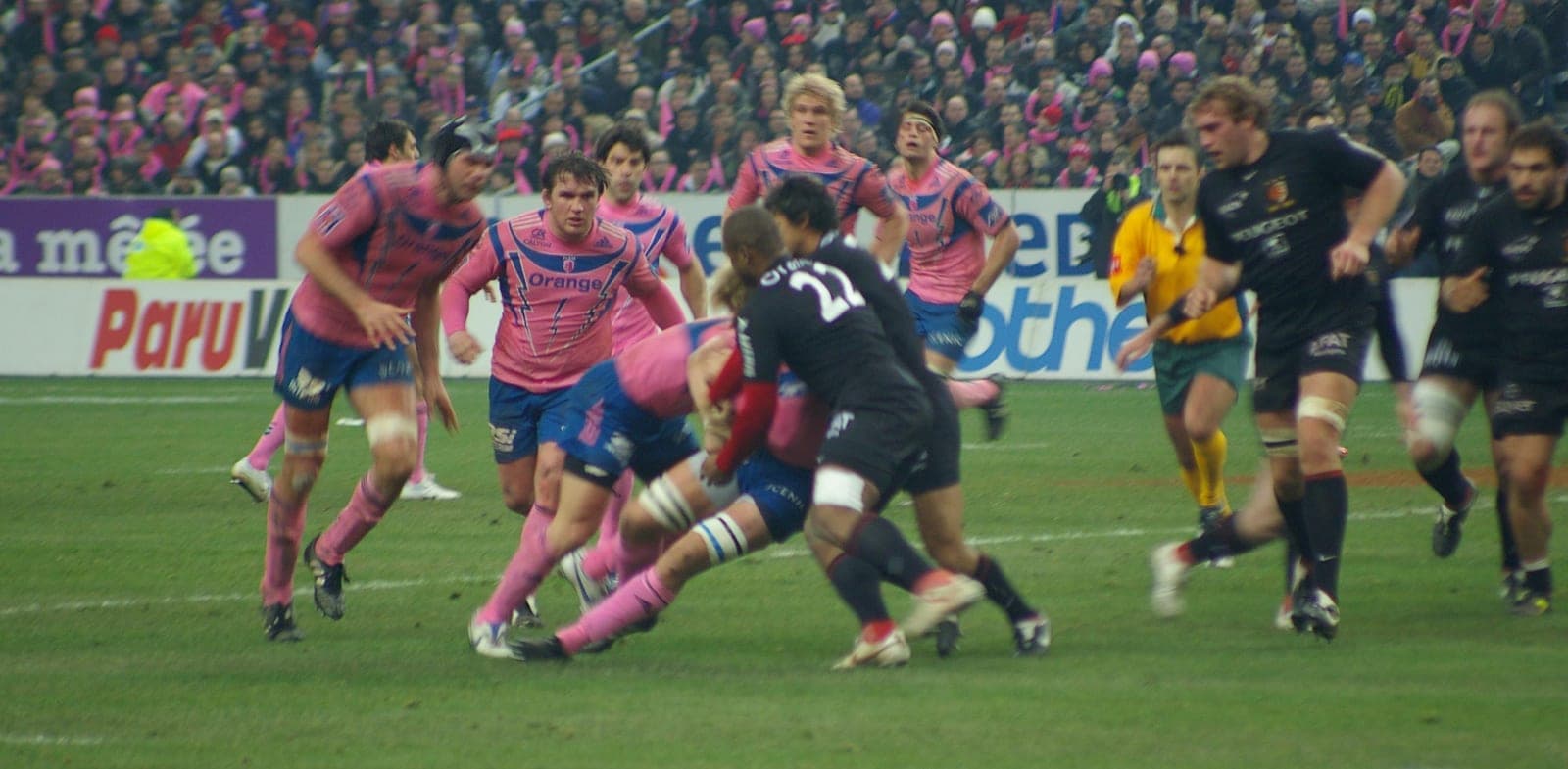
Rugby
A physical team sport of carrying, passing and kicking an oval ball toward the opposing line.
American Football
A strategic, position-based team sport of set plays, sprinting and coordinated teamwork on a marked field.
Compare deceleration with…
Movements it is often confused with — see exactly how they differ.
How it connects
The meaning-bearing relationships that place Deceleration in the wider knowledge graph — each one with the reason it exists.
Builds on
Understanding these first makes this one make sense.
Commonly confused with
Close enough to be mixed up — the distinction is worth knowing.
Explore across the knowledge base
Follow the threads that connect Deceleration to the rest of SocialSportHub.
Movement comparisons
- Acceleration vs DecelerationAcceleration vs Deceleration: how these two movements differ, what they share, and how to tell them apart — from mechanics to the sports that use them.
- Change of Direction vs DecelerationChange of Direction vs Deceleration: how these two movements differ, what they share, and how to tell them apart — from mechanics to the sports that use them.
- Deceleration vs LandingDeceleration vs Landing: how these two movements differ, what they share, and how to tell them apart — from mechanics to the sports that use them.
- Hop vs LandingHop vs Landing: how these two movements differ, what they share, and how to tell them apart — from mechanics to the sports that use them.
- Landing vs SquatLanding vs Squat: how these two movements differ, what they share, and how to tell them apart — from mechanics to the sports that use them.
Skills
- FootworkThe skill of moving efficiently around the playing area to be in position for each shot or action.
- BalanceThe skill of keeping the body stable and controlled while still or moving.
- Core stabilityThe skill of engaging the trunk muscles to keep the body strong and controlled through movement.
- MarkingThe defensive skill of staying close to an opponent to limit their space and options.
- TacklingThe skill of legally challenging an opponent to win the ball or stop their progress.
Sports science
- BiomechanicsThe study of how the body produces and controls movement — the mechanics behind every technique in sport.
- Force and powerThe difference between how much force the body can produce and how quickly it can produce it — the mechanics behind strength and explosiveness.
- The kinetic chainThe idea that the body’s segments work as a linked chain, passing force from the ground up through the hips, trunk and limbs.
- ProprioceptionThe body’s internal sense of where its parts are and how they are moving — the awareness behind balance and coordinated movement.
- Motor controlHow the brain and nervous system organise the muscles to produce coordinated, controlled movement.
Training methods
- Strength TrainingStrength training uses resistance — bodyweight, bands or weights — to challenge your muscles so they gradually adapt and get stronger over time.
- PlyometricsPlyometrics are jumping and bounding drills that train muscles to produce force quickly, developing power and springiness through explosive movement.
- Tempo TrainingTempo training holds a firm, controlled 'comfortably hard' pace for a sustained stretch, teaching the body to sustain effort without tipping into a sprint.
Coaching concepts
- ProgressionBuilding skill and training load in gradual, manageable steps so each stage prepares the next, moving from simple to complex and easy to hard.
- Constraints-Led PracticeA coaching approach that adjusts the task, environment or rules so a desired movement or decision emerges in practice, rather than being explicitly instructed.
- Transfer of TrainingWhether practice carries over to real performance — and why game-like, varied practice tends to transfer better than isolated, repetitive drills.
Go deeper with Deceleration
Everywhere else on the platform that covers Deceleration — assembled from what actually references it, so nothing here is a dead end.
Take it away
Open data and the whole-platform view of this subject.
How this page is maintained
- Content type
- Movement pattern
- Provenance
- Tier A — evergreen educational
- Verified external sources
- 0
- Content updated
- 2026-07-13
Evergreen, first-party explanation — it makes no claim that needs an external source. How we handle sources and reviews.