
Flexibility Training
Flexibility training uses stretching to gradually improve how far your muscles and joints can comfortably lengthen and move.
Overview
Flexibility training focuses on the range through which your muscles and joints can comfortably lengthen. The main tool is stretching, and over time gentle, regular practice tends to make reaching, bending and lengthening feel easier and less restricted.
There are different styles. Static stretching means easing into a lengthened position and holding it calmly; dynamic stretching means moving smoothly through a range, and often features in warm-ups. Which suits a moment depends on whether you are preparing to move or winding down afterwards.
The reliable ingredient is consistency: flexibility responds to regular, gentle practice far more than to occasional forceful efforts. Beginners ease to the first point of gentle tension and breathe, letting range develop patiently rather than pushing into discomfort.
Key points
- Flexibility is the comfortable range your muscles and joints can lengthen through.
- Static stretching holds a position; dynamic stretching moves through a range.
- Dynamic stretches often feature in warm-ups; calm holds suit winding down.
- Consistency matters more than occasional forceful efforts.
- Easing to gentle tension and breathing beats pushing into discomfort.
A note on training information
Where it’s used
Sports this relates to:
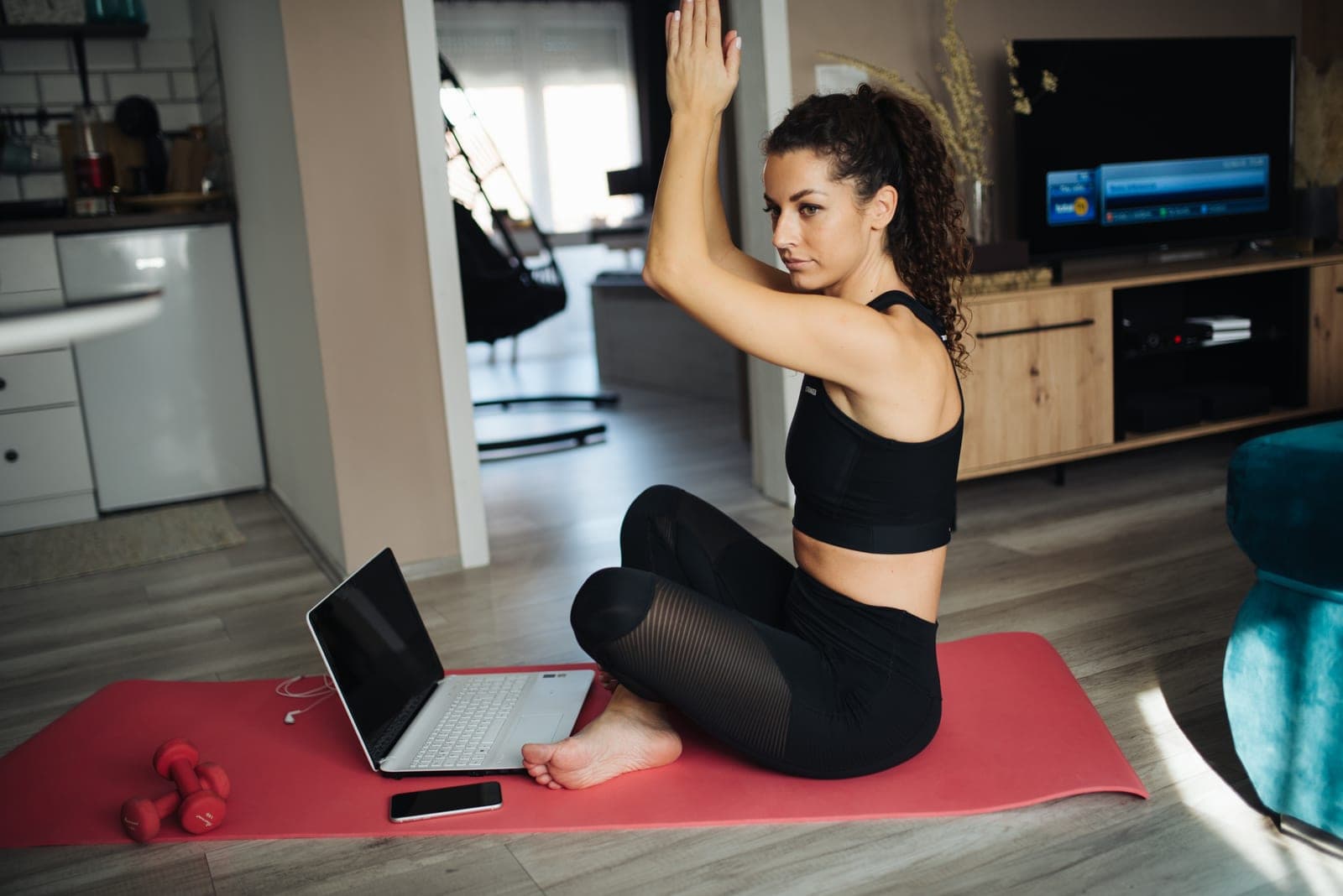
Yoga
A mind-body practice that links postures, breathing and focus to build flexibility, strength and calm.
Pilates
A low-impact mind-body method that builds core strength, control and posture through precise, controlled movement.
Barre
A low-impact mind-body workout blending ballet-inspired moves with elements of pilates and yoga for strength and control.

Tai Chi
A gentle mind-body practice of slow, flowing movements that builds balance, mobility and calm.
Fitness
Strength and general fitness training — the foundation that supports every other sport.
Related training methods
Interval Training
Interval training alternates short bursts of harder effort with easier recovery periods, letting you accumulate more quality work than a single continuous push.
Steady-State Cardio
Steady-state cardio means holding one comfortable, continuous pace for the whole session, building an aerobic base without the peaks of interval work.
Circuit Training
Circuit training moves you through a series of stations back to back with little rest, blending strength and cardio into one time-efficient session.
How it connects
The meaning-bearing relationships that place Flexibility Training in the wider knowledge graph — each one with the reason it exists.
Frequently learned together
Taught side by side in the same stage of a learning path.
- Mobility TrainingBoth are taught in the “Train your body for it” stage of the Yoga learning path.
- Active Recovery SessionsBoth are taught in the “Train your body for it” stage of the Yoga learning path.
- Understanding rest and recoveryBoth are taught in the “Train your body for it” stage of the Yoga learning path.
- FlexibilityBoth are taught in the “Train your body for it” stage of the Yoga learning path.
- BalanceBoth are taught in the “Train your body for it” stage of the Yoga learning path.
Explore across the knowledge base
Follow the threads that connect Flexibility Training to the rest of SocialSportHub.
Training guides
- Understanding rest and recoveryRest and recovery are the everyday habits — sleep, rest days and gentle movement — that let the benefits of training take hold between sessions.
- How to warm upA short, gentle warm-up gradually raises your body temperature and prepares your muscles and joints for the activity ahead.
Learning paths
Practice & sessions
Movement patterns
- KickA ballistic single-support leg swing that whips force from the plant foot through the hip and knee to strike or propel a ball or target with the foot, distinct from the weight-bearing steps of locomotion.
- ReachExtending a limb toward a distant point or object, often at full stretch, by projecting a distal segment beyond the body's resting envelope while a stabilised base preserves balance and control.
Go deeper with Flexibility Training
Everywhere else on the platform that covers Flexibility Training — assembled from what actually references it, so nothing here is a dead end.
Learn it
Structured courses and paths on the platform that cover this directly.
How this page is maintained
- Content type
- Training method
- Provenance
- Tier A — evergreen educational
- Verified external sources
- 0
- Content updated
- 2026-07-06
Evergreen, first-party explanation — it makes no claim that needs an external source. How we handle sources and reviews.