
Jump squat
An explosive squat variation where you spring off the floor at the top of the movement.
Overview
The jump squat adds an explosive element to the standard squat. You lower into a squat and then drive upward hard enough to leave the ground, landing softly and flowing into the next repetition. It is a bodyweight way to train power — moving your own weight quickly.
Because it involves jumping and landing, the jump squat is a higher-impact movement usually introduced once the basic squat feels comfortable. It develops the same thigh and hip muscles as the squat while adding an emphasis on speed and power.
The movement
- 1Start in a shoulder-width stance and lower into a shallow squat.
- 2Drive up explosively so your feet leave the floor.
- 3Land softly on the balls of your feet and bend the knees to absorb the landing.
- 4Flow smoothly into the next repetition.
Beginner notes
- Landing softly with bent knees helps absorb the impact quietly.
- Usually introduced after the basic squat feels comfortable.
- Quality of each jump matters more than piling on repetitions.
A note on training information
Where it’s used
Sports this relates to:

Basketball
A fast, dynamic team sport of running, jumping and quick decisions on court.
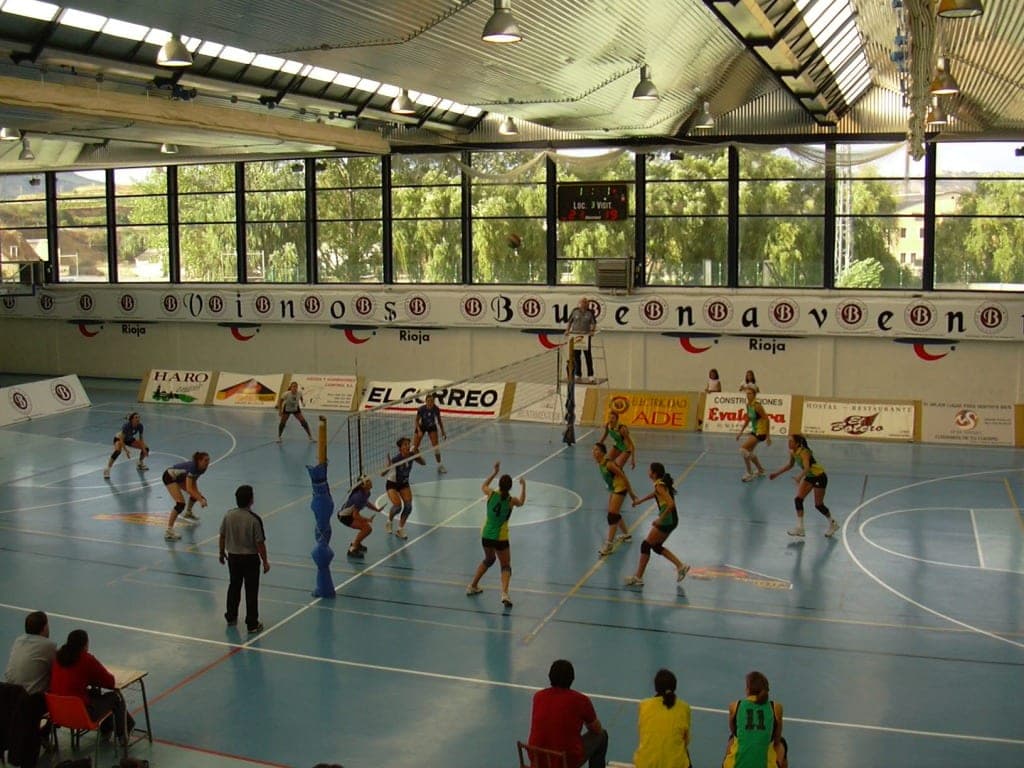
Volleyball
A non-contact team sport of rallies, jumps and teamwork — indoors or on the beach.

Fitness
Strength and general fitness training — the foundation that supports every other sport.
Functional Fitness
Varied, whole-body training built around everyday movement patterns like squatting, lifting and carrying.
Related exercises
Squat
A foundational lower-body movement where you bend at the hips and knees to lower down and stand back up.
Goblet squat
A squat variation where you hold a single weight close to your chest for balance and control.
Wall sit
A holding exercise where you sit against a wall with no chair, holding a squat position still.
Explore across the knowledge base
Follow the threads that connect Jump squat to the rest of SocialSportHub.
Movement patterns
- JumpThe plyometric pattern of projecting the body off the ground through explosive triple extension and controlling the landing — the core expression of lower-body power.
- SquatA knee-dominant pattern: bending the hips, knees and ankles to lower and rise while keeping the torso upright — the foundation of lower-body strength.
- AccelerationThe athletic pattern of building speed from a standing or slow start by driving large horizontal forces into the ground to project the body forward.
- BoundAn exaggerated, horizontal springing stride that transfers from one leg to the opposite leg with a long flight phase, amplifying the mechanics of running.
- Change of DirectionA planned redirection of the body from one movement vector to another, requiring an athlete to decelerate existing momentum and reaccelerate along a new line between two known points.
Sports science
- Energy systemsHow the body supplies energy for movement — the different pathways that power everything from an explosive jump to a long, steady run.
- Training variationThe idea that changing elements of training over time helps keep the body responding and keeps training sustainable.
- Force and powerThe difference between how much force the body can produce and how quickly it can produce it — the mechanics behind strength and explosiveness.
Movement comparisons
- Lunge vs SquatLunge vs Squat: how these two movements differ, what they share, and how to tell them apart — from mechanics to the sports that use them.
- Acceleration vs JumpAcceleration vs Jump: how these two movements differ, what they share, and how to tell them apart — from mechanics to the sports that use them.
- Hinge vs SquatHinge vs Squat: how these two movements differ, what they share, and how to tell them apart — from mechanics to the sports that use them.
- Jump vs LandingJump vs Landing: how these two movements differ, what they share, and how to tell them apart — from mechanics to the sports that use them.
- Glide vs JumpGlide vs Jump: how these two movements differ, what they share, and how to tell them apart — from mechanics to the sports that use them.
Techniques
- Jump ShotA basketball shot released at the top of a vertical jump, letting the shooter get the ball over a defender with a soft, arcing release.
- DeadliftA strength exercise that lifts a loaded barbell from the floor to a standing position by extending the hips and knees together.
- Bodyweight SquatA foundational lower-body exercise that lowers the hips by bending the knees and hips, then stands back up, using only body weight.
Disciplines
- SlopestyleSlopestyle is a freestyle snowboarding discipline in which riders descend a course of jumps and rails, performing tricks on features of their choice.
- Big AirBig air is a freestyle snowboarding discipline in which riders perform a single trick off one large jump, focusing on difficulty and execution.
- Top-Rope ClimbingA roped format where the rope runs up to an anchor at the top of the route and back down, so the climber is held from above throughout the ascent.
Go deeper with Jump squat
Everywhere else on the platform that covers Jump squat — assembled from what actually references it, so nothing here is a dead end.
Take it away
Open data and the whole-platform view of this subject.
How this page is maintained
- Content type
- Exercise
- Provenance
- Tier A — evergreen educational
- Verified external sources
- 0
- Content updated
- 2026-07-06
Evergreen, first-party explanation — it makes no claim that needs an external source. How we handle sources and reviews.