
High line
A defensive setup where the back line of defenders holds a position far up the field to compress the space available to the opposition.
Definition
Playing a high line means the defenders push up close to the halfway line rather than sitting deep near their own goal. This squeezes the space the opposition has to play in, supports pressing higher up the pitch and helps a team keep territorial control.
A high line is mainly a football idea, though field-hockey and futsal teams also push up to compress space and press high. It carries a clear risk: the space behind the defence is larger, so a well-timed pass or a fast forward can create a one-on-one chance. In football, teams that use a high line often pair it with an offside trap and an aggressive press to reduce that danger. In sports without an offside law — such as field hockey and futsal — a high line only compresses space and cannot be backed by an offside trap.
Where you’ll hear “high line”
Sports that use this term:

Football
The world’s most popular team sport — endless running, teamwork and community in one game.
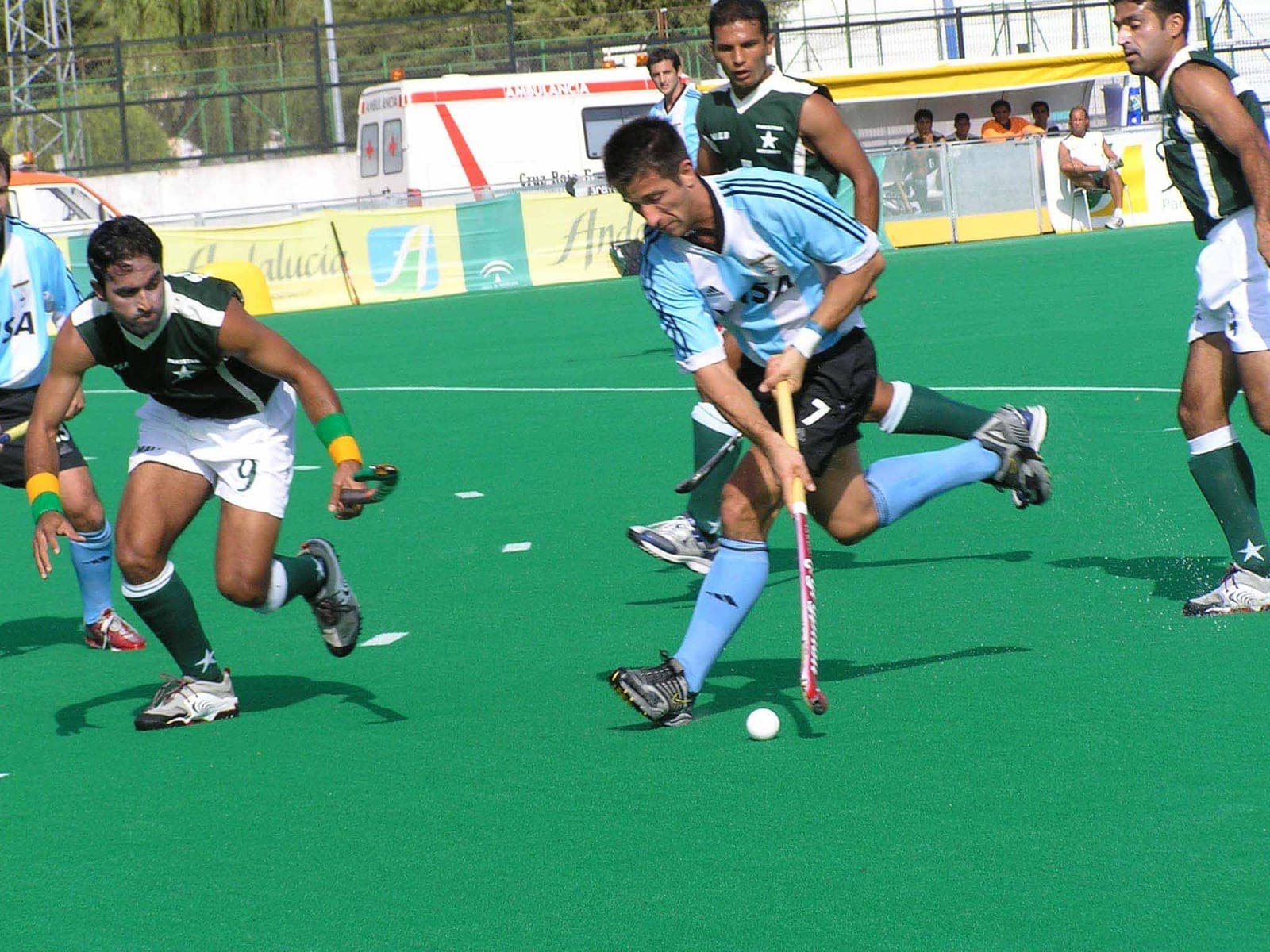
Field Hockey
An outdoor team sport that uses curved sticks to move a ball, built on agility and teamwork.
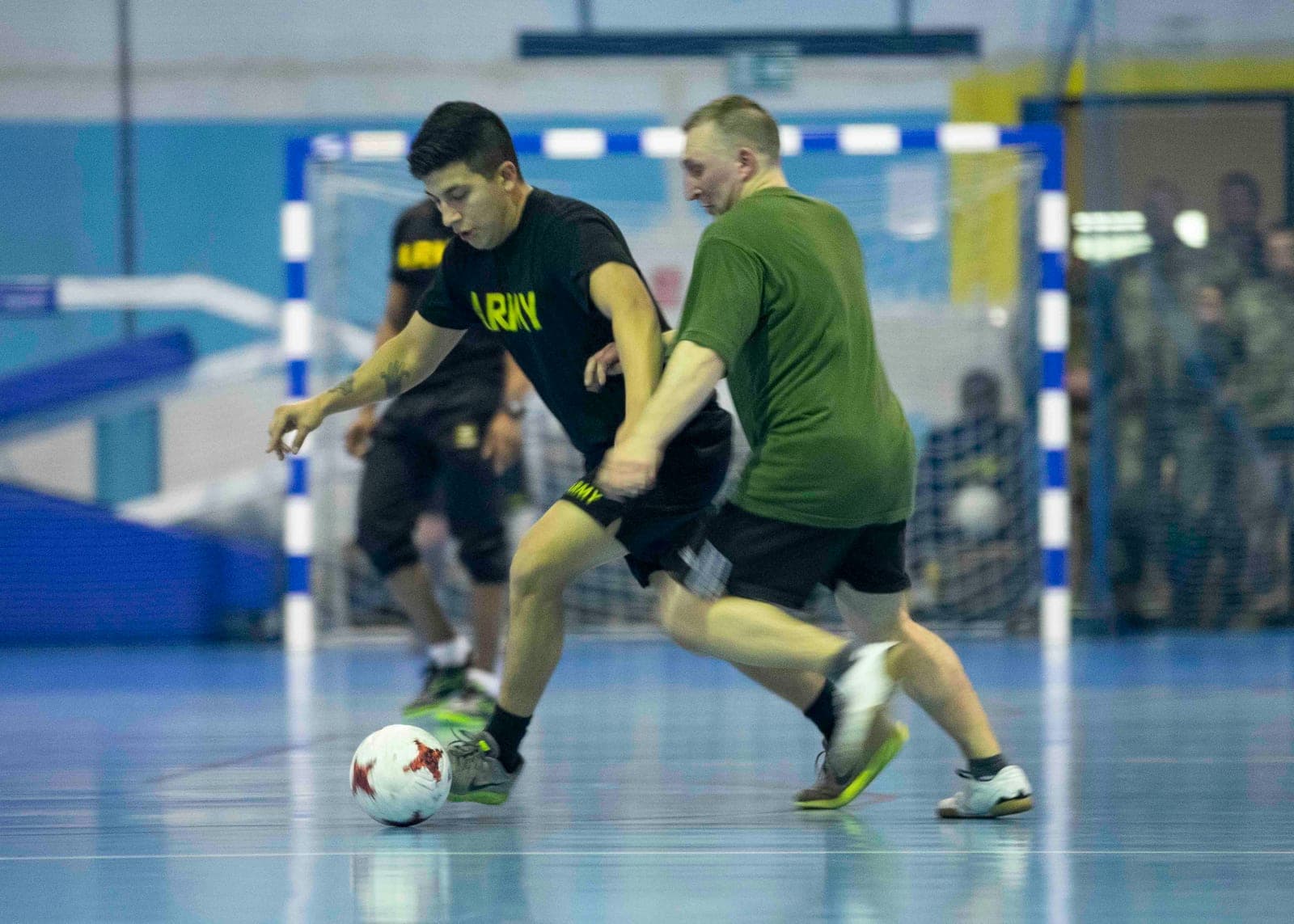
Futsal
A fast, small-sided indoor form of football played on a hard court with a low-bounce ball.
How it connects
The meaning-bearing relationships that place High line in the wider knowledge graph — each one with the reason it exists.
Commonly confused with
Close enough to be mixed up — the distinction is worth knowing.
Explore across the knowledge base
Follow the threads that connect High line to the rest of SocialSportHub.
Positions
- Defensive midfielderA defensive midfielder sits in front of the defence, breaking up opposition attacks and shielding the back line.
- Rugby union backsThe seven players who attack the space the forwards create — scrum-half, fly-half, centres, wings and fullback — what each does in attack and defence, and how the line is organised.
- WingerA winger is an attacking player who operates in the wide areas of the pitch, using pace and dribbling to beat defenders and create chances.
- PivotThe pivot is a handball attacker who plays close to the opposition defence, setting screens and looking for chances near the goal area.
- GoalkeeperThe goalkeeper is the last line of defence in football and the only player allowed to handle the ball inside their own penalty area.
Tactics
- Offside trapA defensive football tactic where the back line steps up together to leave an attacker offside.
- High pressA football tactic where a team hunts the ball high up the pitch to win it back close to the opponent’s goal.
- The forecheckHow a hockey team attacks in the opposition's defensive zone without the puck — the 1-2-2, 2-1-2 and trap approaches, and what each one risks to win the puck back.
- Doubles formationHow a pair positions itself on court — one up, one back, or both at the net — to control space in doubles.
- Territory versus possessionRugby union's central strategic trade — when to keep the ball and when to kick it away — and why the 22-metre line makes field position worth more than possession in some parts of the field.
Decision making
- Reading spaceSeeing where space is — and is not — on the field or court, and using it to decide where to move, pass or play.
- Positioning choicesDeciding where to place yourself — often before the ball arrives — to cover space, stay ready to act and shape what an opponent can do.
- Option recognitionSeeing what actions are actually available in a moment — the passes, shots or moves on offer — before choosing between them.
- Pass selectionChoosing which pass to play, and to whom, from the options a moment offers — weighing space, risk and what the team is trying to do.
- When to defendJudging the moment to switch from attacking intent to protecting your goal, court or position — recognising when the situation calls for security over ambition.
Go deeper with High line
Everywhere else on the platform that covers High line — assembled from what actually references it, so nothing here is a dead end.
Take it away
Open data and the whole-platform view of this subject.
How this page is maintained
- Content type
- Term
- Provenance
- Tier A — evergreen educational
- Verified external sources
- 0
- Content updated
- 2026-09-01
Evergreen, first-party explanation — it makes no claim that needs an external source. How we handle sources and reviews.