
Plyometrics
Plyometrics are explosive jumping, bounding, and throwing exercises that use a rapid stretch-then-shorten muscle action to develop power.
Definition
Plyometrics are exercises built around the stretch-shortening cycle: a muscle is rapidly lengthened under load (the eccentric phase) and then immediately contracts (the concentric phase), storing and releasing elastic energy to produce a fast, forceful movement. Common examples include box jumps, depth jumps, bounding, and medicine-ball throws. The emphasis is on the speed and quality of each effort rather than on accumulating many repetitions.
Because plyometric training targets rate of force development, it is widely used in sports that demand jumping, sprinting, and quick changes of direction. Sessions are usually kept short with full recovery between efforts so each repetition stays explosive. Progression is managed carefully, moving from low-intensity hops toward high-intensity depth jumps as competence develops.
Where you’ll hear “plyometrics”
Sports that use this term:

Basketball
A fast, dynamic team sport of running, jumping and quick decisions on court.
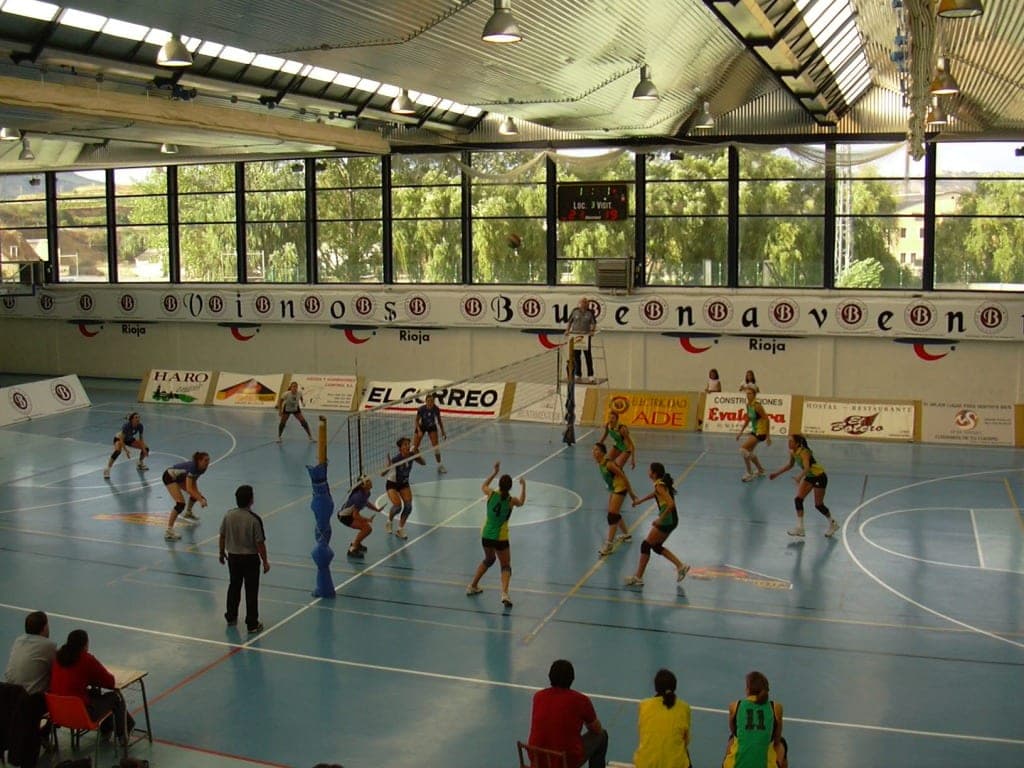
Volleyball
A non-contact team sport of rallies, jumps and teamwork — indoors or on the beach.

Running
The most accessible endurance sport — no venue, just shoes and the open road or trail.

Football
The world’s most popular team sport — endless running, teamwork and community in one game.
Explore across the knowledge base
Follow the threads that connect Plyometrics to the rest of SocialSportHub.
Movement comparisons
- Bound vs JumpBound vs Jump: how these two movements differ, what they share, and how to tell them apart — from mechanics to the sports that use them.
- Bound vs GaitBound vs Gait: how these two movements differ, what they share, and how to tell them apart — from mechanics to the sports that use them.
- Bound vs HopBound vs Hop: how these two movements differ, what they share, and how to tell them apart — from mechanics to the sports that use them.
- Acceleration vs JumpAcceleration vs Jump: how these two movements differ, what they share, and how to tell them apart — from mechanics to the sports that use them.
- Jump vs LandingJump vs Landing: how these two movements differ, what they share, and how to tell them apart — from mechanics to the sports that use them.
Physical qualities
Go deeper with Plyometrics
Everywhere else on the platform that covers Plyometrics — assembled from what actually references it, so nothing here is a dead end.
Take it away
Open data and the whole-platform view of this subject.
How this page is maintained
- Content type
- Term
- Provenance
- Tier A — evergreen educational
- Verified external sources
- 0
- Content updated
- 2026-09-01
Evergreen, first-party explanation — it makes no claim that needs an external source. How we handle sources and reviews.